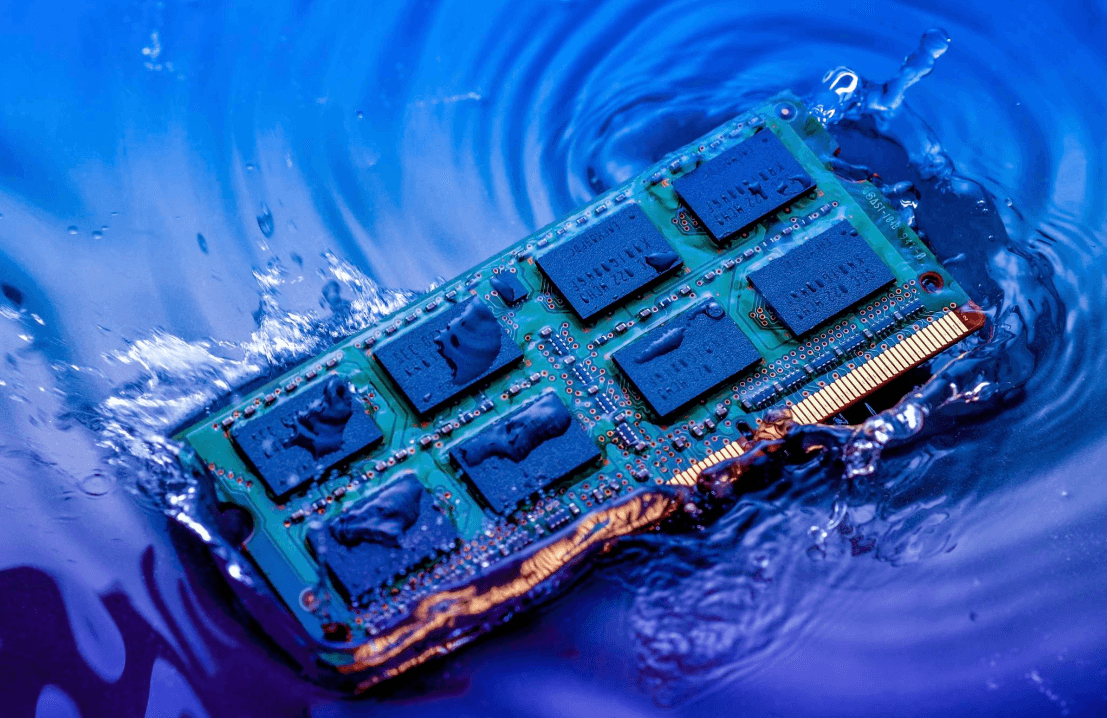
Traditional conformal coatings are low-cost but limited to an IPX5 rating, while Parylene offers superior protection but requires high equipment investment; in contrast, nano-coatings deliver the best overall cost-performance ratio, featuring an ultra-thin profile (2–5 μm), IPX8 waterproofing, and a 3-minute cure time. Shenzhen Zhongfu—a manufacturer of nano-protective coatings for PCBA electronics—offers the Fluere series, covering a full range of applications including moisture-proofing, waterproofing, and fluorine-free options. The Ultimate Guide: A three-step selection method to help you make the right choice.
Traditional conformal coatings are low-cost but max out at an IPX5 rating; Parylene offers robust protection but requires high equipment investment; meanwhile, nano-coatings deliver the best overall value proposition with an ultra-thin profile (2–5 μm), IPX8 waterproofing, and a 3-minute cure time. Shenzhen Zhongfu—a manufacturer of PCBA nano-protective coatings—offers the "Fluere" series, covering all scenarios including moisture-proofing, waterproofing, and fluorine-free options. The Ultimate Guide: A three-step selection method to help you make the right decision.
I. Why is selecting a PCBA protective coating so challenging?
Conformal coatings, Parylene, and nano-coatings—all three technologies offer "protection," yet choosing the wrong one can lead to mass product returns or spiraling costs.
According to a Mordor Intelligence report, the global electronic protective coating market is valued at $3.85 billion. The nano-coating segment's market share is projected to jump from 17% in 2020 to 34% by 2026, with a CAGR exceeding 18%. However, engineers still face three major dilemmas during procurement:
Performance: While all claim to offer moisture and water resistance, there is a vast gap—specifically the "immersion test"—between IPX5 and IPX8 ratings.
Cost: Conformal coatings have a low unit price but high rework costs; Parylene requires high equipment investment but ensures high yields; how should the total cost of nano-coatings actually be calculated?
Compliance: With PFAS restrictions tightening, can fluorine-containing coatings still be used?
This article systematically compares the three solutions across five dimensions: technical principles, protection ratings, process compatibility, total cost, and environmental compliance.
According to the IEC 61086-1:2004 standard (*Coatings for printed boards*), selecting a protective coating requires a comprehensive assessment of environmental conditions, electrical requirements, application processes, and repairability. There is no single "best" coating—only the solution that is "best suited" to your needs.
II. What are traditional conformal coatings? ——The "Oldest" PCBA Protection Solution
Conformal coating is the most widely used protective coating in the electronics industry, with a history spanning over 50 years.
Traditional conformal coatings are polymer films applied to the surface of a PCBA; their primary functions are protection against moisture, salt spray, and mold—hence the name "three-proof" (or "tri-proof"). Based on chemical composition, mainstream products fall into four major families:
| Type | Representative Brands | Advantages | Disadvantages |
|---|---|---|---|
| Acrylic Resin (AR) | Mainstream Conformal Coatings | Fast room-temperature curing; easy to rework | Poor solvent resistance |
| Polyurethane (UR) | Mainstream Conformal Coatings | Wear-resistant and solvent-resistant | Difficult to rework |
| Silicone (SR) | Mainstream Conformal Coatings | High-temperature resistant with good flexibility | Weak adhesion |
| Epoxy Resin (ER) | Mainstream Conformal Coatings | High hardness and good chemical resistance | Virtually impossible to rework |
Process Characteristics:
Application methods: Spraying, brushing, or dip coating
Curing conditions: Room temperature for 24–72 hours or accelerated curing via heating
Coating thickness: 30–130 μm
Requires masking of areas such as connectors and gold fingers
Key Limitations:
Thick films hinder heat dissipation: Thicknesses exceeding 30 μm create a thermal barrier, which is detrimental to high-power components
Coverage blind spots: Difficult to penetrate areas such as the underside of BGAs and gaps between chip pins
Waterproofing limitations: Struggles to consistently pass long-term immersion tests (IPX7/IPX8)
Cumbersome masking process: Manual masking is time-consuming and labor-intensive, creating a significant efficiency bottleneck
According to the *Specification for Conformal Coating Processes for Printed Circuit Boards*, traditional conformal coatings remain dominant in low-to-medium protection scenarios—such as consumer electronics, home appliances, and industrial controls—but are rapidly being replaced in high-reliability sectors like AI servers, automotive electronics, and outdoor telecommunications.
III. What is Parylene Coating? — A High-Performance Vacuum Deposition Solution
Parylene is a specialized polymer material that forms a dense, nanoscale-thin film on PCBA surfaces via vacuum chemical vapor deposition (CVD); while it offers superior performance, the equipment requirements are demanding.
Parylene is the common name for poly-para-xylylene, originally developed by Union Carbide in the 1960s. The preparation process involves: solid dimer → high-temperature vaporization → pyrolysis into reactive monomers → deposition and polymerization within a vacuum chamber, resulting in a pinhole-free film with uniform thickness.
Process Characteristics:
Application method: Vacuum Chemical Vapor Deposition (CVD)
Coating thickness: 2–20 μm (precisely controllable)
Curing conditions: Process complete upon deposition; no post-curing required
No masking required: Vapor deposition provides 360° coverage
Key Advantages:
| Performance Parameters | Parylene Performance |
|---|---|
| Waterproof Rating | IPX7–IPX8 |
| Salt Spray Resistance | 1000h+ |
| "Double 85" Test | 1000h+ |
| Operating Temperature | -200 to 125°C |
| Dielectric Strength | High (~7 kV/mil) |
| Film Thickness Uniformity | Excellent |
Key Limitations:
High equipment investment: CVD equipment starts at 800,000–1.2 million RMB and requires auxiliary systems such as vacuum pumps, cold traps, and high-temperature cracking furnaces.
Batch production: Incompatible with continuous assembly line operations; best suited for small-batch orders of high-value products.
Difficult rework: Coating removal is complex, requiring plasma etching or laser ablation.
Environmental compliance risks: Some Parylene variants contain fluorine structures, facing regulatory pressure regarding PFAS restrictions.
Market research indicates that Parylene coating holds an irreplaceable position in sectors where reliability takes precedence over cost, such as aerospace, implantable medical devices, and military electronics. However, in cost-sensitive industries like consumer electronics and automotive electronics, Parylene is increasingly being replaced by high-performance nano-coatings.
IV. What is Nano-Coating? — The "All-Rounder" of Third-Generation PCBA Protection Technology
Nano-coating represents a third-generation technology that utilizes cutting-edge materials—such as fluorine-modified polymers and sol-gels—to form an ultra-thin protective layer on the PCBA surface through molecular self-assembly.
The protective mechanism of nano-coating differs fundamentally from that of traditional conformal coatings: rather than relying on a thick physical barrier, it employs a low-surface-energy molecular layer to achieve the "Lotus Effect," causing water droplets to bead up and roll off the surface without adhering or penetrating.
Process Characteristics:
Application method: Dipping (3–5 seconds) or spraying.
Coating thickness: 0.8–13 μm (adjustable).
Curing conditions: Rapid curing at room temperature (3 minutes).
No masking required: Connectors and FPC ribbons can be coated directly.
Reworkable: Can be removed with specific solvents and re-applied.
Key Advantages:
| Comparison Criteria | Conformal coating | Parylene | Nano-coating |
|---|---|---|---|
| Coating thickness | 30-130μm | 2-20μm | 0.8-13μm |
| Waterproofing rating | IPX4-IPX5 | IPX7-IPX8 | IPX6-IPX8 |
| Salt spray resistance | 48-500h | 1000h+ | 500-2000h+ |
| "Double 85" test | 500-1000h | 1000h+ | >1000h |
| Application method | Spray/dip coating; masking required. | CVD Vacuum Coating | Dip coating/spray coating, no masking required |
| Curing time | 24-72h | Deposition is complete. | 3 minutes (room temperature) |
| Equipment investment | Low | 800,000-1.2 million yuan | Low (requires only tank immersion) |
| Repairability | Partially repairable | Difficult to remove | Easy to remove |
| Environmental compliance | Contains VOCs | Partially fluorinated | Zero-VOC / Fluorine-free options available |
Nanocoating technology has gained recognition within the framework of ISO 2063:2025 (*Thermal spraying and other coating processes*) and is increasingly emphasized in smart manufacturing environments.
According to a report by *PCB007 China Online* from February 2026, nanocoatings are rapidly capturing market share from traditional conformal coatings—growing at a CAGR of 17.3%—driven primarily by the dual demand for high reliability and high-efficiency production in AI servers and automotive electronics.
V. Comprehensive Comparison of the Three Major Solutions: A Quick-Reference Table
Selection is not about choosing the "best" option, but the "most suitable" one; the following is a comprehensive comparison across five dimensions.
5.1 Performance Comparison Matrix
| Performance Specifications | Conformal coating | Parylene | Nano-coating |
|---|---|---|---|
| Moisture resistance | ★★★☆ | ★★★★★ | ★★★★★ |
| Immersion waterproof (IPX7) | ★★ | ★★★★★ | ★★★★★ |
| Salt spray resistance (500h) | ★★☆ | ★★★★★ | ★★★★★ |
| Chemical solvent resistance | ★★★ | ★★★★★ | ★★★★☆ |
| High and low temperature resistance (-40 to 150°C) | ★★★ | ★★★★★ | ★★★★★ |
| Electrical insulation | ★★★★ | ★★★★★ | ★★★★☆ |
| Coating uniformity | ★★☆ | ★★★★★ | ★★★★☆ |
| Does not affect heat dissipation | ★★ | ★★★★☆ | ★★★★★ |
| Does not affect signal integrity | ★★☆ | ★★★★ | ★★★★★ |
| Process/Cost Metrics | Conformal coating | Parylene | Nano-coating |
|---|---|---|---|
| Equipment Investment | ★★★★★(Low) | ★(800,000+) | ★★★★☆(Low) |
| Masking Requirements | Manual masking required | No masking required | No masking required |
| Curing Time | 24-72h | Deposition complete | 3 minutes |
| Batch vs. Continuous Production | Continuous | Batch | Continuous |
| Production Efficiency | ★★★ | ★★ | ★★★★★ |
| Labor Requirements | High (masking + spraying) | Low (automation) | Low (one-third the manpower) |
| Rework Difficulty | Moderate | Very high | Low (solvent wipe-off) |
| Total Board Cost | Moderate | High | Medium-Low |
Cost-based selection recommendations:
High unit value (>5,000 RMB) and low production volume (<1,000 units/month): Parylene is acceptable; reliability takes precedence over overall cost-performance.
Mass-market consumer electronics (>100,000 units/month): Nano-coating > Conformal coating > Parylene (due to excessive equipment investment payback periods).
Requirement for IPX7/IPX8 ratings combined with a need for high efficiency: Nano-coating is the optimal solution.
VI. Selection Decision Model: A Three-Step Guide to Determining Your PCBA Protection Strategy
This decision model has been validated by numerous brands in the AI server, automotive electronics, and wearable device sectors. Step 1: Determine the Required Level of Protection
Based on the product's deployment environment, establish the minimum protection requirements:
Standard indoor environment (moisture/condensation resistance): Conformal coating or nano-coating are both suitable.
Outdoor/high-humidity/condensation-prone environments (requiring IPX5+): Nano-coating is recommended.
Immersion at 1 meter for 30 minutes (IPX7): Nano-coating or Parylene is mandatory.
Long-term immersion at depths exceeding 2 meters (IPX8+): High-end nano-coating or Parylene.
Automotive electronics/high-temperature conditions (>150°C): Select high-temperature resistant nano-coating or fluorine-free series.
Step 2: Evaluate Production Line and Cost Constraints
Existing spraying line with no desire for major modifications: Conformal coating (accepting IPX5 limitations).
New production line planning/desire for higher efficiency: Prioritize nano-coating immersion processes.
High-value items (>50,000 RMB)/Aerospace applications: Parylene is a viable option.
Consumer electronics with monthly capacity >100,000 units: Nano-coating (unmatched efficiency due to 3-minute curing).
Step 3: Compliance and Medium-to-Long-Term Validation
Exports to Europe/US markets: PFAS compliance is essential; fluorine-free nano-coating is recommended.
Frequent rework/maintenance required: Rule out Parylene; select an easily removable nano-coating type.
AOI (Automated Optical Inspection) requirements: Select fluorescent-detectable nano-coating.
VII. Shenzhen Zhongfu: A "Fourth Option" Beyond the Three Standard Solutions
When conformal coatings fall short and Parylene is cost-prohibitive, Shenzhen Zhongfu’s "Fluere" nano-coating series offers a compelling alternative—delivering performance comparable to Parylene with the efficiency suited for automated production lines. Established in 2013, Shenzhen Zhongfu—a manufacturer of PCBA electronic nano-protective coatings—is a National High-Tech Enterprise and a Guangdong Province "Specialized, Refined, Unique, and Innovative" (SRUI) enterprise. In collaboration with the doctoral team from the State Key Laboratory of Polymer Materials at Fudan University (Shanghai), the company has developed the Fluere® series of nano-coating products:
7.1 Fluere® 1700 Series—Nano-waterproof coating for circuit boards
Masking-free design: No masking required for connectors or FPC ribbon cables; apply directly
3-second immersion + 3-minute room-temperature curing
Adjustable thickness: <1μm (moisture-proof type) / 1–10μm (waterproof type)
Fluorescence detection: Rapid inspection under UV light; QC efficiency increased by 80%
Zero VOC; RoHS and REACH compliant
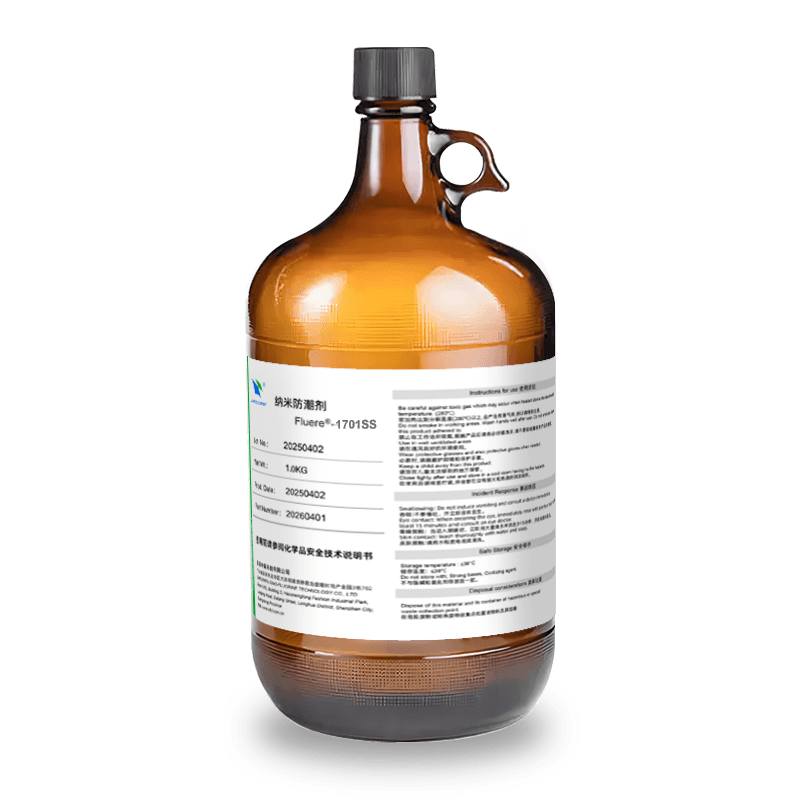
7.2 Fluere® 1701ss—Superhydrophobic, anti-fingerprint coating
Water contact angle >160°; hydrophobic and oleophobic
Withstands >1000 hours of "Double 85" testing; thermal shock resistance from -40°C to 150°C
Nano-scale thickness; does not interfere with heat dissipation or signal transmission
7.3 xflono Series—Fluorine-free, high salt-spray resistant nano-waterproof coating (Top choice for export to Europe and the US)
Fully PFAS-compliant: Total fluorine <20μg/kg
Withstands >2000 hours of neutral salt spray testing
Room-temperature cure within 20 seconds; suitable for automated production lines
Long-term heat resistance up to 200°C; withstands instantaneous temperatures up to 300°C
7.4 Fluere® Anti-sulfurization Coating—Specialized for silver-plated connectors
Highly effective barrier against sulfurous gases; prevents blackening of silver pins
High transparency; suitable for LED applications
Rapid room-temperature curing
8. Selection Summary: A single chart to resolve your decision-making dilemmas
| Application Scenarios | Conformal Coating | Parylene | Nano-coating (Shenzhen Zhongfu) |
|---|---|---|---|
| Home appliance control boards (IPX2–IPX3) | ✅ Economical choice | ❌ Over-investment | ✅ Optional |
| Industrial PLCs (IPX4–IPX5) | ⭕ Available | ⭕ Excessive performance | ✅ Best value for money |
| AI server motherboards (anti-condensation) | ❌ Thickness affects heat dissipation | ❌ Difficult to repair | ✅ Fluere 1700 Series |
| Smartphone motherboards (IPX7) | ❌ Cannot pass reliably | ⭕ Excessively high cost | ✅ Fluere 1700 Series |
| TWS earbuds (IPX7 – sweat resistance) | ❌ Corrosion in hidden areas | ❌ Excessively high cost | ✅ Fluere 1706 |
| Automotive electronics (high temperature + salt spray) | ❌ High-temperature aging | ⭕ High-temperature tolerance | ✅ xflono Series |
| Implantable medical devices (cost-no-object) | ❌ Insufficient reliability | ✅ Gold standard | ⭕ Requires specific validation |
| Exports to Europe and the US (PFAS compliance) | ⭕ Contains some VOCs | ❌ Mostly fluorine-containing | ✅ xflono Fluorine-free Series |