
Everyday Waterproofing for Pet Smart Devices | Simple and Quick Electronic Protective Nano-Coating Electronic Waterproofing Compliance and Protection Upgrade Solution for Pet Smart Devices
Everyday Waterproofing for Pet Smart Devices | Simple and Quick Electronic Protective Nanocoating
Compliance and Upgrade Solutions for Electronic Waterproofing of Pet Smart Devices
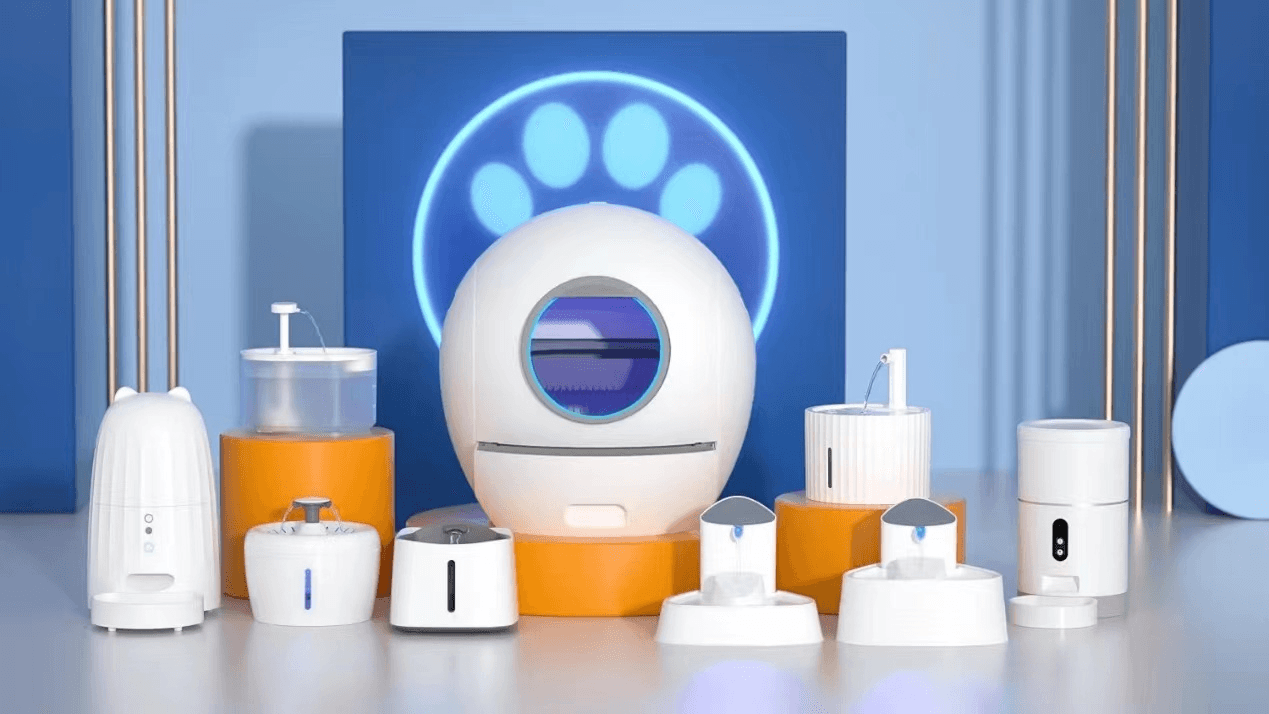
Pet smart hardware is transitioning from novelty to a necessity. Smart feeders, water fountains, GPS trackers, and smart litter boxes are rapidly entering households. This article provides an in-depth analysis of the compliance requirements and upgrade paths for electronic waterproofing of pet smart devices from the perspectives of policy compliance and market data. It covers key issues such as PCBA waterproofing for smart feeders, nanocoating for pet trackers, moisture-proof solutions for smart litter boxes, and IPX7 waterproof ratings for pet electronics, offering actionable solutions for pet hardware manufacturers.
I. The Booming Pet Smart Hardware Market and the Essential Need for Electronic Protection
Global Pet Smart Device Market Size and Growth Data in 2026
According to a report by Grand View Research, the global pet smart device market size exceeded $32 billion in 2026, with a three-year CAGR of 18.7%. Smart feeders and water fountains accounted for over 35%, pet trackers for approximately 28%, and smart litter boxes for approximately 15%. The Chinese pet smart device market has an annual growth rate exceeding 25%, making it the world's largest growth market. Surveys show that 68% of pet owners rank waterproof performance among their top three considerations. Compliance with electronic waterproofing standards for pet smart devices has become a mandatory requirement for market entry and is the foundation for consumer acceptance of technologies such as waterproof PCBAs for smart feeders and nano-coatings for pet trackers.
Analysis of Typical Failure Modes for Pet Devices
Based on after-sales data analysis, typical failure modes of electronic systems in pet smart devices include: water level sensors in water dispensers experiencing electrode corrosion and signal drift due to prolonged immersion in water; inadequate waterproofing of the PCBA in smart feeders, leading to saliva seeping into the casing and causing moisture-sensitive components to fail; electrochemical corrosion at the charging port of pet trackers after exposure to rain or water outdoors, preventing them from charging; and the lack of moisture protection in smart litter boxes causing the motor drive board to shut down due to leakage current in damp, dusty environments. Water ingress failures account for over 42% of total returns for pet smart devices, with average repair costs ranging from 30% to 50% of the unit's selling price. Upgrading the waterproof rating of pet electronics to IPX7 can significantly reduce these failure risks.
II. Protection Rating Requirements for Smart Pet Devices
IPX4/IPX5/IPX7 Rating Standards Explained
IEC 60529 defines the waterproof ratings commonly used in the consumer electronics industry. Pet devices most commonly involve three ratings: IPX4 (splash resistant), meaning the device functions normally after being splashed with water from any direction for 10 minutes, suitable for indoor smart litter boxes and feeders; IPX5 (spray resistant), meaning no harmful water ingress occurs after being sprayed with water at 12.5L/min from a 6.3mm nozzle for 3 minutes, suitable for water fountain housings; IPX7 (short-term immersion), meaning no damage after immersion in 1 meter of water for 30 minutes, the recommended rating for outdoor pet trackers and washable feeders. IPX7 does not mean permanent underwater operation, but rather resistance to accidental water immersion. The IPX7 waterproof rating for pet electronics has become standard for outdoor pet products and is one of the core indicators for waterproof compliance certification of smart pet devices.
Differences in Actual Protection Needs for Different Types of Pet Devices
Smart feeders mainly face risks from pet licking and wet hand operation. It is recommended that the control board meet or exceed IPX4, and direct contact between the food bowl area and the coating material should be avoided. Pet water fountain pumps and sensors operate in high-humidity environments and require regular full-machine cleaning; electrical components are recommended to meet IPX5 or IPX7 standards. Pet tracking devices are exposed to rain, mud, and water spills; the charging port is the weakest link and must meet IPX7 standards. Smart litter box drive boards need to be moisture-proof, salt spray-proof, and ammonia corrosion-proof; IPX4 or higher with anti-corrosion treatment is recommended. The electronic waterproofing strategy for each category of pet smart devices should be precisely matched to the usage scenario to avoid over-design or insufficient protection.
III. Limitations of Traditional Waterproofing Solutions
Long-Term Reliability Issues of Structural Waterproofing
Structural waterproofing achieves physical isolation through silicone sealing rings at the shell joint surfaces and charging port cover. However, in pet device usage scenarios, these sealing rings pose significant long-term risks. Repeated opening and closing of the silicone ring can result in a permanent compression deformation rate exceeding 20%, increasing the sealing gap to over 0.1mm. Drops or pet chewing can cause micro-deformation of the shell, altering the seal pre-compression. Chloride ions and minerals in water from water dispensers can form biofilms and scale on the sealing surfaces. Statistics show that pet trackers with purely structural seals have a water ingress failure rate of 8.3% after 6 months of use, far exceeding the initial factory rate of 0.3%. Once structural waterproofing fails, it completely loses its protective capability. This is precisely why more reliable solutions are needed for electronic waterproofing in pet smart devices.
The Dilemma of Potting Compounds for Sensors and Charging Ports
Potting compounds completely encapsulate the PCBA and are widely used in industrial waterproofing. However, potting compounds present significant challenges in pet smart devices. Components that interact with the environment, such as water level sensors and humidity sensors, will lose their function once covered. Potting USB-C and magnetic charging contacts is extremely difficult, often resulting in glue run-through blockage or incomplete potting. After potting, the PCBA becomes completely unrepairable; a single smart feeder control board accounts for over 40% of the total device price, and a single component failure necessitates scrapping the entire board. The heat release and shrinkage stress during potting compound curing can damage BGA solder joints. These factors severely limit the applicability of potting compounds for waterproofing pet smart devices, especially for multi-sensor consumer electronics.
IV. How Nanocoating Technology Meets Compliance Requirements for Pet Devices
IP Rating Test Data for Immersion-Based Full-Coverage Process
Sino-Fluorine 1700 series immersion-based nanocoating provides a technical route for waterproofing pet smart devices that balances protection and mass production. The PCBA is completely immersed in the Sino-Fluorine 1700 series coating solution. The ultra-low surface tension allows the coating to penetrate to the bottom of the components and the gaps between BGA solder balls. After 3 seconds of wetting and lifting, it cures in 3 minutes to form a 3-5μm transparent nanofilm. According to CNAS testing, the Sino-Fluorine 1700 series coated PCBA maintains an insulation resistance of over 10¹¹Ω after 30 minutes of IPX7 immersion. In the 85℃/85%RH test, the insulation resistance decay rate under coating protection is less than 5%, far superior to 85% for unprotected devices. The 100% coverage characteristic of the immersion process demonstrates a level of protective consistency that spray coating cannot achieve in scenarios such as nanocoating for pet trackers. It is suitable for waterproofing smart feeder PCBAs and moisture-proofing solutions for smart litter boxes.
Zero VOC Environmentally Friendly Formula and RoHS/REACH Compliance
As products that come into contact with the home environment, pet smart devices must meet stringent environmental regulations. The Sino-Fluorine 1700 series uses a perfluoropolyether-based environmentally friendly formula with zero VOC content and is fully RoHS and REACH compliant, certified by SGS. This means that products using nano-coatings for pet trackers, moisture-proof solutions for smart litter boxes, or waterproof PCBA solutions for smart feeders can enter the EU market without additional material compliance declarations. Compliance with nano-coatings in consumer electronics has become a key aspect of market access. After curing, the coating leaves no solvent residue or irritating odor, making it harmless to pets. The zero-VOC process also eliminates the need for large ventilation systems in the production facility.
V. Application Cases of Nanocoating for Smart Pet Devices
Smart Feeder Control Board Protection Solution
Within six months of its launch, a leading pet brand's smart feeder experienced a 5.2% return rate, with 80% of failures caused by water ingress into the control board. The main control board integrates a Wi-Fi module, motor drive, display screen, and sensor interfaces, resulting in a complex structure. A Sino-Fluorine 1700 series immersion-type nanocoating was used, achieving 3-5μm full coverage across the entire board. After treatment, the control board passed IPX7 immersion and 72-hour salt spray tests, and subsequent mass production showed no further water ingress failures. The coating cost per board was only a few yuan, less than 20% of the cost of potting solutions, while retaining USB conductivity and repairability. With cumulative shipments exceeding 500,000 units, the return rate dropped from 5.2% to below 0.7%. This is a successful example of a waterproof solution for smart feeder PCBAs and also verifies the portability of nanocoating technology for pet trackers.
Outdoor Waterproof Solution for Pet Trackers
Pet trackers need to operate outdoors for extended periods, facing extreme scenarios such as rain and pet swimming. When a well-known wearable brand was developing a 4G Cat.1 tracker, its target was an IPX7 waterproof rating for pet electronics. Traditional sealing ring solutions consistently failed verification for the charging magnetic contacts and SIM card slot. After introducing the Sino-Fluorine 1700 series nano-coating, the PCBA, along with the charging contacts, underwent immersion treatment. The 4-5μm coating protects the circuitry while maintaining contact conductivity. Ultimately, it passed the IPX7 test, functioning normally after 48 hours of rain and water immersion in outdoor testing. The waterproof-related return rate decreased from 3.1% in the previous generation to 0.3%.
Water Fountain Level Sensor Protection
The electrodes of the pet water fountain level sensor are in direct contact with water. Prolonged immersion can lead to signal drift due to electrochemical corrosion and scale buildup. The Sino-Fluorine 1700 series coating is optimized for full immersion scenarios, and its 3μm thickness provides resistance to hydrolysis and salt spray. In a comparative study of a water dispenser project, the uncoated sensor experienced a 35% signal drift after 45 days of operation, while the Sino-Fluorine 1700 series coated sensor only drifted by 4.2% after 180 days. The coating also resolved the electrode leakage current issue, improving detection accuracy by 15%. This solution has been mass-produced in multiple models, with cumulative shipments exceeding 1.2 million units, resulting in a 92% decrease in sensor after-sales complaints. This demonstrates the technical feasibility of a moisture-proof solution for smart cat litter boxes and other waterproof scenarios for smart pet devices.
VI. Cost-Effectiveness and Implementation Path
The following comparison of the economics of different waterproofing solutions from multiple dimensions helps manufacturers comprehensively evaluate the optimal choice for waterproofing pet smart devices.
| Comparison Projects | Structural waterproofing (sealing ring) | potting compound | Sino-Fluorine 1700 series |
|---|---|---|---|
| Up to protection level | IPX5 (new unit) → IPX4 (aged unit) | IPX7 (excluding sensor blind spots) | IPX7 (Full coverage with no blind spots) |
| Coating thickness | N/A (Structural Components) | 500-2000μm | 3-5μm |
| Sensor compatibility | Okay (it won't affect anything) | Poor (blockage interference) | Excellent (does not affect functionality) |
| Charging port processing | Medium (complex sealing cap) | Poor (unable to balance both) | Advantage (maintains conductivity) |
| Maintainability | Excellent (Disassembleable) | Poor (Irreparable) | Excellent (can be repaired and repainted) |
| Environmental compliance | Good (materials compliant) | Medium (some contain VOCs) | Excellent (Zero VOC/ROHS) |
| Single-board protection cost | Middle (mold + sealing ring) | High (materials + labor) | Low-medium (stable mass production) |
| Total Life Cycle TCO | Medium (high replacement and repair costs) | High (significant losses from scrapping) | Low (maintenance-free and repairable) |
| Mass production process adaptation | Precision assembly line required | Vacuum filling equipment required | Universal for both soaking and spraying lines |
As the comparison shows, the Sino-Fluorine 1700 series immersion nano-coating has significant advantages in protection level, sensor compatibility, maintainability, and environmental compliance. While structural waterproofing has low initial cost, it has high long-term after-sales costs. Encapsulation provides strong protection but has shortcomings in sensor and charging port treatment. Considering all factors, nano-coating is the optimal solution for waterproofing pet smart devices. More details on compliance certification for nano-coatings in consumer electronics can be found in this special feature.
The recommended implementation path is three stages:
1. Select high-return-rate SKUs for small-batch coating verification, completing waterproofing and environmental reliability tests;
2. After successful verification, switch to the nano-coating solution, accumulate mass production data, and optimize parameters;
3. Horizontally replicate the mature solution to all product lines. The Sino-Fluorine 1700 series provides full-process technical support from verification and prototyping to mass production implementation.
VII. Industry Trends and Conclusion
Waterproofing for pet smart devices is transitioning from an optional feature to a standard capability. Compliance with nano-coating standards for consumer electronics has become a global market entry barrier. The technological evolution is clear: from barrier-based to active protection, from thick and bulky to thin and lightweight, and from high VOCs to zero emissions. Sino-Fluorine 1700 series, as a pioneer in immersion PCBA protection, uses its nano-coating agent as its core to provide the pet hardware industry with a comprehensive solution that combines performance, compliance, and cost-effectiveness. A 3-5μm nanofilm forms an invisible protective layer on the PCBA, meeting the IPX7 waterproofing requirement for pet devices. It is suitable for scenarios such as waterproofing smart feeder PCBAs, nano-coating for pet trackers, and moisture-proofing solutions for smart litter boxes. This reduces after-sales costs, enhances user reputation, and accelerates global market access. Choosing Sino-Fluorine 1700 series means choosing the future of waterproofing for pet smart devices.
Everyday Waterproofing for Pet Smart Devices | Simple and Quick Electronic Protective Nano-Coating Electronic Waterproofing Compliance and Protection Upgrade Solution for Pet Smart Devices
Everyday Waterproofing for Pet Smart Devices | Simple and Quick Electronic Protective Nanocoating
Compliance and Upgrade Solutions for Electronic Waterproofing of Pet Smart Devices
Pet smart hardware is transitioning from novelty to a necessity. Smart feeders, water fountains, GPS trackers, and smart litter boxes are rapidly entering households. This article provides an in-depth analysis of the compliance requirements and upgrade paths for electronic waterproofing of pet smart devices from the perspectives of policy compliance and market data. It covers key issues such as PCBA waterproofing for smart feeders, nanocoating for pet trackers, moisture-proof solutions for smart litter boxes, and IPX7 waterproof ratings for pet electronics, offering actionable solutions for pet hardware manufacturers.
I. The Booming Pet Smart Hardware Market and the Essential Need for Electronic Protection
Global Pet Smart Device Market Size and Growth Data in 2026
According to a report by Grand View Research, the global pet smart device market size exceeded $32 billion in 2026, with a three-year CAGR of 18.7%. Smart feeders and water fountains accounted for over 35%, pet trackers for approximately 28%, and smart litter boxes for approximately 15%. The Chinese pet smart device market has an annual growth rate exceeding 25%, making it the world's largest growth market. Surveys show that 68% of pet owners rank waterproof performance among their top three considerations. Compliance with electronic waterproofing standards for pet smart devices has become a mandatory requirement for market entry and is the foundation for consumer acceptance of technologies such as waterproof PCBAs for smart feeders and nano-coatings for pet trackers.
Analysis of Typical Failure Modes for Pet Devices
Based on after-sales data analysis, typical failure modes of electronic systems in pet smart devices include: water level sensors in water dispensers experiencing electrode corrosion and signal drift due to prolonged immersion in water; inadequate waterproofing of the PCBA in smart feeders, leading to saliva seeping into the casing and causing moisture-sensitive components to fail; electrochemical corrosion at the charging port of pet trackers after exposure to rain or water outdoors, preventing them from charging; and the lack of moisture protection in smart litter boxes causing the motor drive board to shut down due to leakage current in damp, dusty environments. Water ingress failures account for over 42% of total returns for pet smart devices, with average repair costs ranging from 30% to 50% of the unit's selling price. Upgrading the waterproof rating of pet electronics to IPX7 can significantly reduce these failure risks.
II. Protection Rating Requirements for Smart Pet Devices
IPX4/IPX5/IPX7 Rating Standards Explained
IEC 60529 defines the waterproof ratings commonly used in the consumer electronics industry. Pet devices most commonly involve three ratings: IPX4 (splash resistant), meaning the device functions normally after being splashed with water from any direction for 10 minutes, suitable for indoor smart litter boxes and feeders; IPX5 (spray resistant), meaning no harmful water ingress occurs after being sprayed with water at 12.5L/min from a 6.3mm nozzle for 3 minutes, suitable for water fountain housings; IPX7 (short-term immersion), meaning no damage after immersion in 1 meter of water for 30 minutes, the recommended rating for outdoor pet trackers and washable feeders. IPX7 does not mean permanent underwater operation, but rather resistance to accidental water immersion. The IPX7 waterproof rating for pet electronics has become standard for outdoor pet products and is one of the core indicators for waterproof compliance certification of smart pet devices.
Differences in Actual Protection Needs for Different Types of Pet Devices
Smart feeders mainly face risks from pet licking and wet hand operation. It is recommended that the control board meet or exceed IPX4, and direct contact between the food bowl area and the coating material should be avoided. Pet water fountain pumps and sensors operate in high-humidity environments and require regular full-machine cleaning; electrical components are recommended to meet IPX5 or IPX7 standards. Pet tracking devices are exposed to rain, mud, and water spills; the charging port is the weakest link and must meet IPX7 standards. Smart litter box drive boards need to be moisture-proof, salt spray-proof, and ammonia corrosion-proof; IPX4 or higher with anti-corrosion treatment is recommended. The electronic waterproofing strategy for each category of pet smart devices should be precisely matched to the usage scenario to avoid over-design or insufficient protection.
III. Limitations of Traditional Waterproofing Solutions
Long-Term Reliability Issues of Structural Waterproofing
Structural waterproofing achieves physical isolation through silicone sealing rings at the shell joint surfaces and charging port cover. However, in pet device usage scenarios, these sealing rings pose significant long-term risks. Repeated opening and closing of the silicone ring can result in a permanent compression deformation rate exceeding 20%, increasing the sealing gap to over 0.1mm. Drops or pet chewing can cause micro-deformation of the shell, altering the seal pre-compression. Chloride ions and minerals in water from water dispensers can form biofilms and scale on the sealing surfaces. Statistics show that pet trackers with purely structural seals have a water ingress failure rate of 8.3% after 6 months of use, far exceeding the initial factory rate of 0.3%. Once structural waterproofing fails, it completely loses its protective capability. This is precisely why more reliable solutions are needed for electronic waterproofing in pet smart devices.
The Dilemma of Potting Compounds for Sensors and Charging Ports
Potting compounds completely encapsulate the PCBA and are widely used in industrial waterproofing. However, potting compounds present significant challenges in pet smart devices. Components that interact with the environment, such as water level sensors and humidity sensors, will lose their function once covered. Potting USB-C and magnetic charging contacts is extremely difficult, often resulting in glue run-through blockage or incomplete potting. After potting, the PCBA becomes completely unrepairable; a single smart feeder control board accounts for over 40% of the total device price, and a single component failure necessitates scrapping the entire board. The heat release and shrinkage stress during potting compound curing can damage BGA solder joints. These factors severely limit the applicability of potting compounds for waterproofing pet smart devices, especially for multi-sensor consumer electronics.
IV. How Nanocoating Technology Meets Compliance Requirements for Pet Devices
IP Rating Test Data for Immersion-Based Full-Coverage Process
Sino-Fluorine 1700 series immersion-based nanocoating provides a technical route for waterproofing pet smart devices that balances protection and mass production. The PCBA is completely immersed in the Sino-Fluorine 1700 series coating solution. The ultra-low surface tension allows the coating to penetrate to the bottom of the components and the gaps between BGA solder balls. After 3 seconds of wetting and lifting, it cures in 3 minutes to form a 3-5μm transparent nanofilm. According to CNAS testing, the Sino-Fluorine 1700 series coated PCBA maintains an insulation resistance of over 10¹¹Ω after 30 minutes of IPX7 immersion. In the 85℃/85%RH test, the insulation resistance decay rate under coating protection is less than 5%, far superior to 85% for unprotected devices. The 100% coverage characteristic of the immersion process demonstrates a level of protective consistency that spray coating cannot achieve in scenarios such as nanocoating for pet trackers. It is suitable for waterproofing smart feeder PCBAs and moisture-proofing solutions for smart litter boxes.
Zero VOC Environmentally Friendly Formula and RoHS/REACH Compliance
As products that come into contact with the home environment, pet smart devices must meet stringent environmental regulations. The Sino-Fluorine 1700 series uses a perfluoropolyether-based environmentally friendly formula with zero VOC content and is fully RoHS and REACH compliant, certified by SGS. This means that products using nano-coatings for pet trackers, moisture-proof solutions for smart litter boxes, or waterproof PCBA solutions for smart feeders can enter the EU market without additional material compliance declarations. Compliance with nano-coatings in consumer electronics has become a key aspect of market access. After curing, the coating leaves no solvent residue or irritating odor, making it harmless to pets. The zero-VOC process also eliminates the need for large ventilation systems in the production facility.
V. Application Cases of Nanocoating for Smart Pet Devices
Smart Feeder Control Board Protection Solution
Within six months of its launch, a leading pet brand's smart feeder experienced a 5.2% return rate, with 80% of failures caused by water ingress into the control board. The main control board integrates a Wi-Fi module, motor drive, display screen, and sensor interfaces, resulting in a complex structure. A Sino-Fluorine 1700 series immersion-type nanocoating was used, achieving 3-5μm full coverage across the entire board. After treatment, the control board passed IPX7 immersion and 72-hour salt spray tests, and subsequent mass production showed no further water ingress failures. The coating cost per board was only a few yuan, less than 20% of the cost of potting solutions, while retaining USB conductivity and repairability. With cumulative shipments exceeding 500,000 units, the return rate dropped from 5.2% to below 0.7%. This is a successful example of a waterproof solution for smart feeder PCBAs and also verifies the portability of nanocoating technology for pet trackers.
Outdoor Waterproof Solution for Pet Trackers
Pet trackers need to operate outdoors for extended periods, facing extreme scenarios such as rain and pet swimming. When a well-known wearable brand was developing a 4G Cat.1 tracker, its target was an IPX7 waterproof rating for pet electronics. Traditional sealing ring solutions consistently failed verification for the charging magnetic contacts and SIM card slot. After introducing the Sino-Fluorine 1700 series nano-coating, the PCBA, along with the charging contacts, underwent immersion treatment. The 4-5μm coating protects the circuitry while maintaining contact conductivity. Ultimately, it passed the IPX7 test, functioning normally after 48 hours of rain and water immersion in outdoor testing. The waterproof-related return rate decreased from 3.1% in the previous generation to 0.3%.
Water Fountain Level Sensor Protection
The electrodes of the pet water fountain level sensor are in direct contact with water. Prolonged immersion can lead to signal drift due to electrochemical corrosion and scale buildup. The Sino-Fluorine 1700 series coating is optimized for full immersion scenarios, and its 3μm thickness provides resistance to hydrolysis and salt spray. In a comparative study of a water dispenser project, the uncoated sensor experienced a 35% signal drift after 45 days of operation, while the Sino-Fluorine 1700 series coated sensor only drifted by 4.2% after 180 days. The coating also resolved the electrode leakage current issue, improving detection accuracy by 15%. This solution has been mass-produced in multiple models, with cumulative shipments exceeding 1.2 million units, resulting in a 92% decrease in sensor after-sales complaints. This demonstrates the technical feasibility of a moisture-proof solution for smart cat litter boxes and other waterproof scenarios for smart pet devices.
VI. Cost-Effectiveness and Implementation Path
The following comparison of the economics of different waterproofing solutions from multiple dimensions helps manufacturers comprehensively evaluate the optimal choice for waterproofing pet smart devices.
| Comparison Projects | Structural waterproofing (sealing ring) | potting compound | Sino-Fluorine 1700 series |
|---|---|---|---|
| Up to protection level | IPX5 (new unit) → IPX4 (aged unit) | IPX7 (excluding sensor blind spots) | IPX7 (Full coverage with no blind spots) |
| Coating thickness | N/A (Structural Components) | 500-2000μm | 3-5μm |
| Sensor compatibility | Okay (it won't affect anything) | Poor (blockage interference) | Excellent (does not affect functionality) |
| Charging port processing | Medium (complex sealing cap) | Poor (unable to balance both) | Advantage (maintains conductivity) |
| Maintainability | Excellent (Disassembleable) | Poor (Irreparable) | Excellent (can be repaired and repainted) |
| Environmental compliance | Good (materials compliant) | Medium (some contain VOCs) | Excellent (Zero VOC/ROHS) |
| Single-board protection cost | Middle (mold + sealing ring) | High (materials + labor) | Low-medium (stable mass production) |
| Total Life Cycle TCO | Medium (high replacement and repair costs) | High (significant losses from scrapping) | Low (maintenance-free and repairable) |
| Mass production process adaptation | Precision assembly line required | Vacuum filling equipment required | Universal for both soaking and spraying lines |
As the comparison shows, the Sino-Fluorine 1700 series immersion nano-coating has significant advantages in protection level, sensor compatibility, maintainability, and environmental compliance. While structural waterproofing has low initial cost, it has high long-term after-sales costs. Encapsulation provides strong protection but has shortcomings in sensor and charging port treatment. Considering all factors, nano-coating is the optimal solution for waterproofing pet smart devices. More details on compliance certification for nano-coatings in consumer electronics can be found in this special feature.
The recommended implementation path is three stages:
1. Select high-return-rate SKUs for small-batch coating verification, completing waterproofing and environmental reliability tests;
2. After successful verification, switch to the nano-coating solution, accumulate mass production data, and optimize parameters;
3. Horizontally replicate the mature solution to all product lines. The Sino-Fluorine 1700 series provides full-process technical support from verification and prototyping to mass production implementation.
VII. Industry Trends and Conclusion
Waterproofing for pet smart devices is transitioning from an optional feature to a standard capability. Compliance with nano-coating standards for consumer electronics has become a global market entry barrier. The technological evolution is clear: from barrier-based to active protection, from thick and bulky to thin and lightweight, and from high VOCs to zero emissions. Sino-Fluorine 1700 series, as a pioneer in immersion PCBA protection, uses its nano-coating agent as its core to provide the pet hardware industry with a comprehensive solution that combines performance, compliance, and cost-effectiveness. A 3-5μm nanofilm forms an invisible protective layer on the PCBA, meeting the IPX7 waterproofing requirement for pet devices. It is suitable for scenarios such as waterproofing smart feeder PCBAs, nano-coating for pet trackers, and moisture-proofing solutions for smart litter boxes. This reduces after-sales costs, enhances user reputation, and accelerates global market access. Choosing Sino-Fluorine 1700 series means choosing the future of waterproofing for pet smart devices.