In the field of electronic protection, the question I hear most often is: "What exactly is the point of nano-coatings?" People asking this usually have just one scenario in mind—water splashing onto a circuit board and causing a short circuit. However, the factors that actually ruin outdoor equipment go far beyond simple splashes. I have seen countless boards returned for repair: they might look clean on the surface, yet under a magnifying glass, one can spot a thin film of moisture between the pins and dark green discoloration along the edges of the copper traces. I have also seen display screens from coastal clients where, after less than a year of use, the solder joints were covered in tiny white salt crystals. None of this damage was caused by a sudden splash of water, yet each type of failure was devastating. We have been developing nano-coatings in Shenzhen since our company was founded in 2013, serving a wide range of electronics hardware enterprises along the way. My biggest takeaway over the years is this: the reliability of electronic products often fails not because of a single, overwhelming impact, but due to the invisible, chronic corrosion that accumulates day after day. And nano-protective coatings are precisely the solution to these kinds of problems.
In the field of electronic protection, one of the most frequently heard questions is: "What is the use of nano-coating?" People who ask this question usually have only one picture in their mind - water is splashed on the circuit board and the equipment is short-circuited. But what really damages outdoor equipment is far more than just splashing water. I have seen too many reworked boards: the surface looks clean, but under a magnifying glass you can see a thin film of water between the pins, and the edges of the copper foil are dark green; I have also seen screens from coastal customers that were used for less than a year, and the solder joints were covered with tiny white salt crystals. None of these injuries were caused by "splashing water", but each one was more deadly than the last.
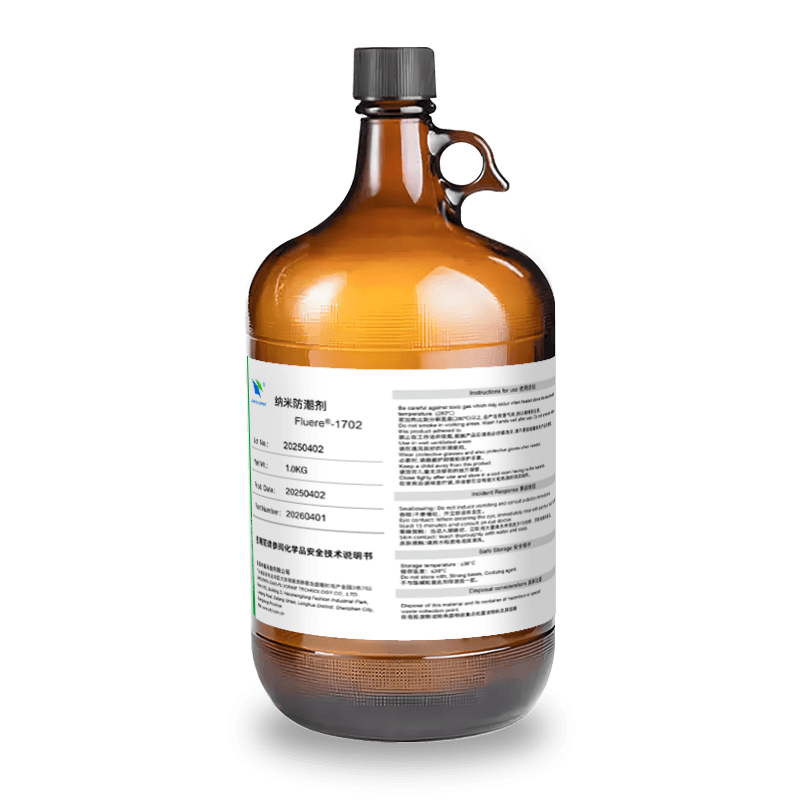
We do nano coatings in Shenzhen. Since the company was established in 2013, we have served many electronic hardware companies. The biggest experience I have gained over the years is that the reliability of electronic products is often defeated not by the impact that it cannot withstand, but by the invisible chronic erosion day after day. The nano protective coating agent solves exactly this type of problem.
1. Failure often starts from the most inconspicuous corner
Let’s talk about the conclusion first: the failure of most electronic equipment in outdoor environments can be traced back to three “invisible killers”.
The first is water vapor condensation. During the day, the equipment is heated by the sun, and at night the temperature drops. When the air inside the case is cold, moisture will condense into a water film on the circuit board, lamp pins, and connectors. This water film is so thin that it is almost invisible to the naked eye, but it is enough to change the insulation performance between the pins, causing leakage and creepage, and will corrode the copper foil over time. This problem is particularly prominent in the high-humidity areas of the South, where LED displays, outdoor lamps, and monitoring equipment used in the open air are almost impossible to avoid.
The second one is salt spray. The salt content in the air in coastal cities and chemical industry parks is high, and the salt spray particles are small and can penetrate into the equipment along the gaps. Once salt adheres to the metal surface, it will accelerate electrochemical corrosion, causing the solder joints to turn black and the pins to become brittle. We have seen LED screens from coastal customers. Within half a year, obvious traces of corrosion appeared on the solder joints, and the repair cost far exceeded the price of a piece of coating.
The third is foreign body intrusion. Insects, dust, and oil get into the screen body, which may affect heat dissipation at least, or directly cause a short circuit at worst. A common "caterpillar dead" phenomenon in outdoor LED displays is that insects get into the gaps between the lamp beads and die. The corpses get wet and conduct electricity, causing a series of lamp beads to go out, and a dark line like a caterpillar is drawn on the screen.
These three types of problems have one thing in common: they are not solved by "hard work", but require a layer of flexible protection that can get into gaps and block erosion.
2. Why can nano-coatings be “thin enough to be invisible, yet protective enough”
The core of the nano protective coating agent is that it does not use ordinary film-forming materials, but specially treated nano-sized particles. After the particle size is reduced to the nanometer level, the behavior of the material will change: it can be evenly dispersed in the coating system to form a dense and continuous protective layer.
This brings two direct engineering values. The first is coverage and penetration. The nanoparticles are small in size and evenly dispersed. The coating liquid can penetrate along the fine structure of the component surface and cover the pin roots, solder joint gaps, connector pins and other places that are difficult to reach with traditional coating processes, forming a complete protective film. The second is the barrier effect. This film effectively blocks moisture, dust, salt spray and other external corrosive substances, isolating them from components, thereby extending the service life of the equipment in harsh environments.
For electronic hardware companies, these two points directly correspond to the yield rate and after-sales costs: the more complete the coverage, the fewer points of missed protection; the denser the barrier, the lower the repair rate.
3. Transparency is the bottom line of display products and the most difficult hurdle for coatings to overcome.
If the coating is only "preventable", then many traditional processes can also do it, such as potting and conformal coating. But electronic protective nanocoating agents have to face a more stringent requirement - transparency.
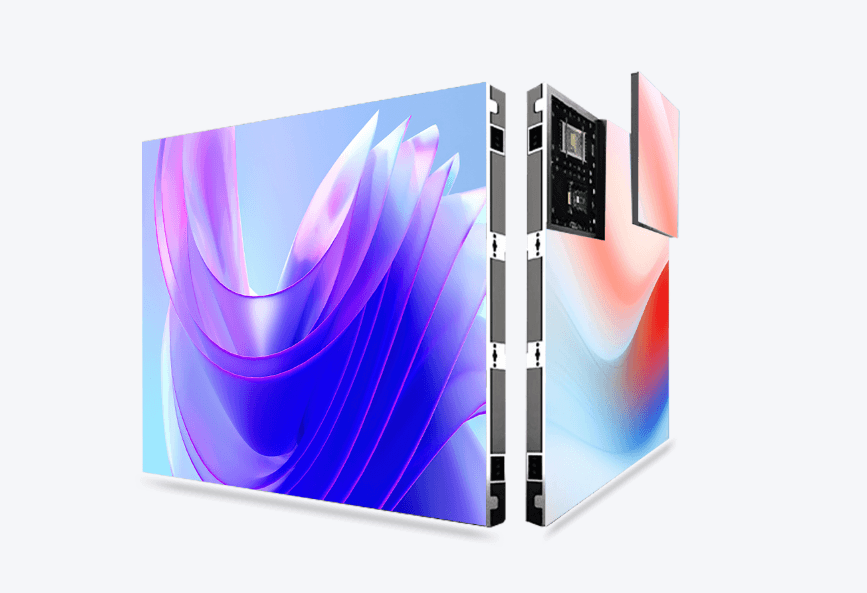
For products such as LED displays and LED small spacing, any haze, yellowing, or fogging of the coating will be directly reflected in the display effect: brightness decrease, color temperature shift, and gray screen. Because the nanoparticles are extremely small in size, they can maintain a high degree of transparency after the coating is cured, without blocking the transmission of light or changing the light emission characteristics of the lamp beads themselves. In other words, it forms an "invisible" protective film on the surface of the lamp bead - the display effect is not affected despite the protective capability.
The reason why this is important is that it allows the two needs of "protection" and "display" that may originally conflict with each other to be satisfied simultaneously for the first time. For display companies, this means that protection can be incorporated into products before they leave the factory, without having to sacrifice image quality for reliability.
4. One coating, multiple tasks: anti-scratch, anti-UV, anti-static
In addition to basic functions such as moisture-proof, waterproof, and salt spray-proof, nano-protective coating agents can also be functionally designed according to application scenarios, superimposing multiple capabilities on the same coating.
Scratch resistance: Outdoor equipment is inevitably bumped during transportation, installation, and use. The coating gives the surface a certain degree of scratch resistance, reducing protection failure caused by physical damage.
Anti-ultraviolet: Long-term sun exposure will cause many polymer materials to age, yellow, and become brittle. Coatings with anti-ultraviolet capabilities can slow down the damage of ultraviolet light to the substrate and the coating itself, and extend the service time of the product outdoors.
Anti-static: In dry environments, static electricity accumulation may breakdown sensitive electronic components. Anti-static coatings can help dissipate charges and reduce the risk of damage to components caused by electrostatic discharge.
These functions do not exist in isolation, but can be combined and configured in the same coating system. For B-end customers, this means that there is no need to do a separate process for each risk, and a set of coatings can cover all major environmental risks.
5. Two old problems that cause headaches for the engineering team: ink color consistency and caterpillar dead light
There are two "old problems" in the LED display industry. Almost every engineering technician has had a headache, and nano-coating can just help.
One is ink consistency. After LED lamp beads are used for a long time, due to the different aging degrees of each lamp bead, the screen will appear with different shades of "ink", making the entire screen look dull from a distance. The nano-coating forms a protective film on the surface of the lamp bead, which can slow down the aging rate of the lamp bead and make the attenuation of each lamp bead more consistent, thereby delaying the occurrence of ink color inconsistency and extending the service life of the display.
The other is a caterpillar dead light. In an outdoor environment, if an insect burrows into the screen and dies, the body will become wet and conduct electricity, causing a series of lamp beads to go out and dark lines that look like caterpillars to appear on the screen, which greatly affects the look and feel and increases maintenance costs. The nano-protective coating agent forms a barrier on the surface of the lamp beads and gaps to prevent insects from entering the inside of the screen and reduce the occurrence of caterpillar dead lamps from the source.
The value of these two problems is that what they solve is not "fix it if it breaks", but "make it less easy to break". For display manufacturers and engineering contractors, reducing the number of on-site maintenance is a real cost savings.
6. From LED to PCBA, the application landscape of electronic protective nano-coatings
The application range of electronic protection nano-coating agents extends far beyond LED displays.
In the field of PCBA conformal protection, nano-coating can be used as a supplement or substitute for traditional conformal coating to protect circuit boards with more stringent size and appearance requirements. For outdoor electronic hardware—outdoor lamps, surveillance cameras, sensors, charging pile control boards, etc.—the waterproof, hydrophobic, and anti-condensation capabilities of nanocoatings can significantly improve the reliability of equipment in open-air environments. For LED small-pitch products, the significance of transparent protection is even more prominent, because it is directly related to the display quality of the screen.
To sum up, the scenarios that this type of products are suitable for have one thing in common: the equipment must be exposed to moisture, high salt, dust, and condensation risks for a long time, and at the same time, there are strict requirements on the transparency and thickness of the protective layer. Any product that meets this profile is worth evaluating nanocoating options.
7. When selecting models, we recommend that customers pay attention to several points:
As a coating supplier that has been in business for more than ten years, we are often asked “how to choose”. Here are some practical suggestions:
Look at the matching between the protective performance and the product: first clarify what the core failure mode of the equipment is - whether it is condensation, salt spray or foreign matter intrusion, and then evaluate the performance of the coating in this direction.
Look at the impact of transparency and appearance: display products must conduct actual measurements of light transmission, haze, and color temperature changes to confirm that the coating does not affect light emission and color.
Look at adhesion and process compatibility: the coating must have good bonding with PCB, device packaging, and housing materials, and be able to adapt to existing spraying, dipping, or brushing production lines.
Look at the supplier’s engineering capabilities: Nanocoating is not as simple as selling a bottle of liquid. Formula adjustment, process parameters, and batch stability all require the supplier to have sufficient experience and production line support.
Choosing the right coating is just as important as choosing the right supplier. Once the coating solution is finalized and entered into the production line, subsequent batch consistency will directly affect the overall reputation of the product.
8. Write at the end
Going back to the original question: "What is the use of nanocoating?" Our answer is: it is responsible for the details that are invisible but will determine the life of the device. It does not change the appearance of the product or occupy the design space, but it can provide a continuous barrier between the components and the harsh environment.
Since its establishment, Shenzhen Zhongfluoro has been focusing on the implementation of nano coating technology in the field of electronic hardware. Its service scope covers electronic components, LED displays, LED small spacing, PCBA nano three-proof, and waterproof, hydrophobic, and anti-condensation water protection for outdoor electronic hardware. If you are worried about the reliability of the equipment, you are welcome to send the product. We are willing to do a round of sample testing first and let the data speak for itself.