Industrial robot joint drive control boards perform critical functions such as servo driving, encoder signal processing, and brake control. However, these precision PCBA modules are exposed to a harsh, complex operating environment characterized by pervasive lubricating oil mist, continuous high-frequency vibration, dust intake from cooling fans, and condensation caused by temperature fluctuations during start-stop cycles. Empirical data shows that unprotected joint drive boards exhibit failure rates of 8%–15% after 6–12 months of continuous operation, directly leading to production line downtime and soaring maintenance costs. This article provides an in-depth analysis of the failure mechanisms of industrial robot joint drive boards and presents protective solutions that have been validated under rigorous operating conditions.
Industrial robot joint drive boards perform critical functions such as servo driving, encoder signal processing, and brake control. However, these precision PCBA modules are exposed to a harsh, complex environment characterized by pervasive lubricating oil mist, continuous high-frequency vibration, dust intake from cooling fans, and condensation caused by temperature fluctuations during start-stop cycles. Empirical data shows that unprotected joint drive boards exhibit failure rates of 8%–15% after 6–12 months of continuous operation, directly leading to production line downtime and soaring maintenance costs. This article provides an in-depth analysis of the failure mechanisms of industrial robot joint drive boards and presents protective solutions validated under rigorous operating conditions.
I. The Four-Fold Complex Failure Environment of Industrial Robot Joint Drive Boards
Industrial robot joint drive boards are subjected to the combined effects of four environmental factors: lubricating medium contamination, mechanical vibration, thermal cycling/condensation, and dust ingress. Understanding these factors is a prerequisite for designing effective protection strategies.
Coupling of Lubricating Oil Mist and High-Frequency Vibration
When the joint reducer operates at high speeds, centrifugal force and high temperatures atomize the lubricant into micron-sized oil mist particles. These particles penetrate through gaps in the motor shaft seals to the surface of the drive board, forming a sticky oil film that attracts dust and causes insulation resistance to plummet to the 10⁶ Ω range. Simultaneously, wide-band vibrations (10 Hz–2 kHz, 5–15g acceleration) resulting from frequent joint acceleration and deceleration induce fatigue micro-cracks in traditional conformal coatings. Furthermore, BGA solder balls and QFN pins are subjected to alternating stresses, which—combined with oil mist corrosion—accelerate failure. Protecting joint motor control boards against oil mist has thus become a primary challenge in enhancing reliability.
Condensation and Dust Ingress
Under heavy load, the junction temperature of the drive board's power MOSFETs reaches 85–105°C; upon shutdown, the temperature rapidly drops to ambient levels, creating a temperature differential exceeding 80°C. The "cold plate effect" on the PCBA surface causes water vapor to condense into micro-droplets, which dissolve acidic oxides from oil mist and chloride (Cl⁻) and sulfate (SO₄²⁻) ions from the air, creating a highly corrosive electrolyte. Simultaneously, cooling fans continuously draw in graphite dust from casting processes and metal spatter particles from welding; once this dust absorbs moisture, it triggers surface tracking and signal crosstalk under continuous bias voltage. Consequently, protective solutions for industrial robot PCBAs must simultaneously address the three-fold requirements of oil resistance, moisture resistance, and dust resistance.
II. Analysis of PCBA Failure Mechanisms in Complex Environments
Failure analysis of 68 defective industrial robot joint drive boards reveals that core failure modes fall into three categories, providing a scientific basis for nano-coating protection strategies for robot electronics.
Electrochemical Migration and Stress Corrosion Cracking
In an environment combining oil mist and condensation (forming a composite electrolyte), copper electrodes undergo anodic dissolution under bias voltage. Cu²⁺ ions migrate to the cathode and are reduced to copper dendrites; between adjacent solder pads spaced 0.3 mm apart, these dendrites grow at rates of 0.5–1.0 μm/h, forming a bridging short circuit within just 300–600 hours. Meanwhile, high-frequency vibration induces micro-cracks within solder joints, leading to stress corrosion cracking in the presence of the electrolyte—a process that propagates 3–5 times faster than in dry environments. Unprotected drive boards exhibit a cumulative failure rate exceeding 7% for power solder joints within 12 months.
Increased Connector Contact Resistance
Connector terminals develop an insulating sulfide film due to oil mist corrosion, causing contact resistance to rise from 5–10 mΩ to 50–200 mΩ. This leads to encoder signal attenuation and distortion in motor current feedback; such faults are intermittent and insidious, making troubleshooting extremely difficult. Field test data from an automotive welding workshop in East China—tracking 48 robot joint drive boards—revealed that unprotected boards experienced 23 encoder signal anomalies due to connector contact failure over a 12-month period; these incidents required an average of 4.5 hours to repair, with downtime costs exceeding 80,000 RMB per occurrence. Following the application of S-series nano-coating protection, connector contact resistance remained stable below 8 mΩ over 24 months under identical operating conditions; no signal loss failures occurred, and contact reliability improved to 99.97%.
III. Comparative Evaluation of Mainstream Protection Solutions
Current protection methods for industrial robot drive boards include standard conformal coating (three-proof coating), Parylene vacuum coating, and immersion-based nano-coating. The following section presents a multi-dimensional comparison based on the complex environmental requirements of industrial robot joints.
| Comparison Criteria | Standard Conformal Coating | Parylene Coating | Fluere Series Nano-coating |
|---|---|---|---|
| Film thickness | 30-150μm | 5-25μm | 3-5μm |
| Oil mist environment tolerance | Oil swells, blisters and peels off after 90 days | Good, oil leakage from pinholes | Excellent, oleophobic angle >70°, non-wetting |
| High-frequency vibration adaptability | Low-temperature embrittlement; 30% cracking rate | Good; moderate adhesion | Excellent; no cracking between -40°C and 150°C |
| Condensation and thermal cycling protection | Generally susceptible to water ingress at the interface | Good, though film thickness varies significantly | Excellent; water contact angle >110° (water rolls off) |
| Impact on heat dissipation | Slight impact | Negligible | Negligible; film thickness is only 3–5 μm |
| Repairability | Locally reworkable | Difficult to rework | Can be locally removed/reworked using specialized solvents |
| Process Efficiency | Spraying + drying: 2–4 hours | Vacuum deposition: 4–6 hours/batch | Immersion: 3 seconds + Curing: 3 minutes |
| Eco-friendly VOC | High VOC emissions | Low VOC | Zero VOC, eco-friendly and non-toxic |
As shown in the table above, conventional conformal coatings suffer from critical weaknesses regarding swelling caused by oil mist and cracking due to vibration, while pinhole defects in Parylene coatings create vulnerabilities in environments with oil mist condensation. The Fluere series of nano-coatings demonstrates comprehensive advantages in terms of film thickness, oil mist resistance, vibration adaptability, and process efficiency.
IV. Core Protective Advantages of the Fluere Series Nano-Coatings
Applied via an immersion process, the Fluere series of electronic protection nano-coatings forms a continuous, 3–5 μm thick nano-scale film on the PCBA surface. Its low-surface-energy molecular structure and ability to provide total encapsulation precisely meet the complex protective requirements of joint drive boards.
Total Encapsulation and Dual-Repellent Properties
The Fluere series coatings exhibit a water contact angle exceeding 110° and an oil contact angle exceeding 70°; lubricating oil mist forms spherical droplets on the coating surface rather than spreading or wetting it. Nano-molecular segments penetrate areas inaccessible to traditional spray coatings, such as the undersides of QFN packages, the gaps between BGA solder balls, and the bases of connector pins. X-ray microscopic inspection reveals that the Fluere series coatings achieve nearly 100% coverage in the "shadow zones" beneath components, whereas spray-type conformal coatings achieve only 70%–85%. In accelerated tests simulating joint oil mist environments (80°C, 500 mg/m³ concentration, 720 hours), the amount of oil adhering to drive boards coated with the Fluere series was only 5% of that found on uncoated boards. This effectively disrupts the failure chain of "oil mist adsorbing dust → dust absorbing moisture and becoming conductive → electrochemical migration."
Wide-Temperature Vibration Resistance and Reworkability
The Fluere series coatings maintain a stable elastic modulus across a wide temperature range of -40°C to 150°C. They show no cracking after 500 thermal shock cycles (-40°C to 125°C) and retain over 95% adhesion after 100 hours of swept-sine vibration testing (10–2000 Hz, 20g). For information regarding the relationship between coating thickness and protection levels, please refer to the in-depth analysis of PCBA protection technologies for industrial electronics. When components on a drive board require replacement, the Fluere series coating can be selectively removed using a compatible solvent; following repair, full protection is restored by simply re-immersing the board for three seconds—eliminating the need for high-temperature baking and preventing component damage.
V. Efficiency and Quality Assurance of the Immersion Process
Industrial robot joint drive boards typically have monthly production volumes ranging from several thousand to tens of thousands of units; the efficiency of the protection process directly impacts production capacity planning. The immersion process used for Fluere series nano-coatings achieves an optimal balance between protective performance and production efficiency. For further process details, please consult the guide and FAQ on the immersion nano-coating process.
Three-Second Immersion, Three-Minute Curing
Operators immerse the drive board PCBA in the nano-coating solution for three seconds; after removal, the coating fully cures after sitting in an 80°C curing tunnel for three minutes. Compared to the 2–4 hour drying time required for traditional conformal coatings, process efficiency is increased dozens of times over. Taking a production line with a monthly output of 10,000 units as an example: a traditional spraying setup requires four ovens and three operators, whereas the Fluere series immersion process requires only one immersion unit, one 3-meter curing tunnel, and one operator—reducing the production line footprint by 60%.
Zero-VOC Eco-friendliness and Full-Coverage Quality
The Fluere series utilizes an eco-friendly, water-based formula with zero VOC emissions and holds RoHS, REACH, and UL certifications. Scanning Electron Microscopy (SEM) cross-sectional analysis demonstrates that the Fluere series coating maintains a thickness uniformity within ±0.5 μm on IC pin sides and bottom pad areas—far superior to the ±15 μm thickness deviation typical of spraying processes—thereby ensuring consistent protection for joint drive boards in environments prone to oil mist and condensation.
VI. Tiered Protection Strategy and Selection Recommendations
Industrial robots used in different application scenarios have significantly varying requirements for drive board protection levels. The core of an industrial automation anti-corrosion strategy lies in establishing a tiered protection system based on actual operating conditions, thereby optimizing the balance between cost and reliability. Basic Protection for Cleanroom Environments
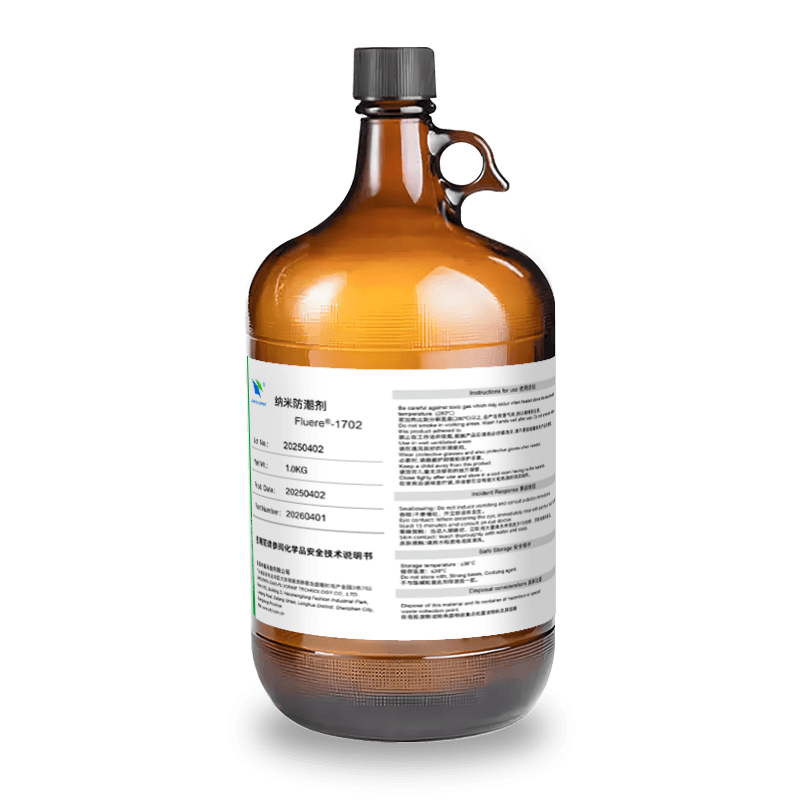
For cleanroom environments—such as those used for 3C electronics assembly and light-load material handling—where oil mist and dust concentrations are low, the Fluere 1702 nano-coating (film thickness: 2–3 μm) is recommended. This coating focuses on covering the solder pads on the underside of the drive boards and the connector areas; it offers a 40% cost reduction compared to the S8 model while providing sufficient protection for mildly contaminated environments.
A 3C electronics assembly plant applied the Fluere 1702 coating to the joint drive boards of 120 six-axis robots. After 18 months of continuous monitoring, the Mean Time Between Failures (MTBF) for the drive boards improved from 6,200 hours (pre-protection) to over 28,000 hours, and the failure rate dropped from 9.5% to 0.8%. Based on a downtime cost of 23,000 RMB per unit per day, the 120 robots saved over 8 million RMB in potential losses annually, validating the cost-effectiveness of the tiered protection strategy in low-contamination scenarios.
Enhanced Protection for Welding Workshops
Robots used for arc welding and spot welding in automotive manufacturing operate amidst moderate concentrations of oil mist. The Fluere 1705 nano-coating is recommended for these applications; it offers 1.5 times the oleophobic performance of the Fluere 1702 model and can operate continuously for over 2,000 hours without degradation in a 500 mg/m³ oil mist environment.
All-Condition Protection for Heavy Industrial Scenarios
Robots in heavy industrial settings—such as those used in casting, grinding, and heat treatment—face simultaneous exposure to high concentrations of oil mist and metal dust, as well as high-temperature condensation and intense vibration. The Fluere 1710 or Fluere 1720 all-condition coatings are recommended. In validation tests on 60 kW-class joint drive boards, the units showed zero failures after 24 months of continuous operation, with insulation resistance consistently remaining above 10¹¹ Ω.
PCBA protection for industrial robot joint drive boards is a systematic undertaking that integrates materials science, process engineering, and reliability analysis. With their combined advantages—including ultra-thin film thickness, comprehensive coverage, dual-repellent properties, and adaptability across a wide temperature range—the Fluere series of nano-coatings is becoming the preferred solution for industrial robot manufacturers facing complex operating environments characterized by lubricant mist, high-frequency vibration, and condensation caused by temperature fluctuations. Early adoption of proven nano-coating protection solutions can significantly reduce equipment failure rates and O&M costs over the entire lifecycle.
Industrial robot joint drive control boards perform critical functions such as servo driving, encoder signal processing, and brake control. However, these precision PCBA modules are exposed to a harsh, complex operating environment characterized by pervasive lubricating oil mist, continuous high-frequency vibration, dust intake from cooling fans, and condensation caused by temperature fluctuations during start-stop cycles. Empirical data shows that unprotected joint drive boards exhibit failure rates of 8%–15% after 6–12 months of continuous operation, directly leading to production line downtime and soaring maintenance costs. This article provides an in-depth analysis of the failure mechanisms of industrial robot joint drive boards and presents protective solutions that have been validated under rigorous operating conditions.
Industrial robot joint drive boards perform critical functions such as servo driving, encoder signal processing, and brake control. However, these precision PCBA modules are exposed to a harsh, complex environment characterized by pervasive lubricating oil mist, continuous high-frequency vibration, dust intake from cooling fans, and condensation caused by temperature fluctuations during start-stop cycles. Empirical data shows that unprotected joint drive boards exhibit failure rates of 8%–15% after 6–12 months of continuous operation, directly leading to production line downtime and soaring maintenance costs. This article provides an in-depth analysis of the failure mechanisms of industrial robot joint drive boards and presents protective solutions validated under rigorous operating conditions.
I. The Four-Fold Complex Failure Environment of Industrial Robot Joint Drive Boards
Industrial robot joint drive boards are subjected to the combined effects of four environmental factors: lubricating medium contamination, mechanical vibration, thermal cycling/condensation, and dust ingress. Understanding these factors is a prerequisite for designing effective protection strategies.
Coupling of Lubricating Oil Mist and High-Frequency Vibration
When the joint reducer operates at high speeds, centrifugal force and high temperatures atomize the lubricant into micron-sized oil mist particles. These particles penetrate through gaps in the motor shaft seals to the surface of the drive board, forming a sticky oil film that attracts dust and causes insulation resistance to plummet to the 10⁶ Ω range. Simultaneously, wide-band vibrations (10 Hz–2 kHz, 5–15g acceleration) resulting from frequent joint acceleration and deceleration induce fatigue micro-cracks in traditional conformal coatings. Furthermore, BGA solder balls and QFN pins are subjected to alternating stresses, which—combined with oil mist corrosion—accelerate failure. Protecting joint motor control boards against oil mist has thus become a primary challenge in enhancing reliability.
Condensation and Dust Ingress
Under heavy load, the junction temperature of the drive board's power MOSFETs reaches 85–105°C; upon shutdown, the temperature rapidly drops to ambient levels, creating a temperature differential exceeding 80°C. The "cold plate effect" on the PCBA surface causes water vapor to condense into micro-droplets, which dissolve acidic oxides from oil mist and chloride (Cl⁻) and sulfate (SO₄²⁻) ions from the air, creating a highly corrosive electrolyte. Simultaneously, cooling fans continuously draw in graphite dust from casting processes and metal spatter particles from welding; once this dust absorbs moisture, it triggers surface tracking and signal crosstalk under continuous bias voltage. Consequently, protective solutions for industrial robot PCBAs must simultaneously address the three-fold requirements of oil resistance, moisture resistance, and dust resistance.
II. Analysis of PCBA Failure Mechanisms in Complex Environments
Failure analysis of 68 defective industrial robot joint drive boards reveals that core failure modes fall into three categories, providing a scientific basis for nano-coating protection strategies for robot electronics.
Electrochemical Migration and Stress Corrosion Cracking
In an environment combining oil mist and condensation (forming a composite electrolyte), copper electrodes undergo anodic dissolution under bias voltage. Cu²⁺ ions migrate to the cathode and are reduced to copper dendrites; between adjacent solder pads spaced 0.3 mm apart, these dendrites grow at rates of 0.5–1.0 μm/h, forming a bridging short circuit within just 300–600 hours. Meanwhile, high-frequency vibration induces micro-cracks within solder joints, leading to stress corrosion cracking in the presence of the electrolyte—a process that propagates 3–5 times faster than in dry environments. Unprotected drive boards exhibit a cumulative failure rate exceeding 7% for power solder joints within 12 months.
Increased Connector Contact Resistance
Connector terminals develop an insulating sulfide film due to oil mist corrosion, causing contact resistance to rise from 5–10 mΩ to 50–200 mΩ. This leads to encoder signal attenuation and distortion in motor current feedback; such faults are intermittent and insidious, making troubleshooting extremely difficult. Field test data from an automotive welding workshop in East China—tracking 48 robot joint drive boards—revealed that unprotected boards experienced 23 encoder signal anomalies due to connector contact failure over a 12-month period; these incidents required an average of 4.5 hours to repair, with downtime costs exceeding 80,000 RMB per occurrence. Following the application of S-series nano-coating protection, connector contact resistance remained stable below 8 mΩ over 24 months under identical operating conditions; no signal loss failures occurred, and contact reliability improved to 99.97%.
III. Comparative Evaluation of Mainstream Protection Solutions
Current protection methods for industrial robot drive boards include standard conformal coating (three-proof coating), Parylene vacuum coating, and immersion-based nano-coating. The following section presents a multi-dimensional comparison based on the complex environmental requirements of industrial robot joints.
| Comparison Criteria | Standard Conformal Coating | Parylene Coating | Fluere Series Nano-coating |
|---|---|---|---|
| Film thickness | 30-150μm | 5-25μm | 3-5μm |
| Oil mist environment tolerance | Oil swells, blisters and peels off after 90 days | Good, oil leakage from pinholes | Excellent, oleophobic angle >70°, non-wetting |
| High-frequency vibration adaptability | Low-temperature embrittlement; 30% cracking rate | Good; moderate adhesion | Excellent; no cracking between -40°C and 150°C |
| Condensation and thermal cycling protection | Generally susceptible to water ingress at the interface | Good, though film thickness varies significantly | Excellent; water contact angle >110° (water rolls off) |
| Impact on heat dissipation | Slight impact | Negligible | Negligible; film thickness is only 3–5 μm |
| Repairability | Locally reworkable | Difficult to rework | Can be locally removed/reworked using specialized solvents |
| Process Efficiency | Spraying + drying: 2–4 hours | Vacuum deposition: 4–6 hours/batch | Immersion: 3 seconds + Curing: 3 minutes |
| Eco-friendly VOC | High VOC emissions | Low VOC | Zero VOC, eco-friendly and non-toxic |
As shown in the table above, conventional conformal coatings suffer from critical weaknesses regarding swelling caused by oil mist and cracking due to vibration, while pinhole defects in Parylene coatings create vulnerabilities in environments with oil mist condensation. The Fluere series of nano-coatings demonstrates comprehensive advantages in terms of film thickness, oil mist resistance, vibration adaptability, and process efficiency.
IV. Core Protective Advantages of the Fluere Series Nano-Coatings
Applied via an immersion process, the Fluere series of electronic protection nano-coatings forms a continuous, 3–5 μm thick nano-scale film on the PCBA surface. Its low-surface-energy molecular structure and ability to provide total encapsulation precisely meet the complex protective requirements of joint drive boards.
Total Encapsulation and Dual-Repellent Properties
The Fluere series coatings exhibit a water contact angle exceeding 110° and an oil contact angle exceeding 70°; lubricating oil mist forms spherical droplets on the coating surface rather than spreading or wetting it. Nano-molecular segments penetrate areas inaccessible to traditional spray coatings, such as the undersides of QFN packages, the gaps between BGA solder balls, and the bases of connector pins. X-ray microscopic inspection reveals that the Fluere series coatings achieve nearly 100% coverage in the "shadow zones" beneath components, whereas spray-type conformal coatings achieve only 70%–85%. In accelerated tests simulating joint oil mist environments (80°C, 500 mg/m³ concentration, 720 hours), the amount of oil adhering to drive boards coated with the Fluere series was only 5% of that found on uncoated boards. This effectively disrupts the failure chain of "oil mist adsorbing dust → dust absorbing moisture and becoming conductive → electrochemical migration."
Wide-Temperature Vibration Resistance and Reworkability
The Fluere series coatings maintain a stable elastic modulus across a wide temperature range of -40°C to 150°C. They show no cracking after 500 thermal shock cycles (-40°C to 125°C) and retain over 95% adhesion after 100 hours of swept-sine vibration testing (10–2000 Hz, 20g). For information regarding the relationship between coating thickness and protection levels, please refer to the in-depth analysis of PCBA protection technologies for industrial electronics. When components on a drive board require replacement, the Fluere series coating can be selectively removed using a compatible solvent; following repair, full protection is restored by simply re-immersing the board for three seconds—eliminating the need for high-temperature baking and preventing component damage.
V. Efficiency and Quality Assurance of the Immersion Process
Industrial robot joint drive boards typically have monthly production volumes ranging from several thousand to tens of thousands of units; the efficiency of the protection process directly impacts production capacity planning. The immersion process used for Fluere series nano-coatings achieves an optimal balance between protective performance and production efficiency. For further process details, please consult the guide and FAQ on the immersion nano-coating process.
Three-Second Immersion, Three-Minute Curing
Operators immerse the drive board PCBA in the nano-coating solution for three seconds; after removal, the coating fully cures after sitting in an 80°C curing tunnel for three minutes. Compared to the 2–4 hour drying time required for traditional conformal coatings, process efficiency is increased dozens of times over. Taking a production line with a monthly output of 10,000 units as an example: a traditional spraying setup requires four ovens and three operators, whereas the Fluere series immersion process requires only one immersion unit, one 3-meter curing tunnel, and one operator—reducing the production line footprint by 60%.
Zero-VOC Eco-friendliness and Full-Coverage Quality
The Fluere series utilizes an eco-friendly, water-based formula with zero VOC emissions and holds RoHS, REACH, and UL certifications. Scanning Electron Microscopy (SEM) cross-sectional analysis demonstrates that the Fluere series coating maintains a thickness uniformity within ±0.5 μm on IC pin sides and bottom pad areas—far superior to the ±15 μm thickness deviation typical of spraying processes—thereby ensuring consistent protection for joint drive boards in environments prone to oil mist and condensation.
VI. Tiered Protection Strategy and Selection Recommendations
Industrial robots used in different application scenarios have significantly varying requirements for drive board protection levels. The core of an industrial automation anti-corrosion strategy lies in establishing a tiered protection system based on actual operating conditions, thereby optimizing the balance between cost and reliability. Basic Protection for Cleanroom Environments
For cleanroom environments—such as those used for 3C electronics assembly and light-load material handling—where oil mist and dust concentrations are low, the Fluere 1702 nano-coating (film thickness: 2–3 μm) is recommended. This coating focuses on covering the solder pads on the underside of the drive boards and the connector areas; it offers a 40% cost reduction compared to the S8 model while providing sufficient protection for mildly contaminated environments.
A 3C electronics assembly plant applied the Fluere 1702 coating to the joint drive boards of 120 six-axis robots. After 18 months of continuous monitoring, the Mean Time Between Failures (MTBF) for the drive boards improved from 6,200 hours (pre-protection) to over 28,000 hours, and the failure rate dropped from 9.5% to 0.8%. Based on a downtime cost of 23,000 RMB per unit per day, the 120 robots saved over 8 million RMB in potential losses annually, validating the cost-effectiveness of the tiered protection strategy in low-contamination scenarios.
Enhanced Protection for Welding Workshops
Robots used for arc welding and spot welding in automotive manufacturing operate amidst moderate concentrations of oil mist. The Fluere 1705 nano-coating is recommended for these applications; it offers 1.5 times the oleophobic performance of the Fluere 1702 model and can operate continuously for over 2,000 hours without degradation in a 500 mg/m³ oil mist environment.
All-Condition Protection for Heavy Industrial Scenarios
Robots in heavy industrial settings—such as those used in casting, grinding, and heat treatment—face simultaneous exposure to high concentrations of oil mist and metal dust, as well as high-temperature condensation and intense vibration. The Fluere 1710 or Fluere 1720 all-condition coatings are recommended. In validation tests on 60 kW-class joint drive boards, the units showed zero failures after 24 months of continuous operation, with insulation resistance consistently remaining above 10¹¹ Ω.
PCBA protection for industrial robot joint drive boards is a systematic undertaking that integrates materials science, process engineering, and reliability analysis. With their combined advantages—including ultra-thin film thickness, comprehensive coverage, dual-repellent properties, and adaptability across a wide temperature range—the Fluere series of nano-coatings is becoming the preferred solution for industrial robot manufacturers facing complex operating environments characterized by lubricant mist, high-frequency vibration, and condensation caused by temperature fluctuations. Early adoption of proven nano-coating protection solutions can significantly reduce equipment failure rates and O&M costs over the entire lifecycle.