
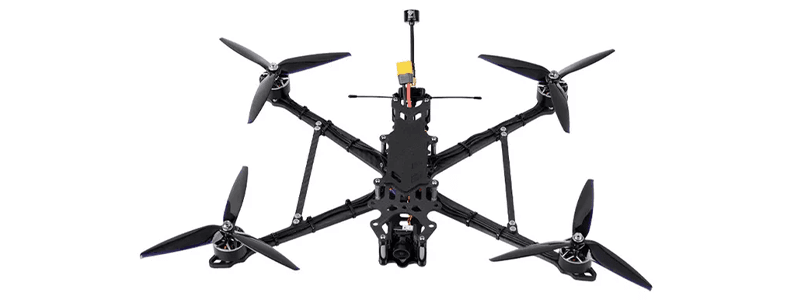
High-Reliability Protection Solution for UAV Flight Control System PCBA – Solving the Electronic Failure Problem in Combined Environments of Low-Altitude Operations with High Humidity, Dust, and Electromagnetic Interference Upgraded Environmental Regulations in Electronic Manufacturing: How Zero-VOC Nanocoatings Help Companies Achieve a Win-Win Situation of PCBA Protection and Green Compliance
Since 2025, the global electronics manufacturing industry has been experiencing a storm of environmental regulations. From the EU RoHS Directive updates to the expansion of the SVHC list under the REACH regulation, and the stringent implementation of VOC emission limits in China's "Emission Standard for Pollutants from Electronic Industry" (GB 39731-2020), the solvent volatiles of traditional conformal coatings have become a key focus of environmental audits. More and more companies are turning their attention to zero-VOC nano-coatings as a green protection solution.
This article will start from the actual background of tightening environmental regulations, combining industry data and compliance requirements, systematically analyze the environmental compliance pressures faced by electronics manufacturing companies, and interpret how zero-VOC nano-coatings can help companies achieve a win-win situation of PCBA protection and green manufacturing.
I. Tightening Environmental Regulations: Electronics Manufacturers Face Triple Compliance Pressure
Currently, environmental compliance for electronic products has shifted from an option to a mandatory entry requirement. For the critical process of PCBA protection, the environmental risks of traditional materials are particularly prominent.
1.1 RoHS Directive Continues to Elevate, Expanding the Scope of Hazardous Substance Control
The EU RoHS Directive (2011/65/EU) and its amendments have included phthalates in its control, increasing the total to 10. Many plasticizer components in traditional solvent-based conformal coatings are now facing compliance red lines. According to industry statistics, approximately 17% of EU RoHS violations in 2024 involved coating materials exceeding hazardous substance limits.
1.2 REACH SVHC List Expands, Regulatory Network Continues to Tighten
As of May 2025, the REACH SVHC candidate list has increased to 247 substances. Common solvent-based conformal coatings such as ethylene glycol ethers and benzene solvents are frequently included in the list. According to an ECHA report, coating materials account for 23% of SVHC notifications in the electrical and electronic equipment industry. Enterprises are not only facing rising compliance costs, but also potential production disruptions due to supply chain interruptions.
1.3 Stricter VOC Emission Limits Lead to Soaring Costs for Traditional Coating Processes
China's "Emission Standard for Pollutants from Electronic Industry" (GB 39731-2020) specifies an NMHC limit of 60 mg/m³ and a combined limit of 15 mg/m³ for toluene and xylene. Taking a medium-sized PCBA coating line as an example, using solvent-based conformal coatings, the VOC emissions per workstation reach 3-5 kg/day. This necessitates the installation of end-of-pipe treatment equipment such as activated carbon adsorption and catalytic combustion, with investment costs ranging from 300,000 to 800,000 yuan and annual operation and maintenance costs exceeding 100,000 yuan.
Key Data:According to statistics from the China Environmental Protection Industry Association, in 2024, the average investment in VOC treatment facilities in the electronics manufacturing industry was 527,000 yuan per line, with annual operation and maintenance costs of approximately 123,000 yuan, representing increases of 38% and 45% respectively compared to 2020. Environmental compliance costs are rapidly eroding corporate profit margins.
II. Traditional Protection Solutions VS Zero-VOC Nanocoating
| Comparison Dimensions | Traditional solvent-based conformal coatings | Solvent-free/low-VOC conformal coating | Sino-Fluorine 1700 series |
|---|---|---|---|
| VOC content | 400-700g/L | 50-150g/L | 0g/L (Zero VOC) |
| RoHS compliance | Some products contain restricted phthalates. | Most are compliant, but batch-by-batch testing is required. | Fully compliant, no restricted substances |
| REACH-SVHC risks | High (including multiple candidate substances) | (Some diluents are subject to expansion risks) | Low (nanoscale silane system, no suspicious substances) |
| VOC end-of-pipe treatment needs | Required (investment of 300,000-800,000 yuan per line) | Recommended investment (150,000-300,000 RMB/line) | No need (no exhaust emissions, saving on treatment costs) |
| Process waste gas emissions | Large amounts of organic waste gas | Small amount of organic waste gas | Zero organic waste gas |
| Film thickness | 25-75μm | 15-50μm | 3-5μm (ultra-thin) |
| Curing time (80°C) | 15-30 minutes | 10-20 minutes | 3 minutes |
| Comprehensive cost per square meter (including environmental protection investment) | High (including cost sharing of remediation) | Medium and high | Controllable (eliminating the need for governance investment and operation and maintenance) |
Faced with increasingly stringent environmental regulations, enterprises urgently need to find green solutions from the perspectives of source reduction and process substitution. The following is a comprehensive comparison from three dimensions: compliance, environmental performance, and process adaptability:
As can be seen from the above comparison, zero-VOC nano-coatings have comprehensive advantages in environmental compliance—eliminating VOC emissions at the source, eliminating end-of-pipe treatment investment, and possessing natural advantages in RoHS full compliance and REACH-SVHC risk management, helping enterprises shift from passively responding to proactively achieving green manufacturing.
2.1 Restructuring Environmental Compliance Costs: From End-of-pipe Treatment to Source Reduction
In traditional conformal coating solutions, end-of-pipe environmental treatment costs account for as much as 30%-45%. Taking a PCBA coating line with an annual capacity of 500,000 pieces as an example, the annual expenditure for VOC treatment equipment investment amortization and activated carbon replacement is approximately 150,000-200,000 yuan. Zero-VOC nano-coatings eliminate VOC generation at the source, eliminating the need for waste gas treatment equipment and saving companies millions of yuan over the production line's lifecycle. More importantly, the zero-VOC solution avoids the risk of penalties for exceeding standards—in 2024, there were 127 cases of VOC violations in the national electronics industry, with the highest single fine reaching 850,000 yuan.
2.2 Process Adaptability: Zero-VOC Nano-coatings Meet Diverse Coating Needs
The Sino-Fluorine 1700 series supports multiple coating methods such as immersion, spraying, and brushing, adaptable to PCBA products of different shapes and sizes. Nanoscale molecular particle size (5-15nm) ensures excellent penetration and uniform coverage. Zero-VOC coatings are also occupationally friendly to operators—no need to wear gas masks or special ventilation facilities, improving the workshop working environment.
III. Zero-VOC Nanocoating: A Systematic Solution from Environmental Compliance to Efficiency Improvement
Sino-Fluorine 1700 series nanocoatings utilize nanoscale silane polymerization technology, using water as the dispersion medium and containing no organic solvents, truly achieving zero VOC emissions. This characteristic not only responds to increasingly stringent environmental regulations but also delivers unexpected value in process efficiency and protective performance.
3.1 Process Revolution: 3-Second Immersion, 3-Minute Curing
Traditional conformal coatings have a single-batch processing cycle of 20-40 minutes and are subject to strict temperature and humidity requirements. Sino-Fluorine 1700 series employs an immersion process—PCBA is immersed in the nanocoating solution for only 3 seconds, and then completely cured in an 80°C oven for 3 minutes, with film thickness precisely controlled at 3-5μm. This eliminates the need for fume hoods and activated carbon adsorption towers, reducing production line footprint by over 60%.
3.2 Uncompromised Protective Performance, Passing Rigorous Reliability Testing
Zero VOC means no sacrifice in protective performance. Sino-Fluorine 1700 series utilizes precise molecular structure design to form a dense nano-protective film on the PCBA surface, exhibiting excellent hydrophobic and oleophobic properties. The product has passed third-party testing by SGS and other organizations: after damp heat resistance testing (85°C/85%RH, 1000 hours), the insulation resistance remains above 10¹²Ω; after salt spray testing (96 hours), there is no corrosion migration; and after insulation withstand voltage testing (1000V), there is no breakdown. Upgraded models such as 1710 and 1720 possess even better chemical corrosion resistance, making them suitable for harsh environments such as automotive electronics and industrial control.
3.3 Comprehensive Cost Restructuring: The Hidden Value of Environmental Protection Investment
Many companies only focus on the unit price of materials, neglecting the hidden costs of environmental compliance. Taking a production line with an annual capacity of 500,000 PCBAs as an example, the comprehensive cost of traditional solvent-based conformal coating solutions, plus VOC treatment equipment depreciation (50,000-80,000 RMB/year), activated carbon replacement (30,000-50,000 RMB/year), exhaust gas testing and certification (20,000-30,000 RMB/year), ventilation energy consumption (10,000-20,000 RMB/year), and the risk of production stoppage, is far higher than that of zero-VOC nano-coating solutions. This is precisely why more and more leading companies are skipping traditional conformal coatings and adopting zero-VOC nano-coatings directly when building new production lines.
IV. Green Compliance Action Plan for Electronics Manufacturing Enterprises
In line with current global environmental regulations, electronic manufacturing enterprises are advised to implement a three-step approach to promote green transformation in PCBA protection:
Step 1: Compliance Review and Risk Identification。Systematically review whether protective materials meet the latest RoHS and REACH requirements, and assess whether VOC emissions comply with limits. Establish a compliance risk ledger.
Step 2: Process Validation and Solution Selection。Conduct zero-VOC nano-coating process validation tests on key products. The Sino-Fluorine 1700 series R&D team can recommend the most suitable model (1701 general-purpose, 1702 enhanced, 1704 high-reliability, 1705 salt spray resistant, 1708/1710 high weather resistance, 1720 special protection) based on PCBA form factor and protection level requirements, and provide free sample testing and process guidance.
Step 3: Environmental Benefit Calculation and Investment Decision-Making。Incorporating VOC governance capital expenditures, operation and maintenance costs, and capacity efficiency improvements into the full life cycle cost model provides management with quantitative decision-making support.
4.1 Automated Integration of Nanocoating in the Context of Smart Factories
Sino-Fluorine 1700 series zero-VOC nanocoatings can be seamlessly integrated into automated production lines. Precise coating control is achieved through immersion robots, combined with real-time monitoring of process parameters by an MES system. Since no waste gas treatment equipment or explosion-proof ventilation systems are required, the production line layout is more compact, and investment and maintenance costs are significantly lower than traditional solutions. Taking a home appliance controller production line as an example, after implementing an automated production line with zero-VOC nanocoatings, the coating cycle time per board was reduced from 45 seconds to 12 seconds, and the overall efficiency increased by 270%.
4.2 Strategic Value of Zero-VOC Nanocoatings under the Global ESG Trend
Against the backdrop of increasingly stringent global ESG information disclosure requirements, corporate environmental compliance is becoming a core indicator for customer audits and investment assessments. Adopting zero-VOC nanocoatings not only directly reduces organic waste gas emissions but also indirectly reduces carbon emissions by eliminating the energy consumption of VOC treatment equipment. Many international electronics brands have included whether suppliers adopt zero-VOC coating technology in their green supply chain review systems, giving user companies an advantage in customer access and order competition. Industry Trend Insights: According to the MarketsandMarkets 2025 report, the global market size for environmentally friendly electronic protective coatings is projected to grow from US$1.26 billion in 2025 to US$2.28 billion in 2030, representing a CAGR of 12.6%. Zero-VOC nano-coatings are the fastest-growing segment, with the Asia-Pacific region becoming the largest growth engine due to its dense manufacturing sector and increasingly stringent regulations.
V. Conclusion: Green Compliance Starts with Coating Processes
Tighter environmental regulations are not a burden for manufacturing companies, but rather a catalyst for industrial upgrading. As the RoHS directive continues to expand its control boundaries, the REACH regulation's SVHC list continues to grow, and VOC emission limits become increasingly stringent, electronics manufacturers can only gain a competitive edge in the fierce global market by proactively embracing green processes. Sino-Fluorine 1700 series zero-VOC nano-coatings, with the technological accumulation of a pioneer in immersion coatings, provide companies with a win-win path from environmental compliance to efficiency improvement, from cost optimization to brand enhancement.
Choosing zero-VOC nano-coatings is not just choosing an environmentally friendly electronic protective agent, but also choosing a green manufacturing approach for the future.
High-Reliability Protection Solution for UAV Flight Control System PCBA – Solving the Electronic Failure Problem in Combined Environments of Low-Altitude Operations with High Humidity, Dust, and Electromagnetic Interference Upgraded Environmental Regulations in Electronic Manufacturing: How Zero-VOC Nanocoatings Help Companies Achieve a Win-Win Situation of PCBA Protection and Green Compliance
Since 2025, the global electronics manufacturing industry has been experiencing a storm of environmental regulations. From the EU RoHS Directive updates to the expansion of the SVHC list under the REACH regulation, and the stringent implementation of VOC emission limits in China's "Emission Standard for Pollutants from Electronic Industry" (GB 39731-2020), the solvent volatiles of traditional conformal coatings have become a key focus of environmental audits. More and more companies are turning their attention to zero-VOC nano-coatings as a green protection solution.
This article will start from the actual background of tightening environmental regulations, combining industry data and compliance requirements, systematically analyze the environmental compliance pressures faced by electronics manufacturing companies, and interpret how zero-VOC nano-coatings can help companies achieve a win-win situation of PCBA protection and green manufacturing.
I. Tightening Environmental Regulations: Electronics Manufacturers Face Triple Compliance Pressure
Currently, environmental compliance for electronic products has shifted from an option to a mandatory entry requirement. For the critical process of PCBA protection, the environmental risks of traditional materials are particularly prominent.
1.1 RoHS Directive Continues to Elevate, Expanding the Scope of Hazardous Substance Control
The EU RoHS Directive (2011/65/EU) and its amendments have included phthalates in its control, increasing the total to 10. Many plasticizer components in traditional solvent-based conformal coatings are now facing compliance red lines. According to industry statistics, approximately 17% of EU RoHS violations in 2024 involved coating materials exceeding hazardous substance limits.
1.2 REACH SVHC List Expands, Regulatory Network Continues to Tighten
As of May 2025, the REACH SVHC candidate list has increased to 247 substances. Common solvent-based conformal coatings such as ethylene glycol ethers and benzene solvents are frequently included in the list. According to an ECHA report, coating materials account for 23% of SVHC notifications in the electrical and electronic equipment industry. Enterprises are not only facing rising compliance costs, but also potential production disruptions due to supply chain interruptions.
1.3 Stricter VOC Emission Limits Lead to Soaring Costs for Traditional Coating Processes
China's "Emission Standard for Pollutants from Electronic Industry" (GB 39731-2020) specifies an NMHC limit of 60 mg/m³ and a combined limit of 15 mg/m³ for toluene and xylene. Taking a medium-sized PCBA coating line as an example, using solvent-based conformal coatings, the VOC emissions per workstation reach 3-5 kg/day. This necessitates the installation of end-of-pipe treatment equipment such as activated carbon adsorption and catalytic combustion, with investment costs ranging from 300,000 to 800,000 yuan and annual operation and maintenance costs exceeding 100,000 yuan.
Key Data:According to statistics from the China Environmental Protection Industry Association, in 2024, the average investment in VOC treatment facilities in the electronics manufacturing industry was 527,000 yuan per line, with annual operation and maintenance costs of approximately 123,000 yuan, representing increases of 38% and 45% respectively compared to 2020. Environmental compliance costs are rapidly eroding corporate profit margins.
II. Traditional Protection Solutions VS Zero-VOC Nanocoating
| Comparison Dimensions | Traditional solvent-based conformal coatings | Solvent-free/low-VOC conformal coating | Sino-Fluorine 1700 series |
|---|---|---|---|
| VOC content | 400-700g/L | 50-150g/L | 0g/L (Zero VOC) |
| RoHS compliance | Some products contain restricted phthalates. | Most are compliant, but batch-by-batch testing is required. | Fully compliant, no restricted substances |
| REACH-SVHC risks | High (including multiple candidate substances) | (Some diluents are subject to expansion risks) | Low (nanoscale silane system, no suspicious substances) |
| VOC end-of-pipe treatment needs | Required (investment of 300,000-800,000 yuan per line) | Recommended investment (150,000-300,000 RMB/line) | No need (no exhaust emissions, saving on treatment costs) |
| Process waste gas emissions | Large amounts of organic waste gas | Small amount of organic waste gas | Zero organic waste gas |
| Film thickness | 25-75μm | 15-50μm | 3-5μm (ultra-thin) |
| Curing time (80°C) | 15-30 minutes | 10-20 minutes | 3 minutes |
| Comprehensive cost per square meter (including environmental protection investment) | High (including cost sharing of remediation) | Medium and high | Controllable (eliminating the need for governance investment and operation and maintenance) |
Faced with increasingly stringent environmental regulations, enterprises urgently need to find green solutions from the perspectives of source reduction and process substitution. The following is a comprehensive comparison from three dimensions: compliance, environmental performance, and process adaptability:
As can be seen from the above comparison, zero-VOC nano-coatings have comprehensive advantages in environmental compliance—eliminating VOC emissions at the source, eliminating end-of-pipe treatment investment, and possessing natural advantages in RoHS full compliance and REACH-SVHC risk management, helping enterprises shift from passively responding to proactively achieving green manufacturing.
2.1 Restructuring Environmental Compliance Costs: From End-of-pipe Treatment to Source Reduction
In traditional conformal coating solutions, end-of-pipe environmental treatment costs account for as much as 30%-45%. Taking a PCBA coating line with an annual capacity of 500,000 pieces as an example, the annual expenditure for VOC treatment equipment investment amortization and activated carbon replacement is approximately 150,000-200,000 yuan. Zero-VOC nano-coatings eliminate VOC generation at the source, eliminating the need for waste gas treatment equipment and saving companies millions of yuan over the production line's lifecycle. More importantly, the zero-VOC solution avoids the risk of penalties for exceeding standards—in 2024, there were 127 cases of VOC violations in the national electronics industry, with the highest single fine reaching 850,000 yuan.
2.2 Process Adaptability: Zero-VOC Nano-coatings Meet Diverse Coating Needs
The Sino-Fluorine 1700 series supports multiple coating methods such as immersion, spraying, and brushing, adaptable to PCBA products of different shapes and sizes. Nanoscale molecular particle size (5-15nm) ensures excellent penetration and uniform coverage. Zero-VOC coatings are also occupationally friendly to operators—no need to wear gas masks or special ventilation facilities, improving the workshop working environment.
III. Zero-VOC Nanocoating: A Systematic Solution from Environmental Compliance to Efficiency Improvement
Sino-Fluorine 1700 series nanocoatings utilize nanoscale silane polymerization technology, using water as the dispersion medium and containing no organic solvents, truly achieving zero VOC emissions. This characteristic not only responds to increasingly stringent environmental regulations but also delivers unexpected value in process efficiency and protective performance.
3.1 Process Revolution: 3-Second Immersion, 3-Minute Curing
Traditional conformal coatings have a single-batch processing cycle of 20-40 minutes and are subject to strict temperature and humidity requirements. Sino-Fluorine 1700 series employs an immersion process—PCBA is immersed in the nanocoating solution for only 3 seconds, and then completely cured in an 80°C oven for 3 minutes, with film thickness precisely controlled at 3-5μm. This eliminates the need for fume hoods and activated carbon adsorption towers, reducing production line footprint by over 60%.
3.2 Uncompromised Protective Performance, Passing Rigorous Reliability Testing
Zero VOC means no sacrifice in protective performance. Sino-Fluorine 1700 series utilizes precise molecular structure design to form a dense nano-protective film on the PCBA surface, exhibiting excellent hydrophobic and oleophobic properties. The product has passed third-party testing by SGS and other organizations: after damp heat resistance testing (85°C/85%RH, 1000 hours), the insulation resistance remains above 10¹²Ω; after salt spray testing (96 hours), there is no corrosion migration; and after insulation withstand voltage testing (1000V), there is no breakdown. Upgraded models such as 1710 and 1720 possess even better chemical corrosion resistance, making them suitable for harsh environments such as automotive electronics and industrial control.
3.3 Comprehensive Cost Restructuring: The Hidden Value of Environmental Protection Investment
Many companies only focus on the unit price of materials, neglecting the hidden costs of environmental compliance. Taking a production line with an annual capacity of 500,000 PCBAs as an example, the comprehensive cost of traditional solvent-based conformal coating solutions, plus VOC treatment equipment depreciation (50,000-80,000 RMB/year), activated carbon replacement (30,000-50,000 RMB/year), exhaust gas testing and certification (20,000-30,000 RMB/year), ventilation energy consumption (10,000-20,000 RMB/year), and the risk of production stoppage, is far higher than that of zero-VOC nano-coating solutions. This is precisely why more and more leading companies are skipping traditional conformal coatings and adopting zero-VOC nano-coatings directly when building new production lines.
IV. Green Compliance Action Plan for Electronics Manufacturing Enterprises
In line with current global environmental regulations, electronic manufacturing enterprises are advised to implement a three-step approach to promote green transformation in PCBA protection:
Step 1: Compliance Review and Risk Identification。Systematically review whether protective materials meet the latest RoHS and REACH requirements, and assess whether VOC emissions comply with limits. Establish a compliance risk ledger.
Step 2: Process Validation and Solution Selection。Conduct zero-VOC nano-coating process validation tests on key products. The Sino-Fluorine 1700 series R&D team can recommend the most suitable model (1701 general-purpose, 1702 enhanced, 1704 high-reliability, 1705 salt spray resistant, 1708/1710 high weather resistance, 1720 special protection) based on PCBA form factor and protection level requirements, and provide free sample testing and process guidance.
Step 3: Environmental Benefit Calculation and Investment Decision-Making。Incorporating VOC governance capital expenditures, operation and maintenance costs, and capacity efficiency improvements into the full life cycle cost model provides management with quantitative decision-making support.
4.1 Automated Integration of Nanocoating in the Context of Smart Factories
Sino-Fluorine 1700 series zero-VOC nanocoatings can be seamlessly integrated into automated production lines. Precise coating control is achieved through immersion robots, combined with real-time monitoring of process parameters by an MES system. Since no waste gas treatment equipment or explosion-proof ventilation systems are required, the production line layout is more compact, and investment and maintenance costs are significantly lower than traditional solutions. Taking a home appliance controller production line as an example, after implementing an automated production line with zero-VOC nanocoatings, the coating cycle time per board was reduced from 45 seconds to 12 seconds, and the overall efficiency increased by 270%.
4.2 Strategic Value of Zero-VOC Nanocoatings under the Global ESG Trend
Against the backdrop of increasingly stringent global ESG information disclosure requirements, corporate environmental compliance is becoming a core indicator for customer audits and investment assessments. Adopting zero-VOC nanocoatings not only directly reduces organic waste gas emissions but also indirectly reduces carbon emissions by eliminating the energy consumption of VOC treatment equipment. Many international electronics brands have included whether suppliers adopt zero-VOC coating technology in their green supply chain review systems, giving user companies an advantage in customer access and order competition. Industry Trend Insights: According to the MarketsandMarkets 2025 report, the global market size for environmentally friendly electronic protective coatings is projected to grow from US$1.26 billion in 2025 to US$2.28 billion in 2030, representing a CAGR of 12.6%. Zero-VOC nano-coatings are the fastest-growing segment, with the Asia-Pacific region becoming the largest growth engine due to its dense manufacturing sector and increasingly stringent regulations.
V. Conclusion: Green Compliance Starts with Coating Processes
Tighter environmental regulations are not a burden for manufacturing companies, but rather a catalyst for industrial upgrading. As the RoHS directive continues to expand its control boundaries, the REACH regulation's SVHC list continues to grow, and VOC emission limits become increasingly stringent, electronics manufacturers can only gain a competitive edge in the fierce global market by proactively embracing green processes. Sino-Fluorine 1700 series zero-VOC nano-coatings, with the technological accumulation of a pioneer in immersion coatings, provide companies with a win-win path from environmental compliance to efficiency improvement, from cost optimization to brand enhancement.
Choosing zero-VOC nano-coatings is not just choosing an environmentally friendly electronic protective agent, but also choosing a green manufacturing approach for the future.