
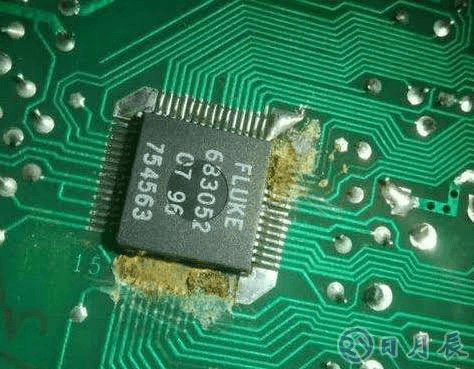
Seven sets of data reveal that the real culprit behind PCBA corrosion failure is not humidity, but hidden defects in the protective layer.
Flip through any electronic device after-sales service report, and you'll likely see the same frequently used word: corrosion. Statistics released by the International Electronics Industry Connectivity Council (IPC) in 2026 show that among electronic products with protective coatings, approximately 63% of after-sales failures stem from the gradual degradation of protective performance during service—rather than one-time defects during the application phase. Even more alarming is that over 70% of failures occur more than six months after the product leaves the factory, despite passing all factory tests. The protective capabilities have already crumbled imperceptibly.
What does this mean? It means that the expensive protection you've implemented may only "look good" at the time of manufacture. When the equipment actually enters high-temperature, high-humidity industrial environments, salt-sprayed coastal warehouses, or outdoor server racks with drastic temperature differences between day and night, that supposedly impenetrable defense is silently collapsing.
The problem isn't "whether protection was applied," but rather what kind of protection was applied and how it was applied. The following seven sets of data will reveal the easily overlooked fatal flaws in traditional conformal coating solutions—and why more and more electronics manufacturers are turning to a completely different technological approach.
Traditional conformal coating spraying processes involve time-consuming and labor-intensive manual masking of connectors, and precise control of coating thickness is difficult.
Traditional conformal coating spraying process: manual masking, difficulty in controlling thickness, and lengthy curing time.
Data 1: 80% Thickness Attenuation at the Edges—The Thinnest Place Where the Coating Should Be Thicker is Precisely the One
Data 2: Curing in 4 Hours or 3 Minutes? Production Line Cycle Determines
Data Point 3: VOC Emissions – A Long-Overlooked Hidden Cost
Traditional solvent-based conformal coatings typically contain 400-700 g/L of volatile organic compounds (VOCs). Assuming a moderately complex PCBA consumes approximately 15 mL of coating, the total VOCs released into the workshop air for every 10,000 boards produced can reach 60-105 kg. This not only necessitates exhaust systems and waste gas treatment equipment but also implies ongoing health risks to employees and increasingly stringent environmental compliance pressures.
Shenzhen Sino-Fluorine Technology Co., Ltd.'s nano-coating agent has zero VOC content. It's not just about "low VOC" or "compliance with environmental standards," but about completely eliminating organic solvents at the formulation level.
This means:
Data 4: Corrosion Migration Under the Coating – The Most Fatal Failures are the Invisible Ones
Data Point 5: Salt Spray Testing – Is 500 Hours Enough?
Data 6: Comparison of Rework Costs – 200 RMB vs. 30 RMB: The Difference is More Than Just the Unit Price
Data 7: A Complete Comparison Table – 7 Dimensions, Clear at a Glance
| Comparison Dimensions | Traditional solvent-based conformal coatings | Sino-Fluorine Nanocoating |
|---|---|---|
| Coating Thickness | 30–130μm, pin edges only 2–10μm (attenuation 80%–90%) | 3-5μm, uniform coating across the entire surface, with no weak areas |
| Curing Time | Surface drying 15–30 minutes, complete curing 24–72 hours | Completely cures at room temperature in 3 minutes |
| Application Method | Spraying/brushing/dipping coating, pre-masking of connectors and plugs is required. | Full immersion process, 3-second immersion and removal, no masking required |
| VOC Content | 400–700g/L | 0g/L (zero VOC formula) |
| Edge and Bottom Coverage | Poor – insufficient coverage of pin edges and device bottoms. | Superior—Nano-level wetting and penetration, fully coating the bottom of the device and the gap between the leads |
| Ease of Repair | Chemical desmearing required, cost per piece 180–250 RMB, cycle 1–2 days. | Direct soldering with a soldering iron, coating decomposes on its own, single repair cost ≤30 RMB, immediate rework |
| Environmental Compliance | Requires exhaust gas treatment equipment, explosion-proof workshop, and emission permit. | No additional environmental protection facilities required, RoHS/REACH compliant |
| Production Line Cycle Time | Due to curing delays, daily production capacity is 80–150 pieces/line (depending on complexity). | 3-minute continuous turnover, daily capacity 300-500 units/line |
Conclusion: The real killer of the protective layer is the unseen "uniformity"
Reviewing the seven sets of data above, a clear picture emerges: the culprit behind PCBA corrosion failure is not humidity itself—humidity is unavoidable in any real-world environment—but rather the coating that should protect the circuit board, which has systematic coverage blind spots at the microscopic scale. 80%–90% thickness reduction at pin edges, ionic contaminants sealed under the coating, production bottlenecks caused by curing cycles, compliance risks from VOC emissions… these problems cannot be explained by "too high humidity," but rather by fundamental logical flaws in the protective solution itself.
Immersion nano-coating technology offers a fundamental shift in thinking, from "coverage" to "encapsulation," from "masking" to "replacement," and from "hour-level curing" to "minute-level flow." 3-second immersion, 3-minute curing, 3-5μm uniform film thickness, zero VOC—every parameter of the PiQnano™ S series is an engineered realization of this shift.
If your production line is still undergoing repeated rework due to post-sales corrosion caused by uneven coating thickness, if your environmental compliance costs are rising year by year, or if your daily production capacity is stuck due to curing waiting time—perhaps it's time to re-examine that "beautiful-looking" protective layer.
Seven sets of data reveal that the real culprit behind PCBA corrosion failure is not humidity, but hidden defects in the protective layer.
Flip through any electronic device after-sales service report, and you'll likely see the same frequently used word: corrosion. Statistics released by the International Electronics Industry Connectivity Council (IPC) in 2026 show that among electronic products with protective coatings, approximately 63% of after-sales failures stem from the gradual degradation of protective performance during service—rather than one-time defects during the application phase. Even more alarming is that over 70% of failures occur more than six months after the product leaves the factory, despite passing all factory tests. The protective capabilities have already crumbled imperceptibly.
What does this mean? It means that the expensive protection you've implemented may only "look good" at the time of manufacture. When the equipment actually enters high-temperature, high-humidity industrial environments, salt-sprayed coastal warehouses, or outdoor server racks with drastic temperature differences between day and night, that supposedly impenetrable defense is silently collapsing.
The problem isn't "whether protection was applied," but rather what kind of protection was applied and how it was applied. The following seven sets of data will reveal the easily overlooked fatal flaws in traditional conformal coating solutions—and why more and more electronics manufacturers are turning to a completely different technological approach.
Traditional conformal coating spraying processes involve time-consuming and labor-intensive manual masking of connectors, and precise control of coating thickness is difficult.
Traditional conformal coating spraying process: manual masking, difficulty in controlling thickness, and lengthy curing time.
Data 1: 80% Thickness Attenuation at the Edges—The Thinnest Place Where the Coating Should Be Thicker is Precisely the One
Data 2: Curing in 4 Hours or 3 Minutes? Production Line Cycle Determines
Data Point 3: VOC Emissions – A Long-Overlooked Hidden Cost
Traditional solvent-based conformal coatings typically contain 400-700 g/L of volatile organic compounds (VOCs). Assuming a moderately complex PCBA consumes approximately 15 mL of coating, the total VOCs released into the workshop air for every 10,000 boards produced can reach 60-105 kg. This not only necessitates exhaust systems and waste gas treatment equipment but also implies ongoing health risks to employees and increasingly stringent environmental compliance pressures.
Shenzhen Sino-Fluorine Technology Co., Ltd.'s nano-coating agent has zero VOC content. It's not just about "low VOC" or "compliance with environmental standards," but about completely eliminating organic solvents at the formulation level.
This means:
Data 4: Corrosion Migration Under the Coating – The Most Fatal Failures are the Invisible Ones
Data Point 5: Salt Spray Testing – Is 500 Hours Enough?
Data 6: Comparison of Rework Costs – 200 RMB vs. 30 RMB: The Difference is More Than Just the Unit Price
Data 7: A Complete Comparison Table – 7 Dimensions, Clear at a Glance
| Comparison Dimensions | Traditional solvent-based conformal coatings | Sino-Fluorine Nanocoating |
|---|---|---|
| Coating Thickness | 30–130μm, pin edges only 2–10μm (attenuation 80%–90%) | 3-5μm, uniform coating across the entire surface, with no weak areas |
| Curing Time | Surface drying 15–30 minutes, complete curing 24–72 hours | Completely cures at room temperature in 3 minutes |
| Application Method | Spraying/brushing/dipping coating, pre-masking of connectors and plugs is required. | Full immersion process, 3-second immersion and removal, no masking required |
| VOC Content | 400–700g/L | 0g/L (zero VOC formula) |
| Edge and Bottom Coverage | Poor – insufficient coverage of pin edges and device bottoms. | Superior—Nano-level wetting and penetration, fully coating the bottom of the device and the gap between the leads |
| Ease of Repair | Chemical desmearing required, cost per piece 180–250 RMB, cycle 1–2 days. | Direct soldering with a soldering iron, coating decomposes on its own, single repair cost ≤30 RMB, immediate rework |
| Environmental Compliance | Requires exhaust gas treatment equipment, explosion-proof workshop, and emission permit. | No additional environmental protection facilities required, RoHS/REACH compliant |
| Production Line Cycle Time | Due to curing delays, daily production capacity is 80–150 pieces/line (depending on complexity). | 3-minute continuous turnover, daily capacity 300-500 units/line |
Conclusion: The real killer of the protective layer is the unseen "uniformity"
Reviewing the seven sets of data above, a clear picture emerges: the culprit behind PCBA corrosion failure is not humidity itself—humidity is unavoidable in any real-world environment—but rather the coating that should protect the circuit board, which has systematic coverage blind spots at the microscopic scale. 80%–90% thickness reduction at pin edges, ionic contaminants sealed under the coating, production bottlenecks caused by curing cycles, compliance risks from VOC emissions… these problems cannot be explained by "too high humidity," but rather by fundamental logical flaws in the protective solution itself.
Immersion nano-coating technology offers a fundamental shift in thinking, from "coverage" to "encapsulation," from "masking" to "replacement," and from "hour-level curing" to "minute-level flow." 3-second immersion, 3-minute curing, 3-5μm uniform film thickness, zero VOC—every parameter of the PiQnano™ S series is an engineered realization of this shift.
If your production line is still undergoing repeated rework due to post-sales corrosion caused by uneven coating thickness, if your environmental compliance costs are rising year by year, or if your daily production capacity is stuck due to curing waiting time—perhaps it's time to re-examine that "beautiful-looking" protective layer.