
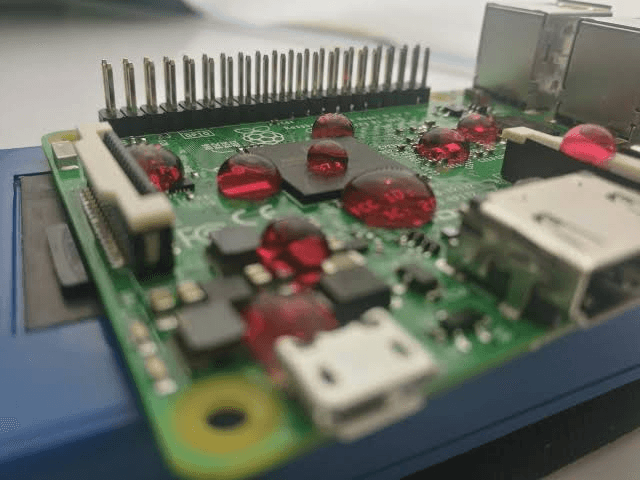
Chemical Industry DCS Field I/O Module PCBA Protection: Nano-coating Solution for Corrosive Gases and High Humidity Condensation Environments
Protection of PCBAs for Field I/O Modules in Chemical DCS: Nanocoating Solutions for Corrosive Gases and High Humidity Condensation Environments
The DCS control system in a fine chemical plant is the nerve center of modern process industries. Field I/O modules and remote I/O stations deployed near core equipment are subjected to corrosion threats far exceeding those of ordinary industrial environments. Continuous penetration of corrosive gases, coupled with condensation caused by temperature differences in the reactor jacket, makes the PCBAs of the field electronic modules the most vulnerable link in the control system. This article analyzes the failure mechanism of field I/O module PCBAs under typical fine chemical operating conditions and proposes a systematic protection solution based on nanocoatings, in accordance with the IEC 61511 standard.
I. Corrosion Challenges Faced by Field I/O Modules in Fine Chemical DCS
The DCS architecture in fine chemical plants is characterized by dense reactors, diverse types of corrosive media with large concentration fluctuations, and field I/O modules installed as remote I/O stations near reactors less than 5 meters from the corrosion source, directly exposing electronic equipment to harsh environments.
1.1 Typical Corrosive Media in Chlor-alkali and Pesticide Intermediate Workshops
The primary threat to the chlor-alkali industry comes from the release of wet chlorine and hydrogen chloride from the electrolysis process. Wet chlorine is a highly oxidizing agent, causing copper conductors to form copper chloride, leading to increased circuit impedance or even circuit breakers. H₂S released during pesticide intermediate synthesis reacts with PCBA surface metals at a rate far exceeding that of general atmospheric corrosion; even ppb-level concentrations can cause irreversible damage within months.
1.2 The Combined Effect of Acidic Gases in Pharmaceutical Intermediate Workshops
Pharmaceutical intermediate production uses acyl chloride reagents such as thionyl chloride and oxaloyl chloride, along with media such as concentrated sulfuric acid, resulting in the simultaneous presence of HCl, SO₂, and organic acid vapors in the workshop atmosphere. This type of combined corrosion exhibits a synergistic effect: organic acid vapors form an adsorption film on the circuit board surface, while inorganic acidic gases dissolve to form strongly acidic microdroplets, accelerating solder joint and via corrosion.
1.3 Sealed Cabinets Are Not Absolute Barriers
Corrosive gas molecules of H₂S, with a diameter of only about 0.36 nm, can easily penetrate the tiny gaps in cabinet seals and cable glands. IEC 60721-3-3 classifies chemical environments as 3C4 (highly corrosive), clearly indicating that conventional sealed cabinets cannot adequately protect electronic equipment; the microenvironment inside the cabinet becomes similar to the external environment after 6-12 months of operation.
II. Failure Mechanism Analysis of PCBAs Due to Corrosive Gases
PCBAs integrating field I/O modules contain critical functions such as analog-to-digital conversion chips, signal conditioning circuits, and communication interfaces. Their failure can lead to misreading of process parameters or loss of control commands, and in severe cases, trigger interlocking shutdowns.
2.1 Microporous Corrosion and Ion Migration of the Silver/Copper Interface by Hydrogen Sulfide
H₂S corrosion follows a four-step mechanism: adsorption-dissolution-reaction-migration. H₂S molecules adsorb onto the metal surface, dissolve in a water film, and ionize to release HS⁻ and S²⁻. These react with silver to form Ag₂S whiskers, creating low-impedance pathways between adjacent pads, leading to a 4-20mA analog signal drift. According to IPC-CC-830B test data, a complete coating of 3μm or more can reduce H₂S permeability to less than 1/500 of the unprotected state.
2.2 Acid Etching-Coupling Synergistic Effect of Hydrogen Chloride and Sulfur Dioxide
HCl and SO₂ dissolve in the water film on the PCBA surface, forming a strong acid environment that lowers the pH to 2-3. The strong acid dissolves the oxide protective layer of the solder joints, exposing the active metal substrate and triggering a "small anode-large cathode" galvanic corrosion: the solder joints dissolve preferentially, and large-area copper foil accelerates this process, with solder joint strength decreasing by over 60% within hundreds of hours.
2.3 Oxidative Degradation of PCB Substrate and Solder Resist by Chlorine Gas
Wet chlorine gas not only threatens metal conductors but also attacks the PCB epoxy resin substrate and solder resist ink. Chlorine molecules embedding into epoxy resin molecular chains cause chain breakage, manifesting as substrate delamination, solder mask peeling, and a continuous decrease in surface insulation resistance (SIR). When SIR drops below 10⁹Ω to below 10⁶Ω, inter-channel crosstalk can cause low-level thermocouples and RTD signals to fail.
III. Reactor Temperature Difference Condensation and Electrochemical Corrosion Creep of Terminals
A key difference between fine chemical workshops and ordinary chemical environments is the frequent heating and cooling operations of reactors. During the jacket heating of pharmaceutical intermediate synthesis reactors, the temperature of the heat transfer oil can reach 160~180℃, while the ambient temperature can drop to 5~10℃ in winter after discharge. This extreme temperature gradient creates ideal conditions for condensation, a risk that is easily underestimated in the protection of on-site I/O modules.
3.1 Formation Mechanism of Temperature Difference Condensation
During high-temperature operation of the reactor, the air in the nearby I/O cabinet is heated to 40~50℃ by radiant heat, increasing the absolute humidity. After entering the material unloading and cooling stage, the cabinet wall temperature drops sharply to ambient temperature within 30 minutes. The humid, hot air inside the cabinet reaches its dew point on the PCBA surface, condensing into a micro-liquid film. Periodic condensation (1-2 times per batch, hundreds of times per year) is more destructive than continuous high humidity; the condensation-evaporation cycle continuously concentrates and enriches corrosive ions.
3.2 Electrochemical Corrosion Creep of Terminal Blocks
Terminal blocks are high-risk sites for corrosion failure. Copper alloy conductors and plating, as well as connections between different metals, form electrical couples, which, under the influence of condensation, constitute micro-cells. Corrosion starts at the terminal-wire interface and "creeps" along the conductor surface towards the PCBA's internal pads. In a typical chlor-alkali workshop environment, the corrosion creep rate reaches 0.5-1.0 mm/month; an 8mm pitch terminal block only takes 8-16 months from initial corrosion to adjacent short circuits.
3.3 Hidden Corrosion in High-Density SMT Packaging
Modern I/O modules widely use BGA, QFN, and other packages, with a gap of only 0.05~0.15mm between the bottom of the package and the PCB. Condensation films seep into this micro-gap under capillary action, which traditional conformal coatings cannot cover due to surface tension limitations. Corrosion develops latently at the bottom of the package and is only detected when the chip pins break, at which point the module is irreparable.
IV. IEC 61511 Functional Safety Standard Requirements for Field I/O Protection
Fine chemical DCS systems often integrate Safety Instrumented Functions (SIFs) and must comply with the IEC 61511 standard. This standard sets clear requirements for the systemic capability and hardware failure margin of field devices. The corrosion protection level of field I/O modules directly affects the integrity of the SIF loop.
4.1 SIL Level Requirements for I/O Module Availability
Chapter 11 of IEC 61511-1 requires that SIF designs meet the PFDavg limit corresponding to the target SIL level. In SIL2 level reactor over-temperature and over-pressure interlocking circuits, the PFDavg (Power Delivery Days) of field I/O modules must be controlled within 15% of the total circuit budget. Corrosion-induced signal drift is difficult to detect in advance and will significantly increase the actual PFDavg of the circuit.
4.2 Systemic Failure Protection and Environmental Adaptability Verification
IEC 61511-2 Clause 7.4.2 states that the selection and installation of field equipment must consider "reasonably foreseeable extreme environmental conditions," including corrosive atmospheres, temperature fluctuations, and condensation. A systematic assessment of the environmental adaptability of I/O module PCBAs is required during the design phase. The core standards for verifying the effectiveness of protection are IEC 60068-2-60 (Flowing Mixed Gas Corrosion Test) and IEC 60068-2-30 (Damp Heat Cycling Test).
4.3 Design Verification and Documentation Traceability of Protection Schemes
IEC 61511-1 Chapter 5 requires that all protection measures be documented in auditable technical documentation, including protective coating material specifications, process parameter records, and accelerated aging life assessments. Sino-Fluorine Fluere Series Nanocoatings provides FTIR fingerprint spectra and coating thickness XRF testing data for each batch, meeting the traceability requirements of functional safety audits.
V. Sino-Fluorine Fluere Series Nanocoatings PCBA Nanocoating Protection Solution
Addressing the complex corrosion threats posed by DCS I/O modules in fine chemical industries, Sino-Fluorine Fluere Series Nanocoatings utilizes a "3-second immersion coating and 3-minute room temperature curing" process to form a dense 3-5μm nano-protective layer on the PCBA surface, achieving comprehensive protection against hydrogen sulfide, acid gases, and water and moisture.
5.1 Immersion Process Achieves Full Coverage of BGA Bottom
Unlike traditional spray-applied conformal coatings, Sino-Fluorine Fluere Series Nanocoatings employs a full immersion coating method. The PCBA is immersed in the nanocoating solution for 3 seconds and then removed. The solution, through capillary effect, penetrates into the dead zones of the spraying process—the 0.05mm micro-gap at the bottom of the BGA chip, the bottom of 0201 components, and the base of connector pins—areas prone to corrosion. Curing is completed in 3 minutes at room temperature, requiring no heating, thus avoiding damage to heat-sensitive components such as electrolytic capacitors and crystal oscillators.
5.2 Nanometer-Level Thickness: Balancing Protection and Heat Dissipation
Sino-Fluorine Fluere Series Nanocoatings achieve a dry film thickness of 3~5μm after curing, only 1/20 to 1/40th that of traditional conformal coatings (50~200μm). This ultra-thin characteristic offers three advantages: it does not affect heat dissipation of heat-generating components, has minimal impact on the dielectric constant of high-frequency signals such as CAN bus and RS-485, and maintains the metallic conductivity of the terminals.
5.3 Product Matrix and Selection Guide
Sino-Fluorine Fluere Series Nanocoatings offers a product line with solid content gradients from 1% to 20%: 1701/1702 (1%~2%, dry film 0.1~0.5μm) suitable for mildly corrosive communication boards; 1704/1705 (4%~5%, dry film 1~3μm) is a general recommendation, covering most fine chemical DCS field I/O module needs; 1708/1710 (8%~10%, dry film 5~8μm) is for high-concentration H₂S/HCl environments such as chlor-alkali and pesticide intermediates; 1720 (20%, dry film 10~13μm) is for extreme operating conditions. All series are zero-VOC water-based formulations and are RoHS and REACH certified.
VI. Comparative Analysis of Nanocoatings and Traditional Protective Processes
The following compares Sino-Fluorine Fluere Series Nanocoatings with acrylic conformal coatings, silicone conformal coatings, and polyurethane potting compounds from four dimensions: protective effectiveness, process feasibility, maintenance convenience, and overall cost.
| Comparison Dimensions | Sino-Fluorine 1700 Series | Acrylic conformal coating | Organosilicon conformal coating | Polyurethane potting compound |
|---|---|---|---|---|
| Coating thickness | 3~5μm (nanometer scale) | 50~150μm | 80~200μm | 1~5mm (millimeter level) |
| Coating process | Soak for 3 seconds + cure at room temperature for 3 minutes | Spraying/brushing + 24-hour curing | Spraying/brushing + 48-hour curing | Potting + 24~72 hours curing |
| BGA bottom cover | Capillary penetration, complete coverage | Unable to cover (surface tension limitation) | Unable to cover | It can be covered but has high thermal stress. |
| H₂S protection capability | Excellent (dense nanolayer barrier) | Generally (high microporosity) | Poor (high gas permeability) | Good but unrepairable |
| Heat dissipation effect | Almost no effect (thermal resistance <0.1℃/W) | Moderate impact | Significant impact (heat insulation effect) | Severe impact (requires additional heat dissipation design) |
| Maintainability | Solderable through, direct repair with soldering iron | Repair requires partial scraping. | Repair requires solvent cleaning. | It cannot be repaired; it can only be replaced as a whole. |
| Terminal block compatibility | Nanodeformation maintains conduction | Masking is required. | Masking is required. | The terminals are completely covered |
| Environmental protection and VOCs | Zero VOC water-based formula | High VOC solvent type | Medium VOC solvent type | Contains isocyanate, requires ventilation |
| Single-board processing cost (estimated) | Low (high efficiency in batch soaking) | Medium (manual spraying + masking) | Medium to high (long curing time) | High (materials + molds + scrap costs) |
VII. Typical Application Scenarios and Implementation Paths
Sino-Fluorine Fluere Series Nanocoatings has formed a mature nanocoating protection implementation plan for field I/O module PCBAs, covering the entire lifecycle from new design to in-service retrofitting.
7.1 Integration in the Design Phase of New Projects
For new chlor-alkali, pesticide, or pharmaceutical intermediate projects, it is recommended to include Sino-Fluorine Fluere Series Nanocoatings in the field I/O module technical specifications during the detailed design phase of the DCS cabinet. This can be done by the module supplier through immersion coating before shipment, or by the integrator through unified treatment before FAT (Fabrication Equipment Assembled). Node Requirements: After SMT placement and wave soldering, a coating treatment is applied; ICT verification of electrical connectivity is performed; and four batches are sampled for verification according to IEC 60068-2-60 method. This "factory-as-protected" strategy can eliminate corrosion failure from operational risks.
7.2 Corrosion Control and Preventive Retrofitting of In-Service Equipment
For operational equipment, centralized treatment can be carried out during planned shutdown windows. The process is as follows: module power-off disassembly → visual inspection and corrosion assessment → precision cleaning to remove corrosion products → immersion coating → room temperature curing → reassembly and power-on → channel signal verification. The processing cycle for a 20-point AI module is approximately 15 minutes; a remote I/O station containing 40 modules can be completed in a single day. After retrofitting, it is recommended to randomly inspect 1-2 modules every 6 months to accumulate long-term operational data.
7.3 Coating Lifecycle Management and Recoating
Based on accelerated aging tests and on-site tracking verification, the expected effective lifespan of 1704/1706 coatings in a 3C4 environment is 5-7 years, and 1708/1708 can reach 8-10 years. It is recommended to establish a coating history file for each I/O module in the DCS maintenance system, recording the coating date, model, and batch number, and setting an expiration reminder. When the coating is nearing its expiration date, the old coating can be removed with a special cleaning agent and then re-coated after soaking, achieving a "lifetime corrosion-free" closed-loop management.
VIII. Conclusion
Corrosion protection of I/O modules in the fine chemical DCS field is crucial to functional safety compliance and reliable equipment operation. When corrosive gases such as H₂S, HCl, and Cl₂ periodically condense on the PCBA surface, traditional sealed cabinets and conformal coating solutions have significant shortcomings. Sino-Fluorine Fluere Series Nanocoatings achieves full coverage of traditional blind spots through an immersion process, blocking multi-media corrosion with an ultra-thin thickness of 3~5μm. Its zero-VOC formulation meets green chemical requirements, providing a proven solution for fine chemical companies facing I/O module corrosion issues.
Chemical Industry DCS Field I/O Module PCBA Protection: Nano-coating Solution for Corrosive Gases and High Humidity Condensation Environments
Protection of PCBAs for Field I/O Modules in Chemical DCS: Nanocoating Solutions for Corrosive Gases and High Humidity Condensation Environments
The DCS control system in a fine chemical plant is the nerve center of modern process industries. Field I/O modules and remote I/O stations deployed near core equipment are subjected to corrosion threats far exceeding those of ordinary industrial environments. Continuous penetration of corrosive gases, coupled with condensation caused by temperature differences in the reactor jacket, makes the PCBAs of the field electronic modules the most vulnerable link in the control system. This article analyzes the failure mechanism of field I/O module PCBAs under typical fine chemical operating conditions and proposes a systematic protection solution based on nanocoatings, in accordance with the IEC 61511 standard.
I. Corrosion Challenges Faced by Field I/O Modules in Fine Chemical DCS
The DCS architecture in fine chemical plants is characterized by dense reactors, diverse types of corrosive media with large concentration fluctuations, and field I/O modules installed as remote I/O stations near reactors less than 5 meters from the corrosion source, directly exposing electronic equipment to harsh environments.
1.1 Typical Corrosive Media in Chlor-alkali and Pesticide Intermediate Workshops
The primary threat to the chlor-alkali industry comes from the release of wet chlorine and hydrogen chloride from the electrolysis process. Wet chlorine is a highly oxidizing agent, causing copper conductors to form copper chloride, leading to increased circuit impedance or even circuit breakers. H₂S released during pesticide intermediate synthesis reacts with PCBA surface metals at a rate far exceeding that of general atmospheric corrosion; even ppb-level concentrations can cause irreversible damage within months.
1.2 The Combined Effect of Acidic Gases in Pharmaceutical Intermediate Workshops
Pharmaceutical intermediate production uses acyl chloride reagents such as thionyl chloride and oxaloyl chloride, along with media such as concentrated sulfuric acid, resulting in the simultaneous presence of HCl, SO₂, and organic acid vapors in the workshop atmosphere. This type of combined corrosion exhibits a synergistic effect: organic acid vapors form an adsorption film on the circuit board surface, while inorganic acidic gases dissolve to form strongly acidic microdroplets, accelerating solder joint and via corrosion.
1.3 Sealed Cabinets Are Not Absolute Barriers
Corrosive gas molecules of H₂S, with a diameter of only about 0.36 nm, can easily penetrate the tiny gaps in cabinet seals and cable glands. IEC 60721-3-3 classifies chemical environments as 3C4 (highly corrosive), clearly indicating that conventional sealed cabinets cannot adequately protect electronic equipment; the microenvironment inside the cabinet becomes similar to the external environment after 6-12 months of operation.
II. Failure Mechanism Analysis of PCBAs Due to Corrosive Gases
PCBAs integrating field I/O modules contain critical functions such as analog-to-digital conversion chips, signal conditioning circuits, and communication interfaces. Their failure can lead to misreading of process parameters or loss of control commands, and in severe cases, trigger interlocking shutdowns.
2.1 Microporous Corrosion and Ion Migration of the Silver/Copper Interface by Hydrogen Sulfide
H₂S corrosion follows a four-step mechanism: adsorption-dissolution-reaction-migration. H₂S molecules adsorb onto the metal surface, dissolve in a water film, and ionize to release HS⁻ and S²⁻. These react with silver to form Ag₂S whiskers, creating low-impedance pathways between adjacent pads, leading to a 4-20mA analog signal drift. According to IPC-CC-830B test data, a complete coating of 3μm or more can reduce H₂S permeability to less than 1/500 of the unprotected state.
2.2 Acid Etching-Coupling Synergistic Effect of Hydrogen Chloride and Sulfur Dioxide
HCl and SO₂ dissolve in the water film on the PCBA surface, forming a strong acid environment that lowers the pH to 2-3. The strong acid dissolves the oxide protective layer of the solder joints, exposing the active metal substrate and triggering a "small anode-large cathode" galvanic corrosion: the solder joints dissolve preferentially, and large-area copper foil accelerates this process, with solder joint strength decreasing by over 60% within hundreds of hours.
2.3 Oxidative Degradation of PCB Substrate and Solder Resist by Chlorine Gas
Wet chlorine gas not only threatens metal conductors but also attacks the PCB epoxy resin substrate and solder resist ink. Chlorine molecules embedding into epoxy resin molecular chains cause chain breakage, manifesting as substrate delamination, solder mask peeling, and a continuous decrease in surface insulation resistance (SIR). When SIR drops below 10⁹Ω to below 10⁶Ω, inter-channel crosstalk can cause low-level thermocouples and RTD signals to fail.
III. Reactor Temperature Difference Condensation and Electrochemical Corrosion Creep of Terminals
A key difference between fine chemical workshops and ordinary chemical environments is the frequent heating and cooling operations of reactors. During the jacket heating of pharmaceutical intermediate synthesis reactors, the temperature of the heat transfer oil can reach 160~180℃, while the ambient temperature can drop to 5~10℃ in winter after discharge. This extreme temperature gradient creates ideal conditions for condensation, a risk that is easily underestimated in the protection of on-site I/O modules.
3.1 Formation Mechanism of Temperature Difference Condensation
During high-temperature operation of the reactor, the air in the nearby I/O cabinet is heated to 40~50℃ by radiant heat, increasing the absolute humidity. After entering the material unloading and cooling stage, the cabinet wall temperature drops sharply to ambient temperature within 30 minutes. The humid, hot air inside the cabinet reaches its dew point on the PCBA surface, condensing into a micro-liquid film. Periodic condensation (1-2 times per batch, hundreds of times per year) is more destructive than continuous high humidity; the condensation-evaporation cycle continuously concentrates and enriches corrosive ions.
3.2 Electrochemical Corrosion Creep of Terminal Blocks
Terminal blocks are high-risk sites for corrosion failure. Copper alloy conductors and plating, as well as connections between different metals, form electrical couples, which, under the influence of condensation, constitute micro-cells. Corrosion starts at the terminal-wire interface and "creeps" along the conductor surface towards the PCBA's internal pads. In a typical chlor-alkali workshop environment, the corrosion creep rate reaches 0.5-1.0 mm/month; an 8mm pitch terminal block only takes 8-16 months from initial corrosion to adjacent short circuits.
3.3 Hidden Corrosion in High-Density SMT Packaging
Modern I/O modules widely use BGA, QFN, and other packages, with a gap of only 0.05~0.15mm between the bottom of the package and the PCB. Condensation films seep into this micro-gap under capillary action, which traditional conformal coatings cannot cover due to surface tension limitations. Corrosion develops latently at the bottom of the package and is only detected when the chip pins break, at which point the module is irreparable.
IV. IEC 61511 Functional Safety Standard Requirements for Field I/O Protection
Fine chemical DCS systems often integrate Safety Instrumented Functions (SIFs) and must comply with the IEC 61511 standard. This standard sets clear requirements for the systemic capability and hardware failure margin of field devices. The corrosion protection level of field I/O modules directly affects the integrity of the SIF loop.
4.1 SIL Level Requirements for I/O Module Availability
Chapter 11 of IEC 61511-1 requires that SIF designs meet the PFDavg limit corresponding to the target SIL level. In SIL2 level reactor over-temperature and over-pressure interlocking circuits, the PFDavg (Power Delivery Days) of field I/O modules must be controlled within 15% of the total circuit budget. Corrosion-induced signal drift is difficult to detect in advance and will significantly increase the actual PFDavg of the circuit.
4.2 Systemic Failure Protection and Environmental Adaptability Verification
IEC 61511-2 Clause 7.4.2 states that the selection and installation of field equipment must consider "reasonably foreseeable extreme environmental conditions," including corrosive atmospheres, temperature fluctuations, and condensation. A systematic assessment of the environmental adaptability of I/O module PCBAs is required during the design phase. The core standards for verifying the effectiveness of protection are IEC 60068-2-60 (Flowing Mixed Gas Corrosion Test) and IEC 60068-2-30 (Damp Heat Cycling Test).
4.3 Design Verification and Documentation Traceability of Protection Schemes
IEC 61511-1 Chapter 5 requires that all protection measures be documented in auditable technical documentation, including protective coating material specifications, process parameter records, and accelerated aging life assessments. Sino-Fluorine Fluere Series Nanocoatings provides FTIR fingerprint spectra and coating thickness XRF testing data for each batch, meeting the traceability requirements of functional safety audits.
V. Sino-Fluorine Fluere Series Nanocoatings PCBA Nanocoating Protection Solution
Addressing the complex corrosion threats posed by DCS I/O modules in fine chemical industries, Sino-Fluorine Fluere Series Nanocoatings utilizes a "3-second immersion coating and 3-minute room temperature curing" process to form a dense 3-5μm nano-protective layer on the PCBA surface, achieving comprehensive protection against hydrogen sulfide, acid gases, and water and moisture.
5.1 Immersion Process Achieves Full Coverage of BGA Bottom
Unlike traditional spray-applied conformal coatings, Sino-Fluorine Fluere Series Nanocoatings employs a full immersion coating method. The PCBA is immersed in the nanocoating solution for 3 seconds and then removed. The solution, through capillary effect, penetrates into the dead zones of the spraying process—the 0.05mm micro-gap at the bottom of the BGA chip, the bottom of 0201 components, and the base of connector pins—areas prone to corrosion. Curing is completed in 3 minutes at room temperature, requiring no heating, thus avoiding damage to heat-sensitive components such as electrolytic capacitors and crystal oscillators.
5.2 Nanometer-Level Thickness: Balancing Protection and Heat Dissipation
Sino-Fluorine Fluere Series Nanocoatings achieve a dry film thickness of 3~5μm after curing, only 1/20 to 1/40th that of traditional conformal coatings (50~200μm). This ultra-thin characteristic offers three advantages: it does not affect heat dissipation of heat-generating components, has minimal impact on the dielectric constant of high-frequency signals such as CAN bus and RS-485, and maintains the metallic conductivity of the terminals.
5.3 Product Matrix and Selection Guide
Sino-Fluorine Fluere Series Nanocoatings offers a product line with solid content gradients from 1% to 20%: 1701/1702 (1%~2%, dry film 0.1~0.5μm) suitable for mildly corrosive communication boards; 1704/1705 (4%~5%, dry film 1~3μm) is a general recommendation, covering most fine chemical DCS field I/O module needs; 1708/1710 (8%~10%, dry film 5~8μm) is for high-concentration H₂S/HCl environments such as chlor-alkali and pesticide intermediates; 1720 (20%, dry film 10~13μm) is for extreme operating conditions. All series are zero-VOC water-based formulations and are RoHS and REACH certified.
VI. Comparative Analysis of Nanocoatings and Traditional Protective Processes
The following compares Sino-Fluorine Fluere Series Nanocoatings with acrylic conformal coatings, silicone conformal coatings, and polyurethane potting compounds from four dimensions: protective effectiveness, process feasibility, maintenance convenience, and overall cost.
| Comparison Dimensions | Sino-Fluorine 1700 Series | Acrylic conformal coating | Organosilicon conformal coating | Polyurethane potting compound |
|---|---|---|---|---|
| Coating thickness | 3~5μm (nanometer scale) | 50~150μm | 80~200μm | 1~5mm (millimeter level) |
| Coating process | Soak for 3 seconds + cure at room temperature for 3 minutes | Spraying/brushing + 24-hour curing | Spraying/brushing + 48-hour curing | Potting + 24~72 hours curing |
| BGA bottom cover | Capillary penetration, complete coverage | Unable to cover (surface tension limitation) | Unable to cover | It can be covered but has high thermal stress. |
| H₂S protection capability | Excellent (dense nanolayer barrier) | Generally (high microporosity) | Poor (high gas permeability) | Good but unrepairable |
| Heat dissipation effect | Almost no effect (thermal resistance <0.1℃/W) | Moderate impact | Significant impact (heat insulation effect) | Severe impact (requires additional heat dissipation design) |
| Maintainability | Solderable through, direct repair with soldering iron | Repair requires partial scraping. | Repair requires solvent cleaning. | It cannot be repaired; it can only be replaced as a whole. |
| Terminal block compatibility | Nanodeformation maintains conduction | Masking is required. | Masking is required. | The terminals are completely covered |
| Environmental protection and VOCs | Zero VOC water-based formula | High VOC solvent type | Medium VOC solvent type | Contains isocyanate, requires ventilation |
| Single-board processing cost (estimated) | Low (high efficiency in batch soaking) | Medium (manual spraying + masking) | Medium to high (long curing time) | High (materials + molds + scrap costs) |
VII. Typical Application Scenarios and Implementation Paths
Sino-Fluorine Fluere Series Nanocoatings has formed a mature nanocoating protection implementation plan for field I/O module PCBAs, covering the entire lifecycle from new design to in-service retrofitting.
7.1 Integration in the Design Phase of New Projects
For new chlor-alkali, pesticide, or pharmaceutical intermediate projects, it is recommended to include Sino-Fluorine Fluere Series Nanocoatings in the field I/O module technical specifications during the detailed design phase of the DCS cabinet. This can be done by the module supplier through immersion coating before shipment, or by the integrator through unified treatment before FAT (Fabrication Equipment Assembled). Node Requirements: After SMT placement and wave soldering, a coating treatment is applied; ICT verification of electrical connectivity is performed; and four batches are sampled for verification according to IEC 60068-2-60 method. This "factory-as-protected" strategy can eliminate corrosion failure from operational risks.
7.2 Corrosion Control and Preventive Retrofitting of In-Service Equipment
For operational equipment, centralized treatment can be carried out during planned shutdown windows. The process is as follows: module power-off disassembly → visual inspection and corrosion assessment → precision cleaning to remove corrosion products → immersion coating → room temperature curing → reassembly and power-on → channel signal verification. The processing cycle for a 20-point AI module is approximately 15 minutes; a remote I/O station containing 40 modules can be completed in a single day. After retrofitting, it is recommended to randomly inspect 1-2 modules every 6 months to accumulate long-term operational data.
7.3 Coating Lifecycle Management and Recoating
Based on accelerated aging tests and on-site tracking verification, the expected effective lifespan of 1704/1706 coatings in a 3C4 environment is 5-7 years, and 1708/1708 can reach 8-10 years. It is recommended to establish a coating history file for each I/O module in the DCS maintenance system, recording the coating date, model, and batch number, and setting an expiration reminder. When the coating is nearing its expiration date, the old coating can be removed with a special cleaning agent and then re-coated after soaking, achieving a "lifetime corrosion-free" closed-loop management.
VIII. Conclusion
Corrosion protection of I/O modules in the fine chemical DCS field is crucial to functional safety compliance and reliable equipment operation. When corrosive gases such as H₂S, HCl, and Cl₂ periodically condense on the PCBA surface, traditional sealed cabinets and conformal coating solutions have significant shortcomings. Sino-Fluorine Fluere Series Nanocoatings achieves full coverage of traditional blind spots through an immersion process, blocking multi-media corrosion with an ultra-thin thickness of 3~5μm. Its zero-VOC formulation meets green chemical requirements, providing a proven solution for fine chemical companies facing I/O module corrosion issues.