
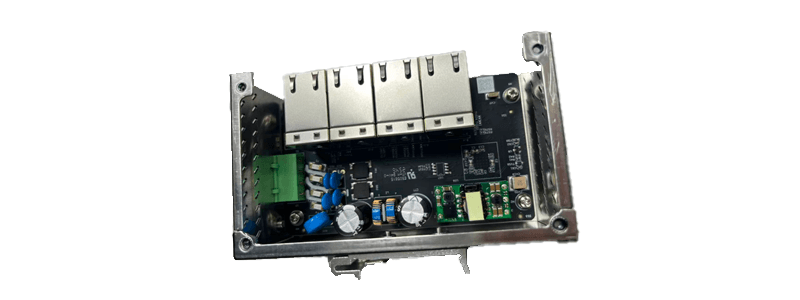
Immersion-type electronic protection nano-coating agent solves the problem of electronic failure in outdoor charging piles under high temperature, high humidity, and voltage shock environments.
As of the first half of 2026, the number of new energy vehicles in China had exceeded 45 million, and the number of public charging piles had surpassed 3.5 million, with an annual compound growth rate maintaining above 45%. This explosive growth in charging infrastructure has brought with it a recurring technical challenge: how can charging pile controller PCBA maintain stable long-term operation in harsh outdoor environments? Behind every charging pile is a controller PCBA integrating power management, communication modules, leakage protection, metering chips, and other multi-functional components. If this circuit board fails due to moisture, condensation, or salt spray corrosion, it can lead to anything from charging interruptions and user complaints to short circuits, fires, and damage to brand reputation. Shenzhen Sino-Fluorine Technology Co., Ltd. (brand Fluere), based on its independently developed 1700 series electronic protective nano-coating agent, has launched an immersion-type protection solution for intelligent charging pile controller PCBAs, systematically solving the challenges of moisture resistance, waterproofing, and electronic reliability for outdoor charging piles.
I. Real-World Service Environments Faced by Charging Pile Controller PCBA
Charging piles are essentially industrial devices that expose their power electronic systems to the open air. Whether in the extreme cold of northern regions, the rainy seasons of southern alleys, or the salt spray corrosion zones of the coast, the controller PCBA endures multi-dimensional environmental pressures.
High Temperatures and Exposure to Sunlight
Under direct sunlight in summer, the internal temperature of the charging pile casing can reach over 75℃. The combined heat from components such as MOSFETs, transformers, and capacitors on the PCBA easily causes local hotspot temperatures to exceed 90℃. High temperatures accelerate moisture diffusion and reduce the insulation resistance of traditional protective materials such as conformal coatings.
Heavy Rain and Condensation
IP54 or IP65 casing protection ratings gradually deteriorate over long-term use due to aging of sealing strips and casing deformation. In environments with humidity as high as 95% RH, when the day-night temperature difference exceeds 15℃, a condensation film will form on the PCBA surface—this is the biggest hidden killer of charging pile controller PCBA failure.
Voltage Surge and Creepage Risks
Charging stations contain a high-voltage circuit with a 380V AC three-phase input and a 750V DC output. In humid environments, water films and contaminants adhering to the PCBA surface can significantly reduce the effectiveness of creepage distances, leading to insulation breakdown, tracking, and even arc flashover. Industry statistics indicate that approximately 62% of after-sales failures in charging stations are directly related to electronic failures in humid environments.

II. Three Major Limitations of Traditional Protection Solutions
For the protection of charging pile controller PCBA, the mainstream solutions in the industry currently include conformal coating, potting compound filling, and structural sealing for waterproofing. However, in practical applications, all three solutions have unavoidable shortcomings.
Conformal Coating: Uneven Thickness and Poor Maintainability
Conformal coatings (acrylic/polyurethane/silicone) are applied by spraying or brushing, with a film thickness typically between 25 and 75 μm. However, the uniformity of manual spraying is difficult to guarantee, and missed areas are easily found in shaded areas such as the bottom of BGAs and connector pins. Furthermore, if resoldering is required after the conformal coating has cured, special solvents must be used for removal, which is time-consuming and can easily damage the solder pads. In addition, conformal coatings are mostly solvent-based products with high VOC content, failing to meet increasingly stringent environmental compliance requirements.
Potting Compound: Heavy Weight and Limited Thermal Management
Organic silicone or epoxy potting compounds can provide extremely high waterproof ratings (IP67 and above), but the potted PCBA is almost completely unrepairable; a single failure means the entire control board is scrapped. The thermal conductivity of potting compounds is typically 0.2~0.4 W/m·K, far lower than the heat dissipation effect of air convection, which exacerbates the temperature rise of power devices. Furthermore, potting compounds are expensive and have low production efficiency (curing cycles typically require 4~24 hours).
Structural Waterproofing: A Hidden Concern for Long-Term Reliability
Mechanical waterproofing using O-rings, waterproof joints, and other structural waterproofing methods may achieve IP65 or even IP67 ratings at the time of manufacture. However, after 3~5 years of temperature cycling and UV aging, the sealing material will inevitably undergo permanent deformation and elasticity degradation, leading to a gradual decline in protective performance. Structural waterproofing cannot fundamentally protect the PCBA itself—once moisture intrudes, the controller will still malfunction.
III. Fluere Immersion Nanocoating Technology Solution
Shenzhen Sino-Fluorine Technology Co., Ltd. (a Shenzhen National High-Tech Enterprise) positions itself as the "pioneer of immersion PCBA protection." It has independently developed the 1700 series of electronic protection nanocoating agents, including models 1701/1702/1704/1705/1708/1710/1720, with solid content ranging from 1% to 20% and coating thickness precisely adjustable from 0.1μm to 13μm, accurately matching the protection requirements of charging pile PCBA for different electrical applications.
Core Technology Principle
The Fluere 1700 series nanocoating agent utilizes a self-assembled monolayer (SAMs) film-forming mechanism. Immersing the entire charging pile controller PCBA in the nanocoating liquid for 3 seconds causes nanomolecules to spontaneously form a dense and ordered molecular-level protective film on the PCBA surface and in the gaps between all components. This coating, only 3-5 μm thick (approximately 1/20th the diameter of a human hair), possesses excellent hydrophobic and oleophobic properties, with a water contact angle ≥110° and a surface energy below 20 mN/m, effectively preventing contact and penetration by water vapor, salt spray, and corrosive chemical media.
Fluere 1700 Series Product Selection Recommendation
For the protection requirements of charging pile controller PCBA, the following two product combinations are recommended:
1705 (5% solids content): Suitable for general protection scenarios such as charging pile main control boards, communication boards, and metering boards. With a film thickness of 3-5 μm, it balances high insulation and heat dissipation performance. The 1705 coating has a volume resistivity as high as 1×10¹⁴ Ω·cm and a dielectric strength ≥20 kV/mm, meeting the high-voltage insulation requirements of charging pile power modules.
1708 (8% solids content): Suitable for outdoor charging pile interface control boards, power drive boards, and other applications requiring stronger physical protection. Film thickness 5~8μm, salt spray resistance exceeding 500 hours (neutral salt spray test), capable of withstanding long-term testing in high-salt-spray coastal environments.
Heat Dissipation Advantages
Unlike conventional organic coatings (thermal conductivity approximately 0.15~0.25 W/m·K), the Fluere 1700 series nano-coating utilizes an inorganic-organic hybrid molecular design, achieving a measured thermal conductivity of 0.88 W/m·K. This characteristic is more beneficial for heat dissipation of heat-generating components such as power MOSFET and transformers in charging pile controller PCBA. The coating does not form heat accumulation, effectively reducing hotspot temperatures by 3~8℃.
IV. Comparative Analysis of Traditional Solutions and Fluere 1700 Series Nanocoatings
To facilitate engineering selection decisions, a comprehensive comparison is conducted below from the dimensions of protective performance, process efficiency, environmental compliance, and overall cost:
| Comparison Dimensions | Conformal coating | potting compound | Fluere 1700series |
|---|---|---|---|
| Coating thickness | 25~75μm | 500~3000μm | 3~5μm (1706) |
| Construction process | Spraying/Brushing | Gathering/Pouring | Immersion (3 seconds) |
| Curing time | 30 minutes to 2 hours (surface dry) | 4~24h | 3 minutes (heat curing) |
| VOC content | High (solvent-based) | Medium (some contain solvent) | Zero VOC (environmentally friendly and non-toxic) |
| thermal conductivity | 0.15~0.25 W/m·K | 0.2~0.4 W/m·K | 0.88 W/m·K |
| Maintainability | Solderable (solvent required) | Unrepairable | Solderable (solder-free) |
| Salt spray weather resistance | 200~400h | 500~1000h | ≥500h (1706)/ ≥800h (1708) |
| Overall Efficiency | Slow tempo, reliant on manual labor | Slow tempo, requires mixing/vacuuming | Adaptable to automated production lines, ±1μm accuracy |
The comparison table clearly shows that the Fluere 1700 series immersion nanocoatings have significant advantages in key indicators such as nanoscale thickness, high-speed curing, zero VOC environmental friendliness, high thermal conductivity, and maintainability—which is particularly important for the large-scale mass production of charging pile PCBA protection.
V. Measured Data and Benefit Verification
Shenzhen Sino-Fluorine Technology Co., Ltd. collaborated with several leading domestic charging pile manufacturers to conduct a 12-month on-site testing program. The testing locations covered three typical climate zones: Hainan (humid and hot), Xinjiang (dry and hot), and the East China Sea coast. The following are key measured data:
Damp Heat Aging Test
An alternating damp heat test (55℃/95% relative humidity/24h cycle) was performed according to GB/T 2423.4 standard. After 56 cycles, the insulation resistance of the charging pile controller PCBA treated with Fluere 1705 consistently remained above 1×10¹² Ω, with no excessive leakage current or electrochemical migration observed.
Salt Spray Corrosion Test
A neutral salt spray test of the stringent level (severity level 4) was conducted according to IEC 60068-2-52 standard. After 504 hours of continuous salt spraying, the 1708 coated samples showed no corrosion spots, blistering, or peeling on the PCBA surface, achieving a 100% functional test pass rate.
Temperature Cycling Impact
After undergoing 200 rapid temperature cycling shocks within the range of -40℃ to +85℃ (transition time < 30 seconds), the nano-coating did not exhibit cracking or peeling issues, and its adhesion passed the cross-cut adhesion test (ISO 2409 Grade 0).
VI. Immersion Process Description and Production Line Adaptation
The Fluere 1700 series immersion protective process is designed for large-scale production and has achieved seamless integration with mainstream SMT back-end production lines.
Standard Process Flow
The process flow is simple and efficient: PCBA loading → immersion (3 seconds) → draining (5 seconds) → purging (excess liquid recovery) → heat curing (3 minutes/80~120℃) → unloading and inspection. The entire process cycle is controlled at 6~8 minutes per batch, and a single machine can process 1500~2000 charging pile controller PCBA per day.
Equipment Adaptation and Investment
Shenzhen Sino-Fluorine Technology Co., Ltd. can provide complete immersion equipment solutions, supporting manual, semi-automatic, and fully automatic production line modes. For customers with existing conformal coating lines, only an immersion tank and hot air drying tunnel need to be added to the existing production line to complete the modification. The modification cost is controlled within the range of 30,000~80,000 RMB, significantly reducing the process switchover threshold.
Environmental Compliance Advantages
Fluere 1700 series nano-coating agents are all zero-VOC formulations, and have passed SGS RoHS, REACH, and PFAS-free testing and certification, complying with the EU's Persistent Organic Pollutants Regulation and domestic VOCs emission limits. The immersion process eliminates the need for expensive hazardous gas treatment systems and explosion-proof facilities, significantly reducing factory construction costs and production safety risks.
VII. Conclusion: Solving the Reliability Challenges of Charging Pile PCBA from the Source
The charging infrastructure is shifting from a phase of "quantitative expansion" to one of "qualitative improvement." With the continued advancement of the National New Energy Vehicle Industry Development Plan (2021-2035), the reliability and lifespan of charging piles have become core indicators of industry competition. The Fluere 1700 series immersion-type nano-coating protection solution, with its minimalist process of 3-second immersion and 3-minute curing, provides highly efficient protection for charging pile controller PCBA with nanometer-level thickness, while also considering heat dissipation, maintainability, and environmental compliance requirements. It is an ideal protection choice for next-generation smart charging piles.
If your charging pile products are facing electronic failure issues in outdoor high-temperature and high-humidity environments, or if you are evaluating a more efficient and environmentally friendly PCBA protection upgrade solution, please contact the Shenzhen Sino-Fluorine Technology Co., Ltd. technical team for detailed technical information and free sample testing services.
Immersion-type electronic protection nano-coating agent solves the problem of electronic failure in outdoor charging piles under high temperature, high humidity, and voltage shock environments.
As of the first half of 2026, the number of new energy vehicles in China had exceeded 45 million, and the number of public charging piles had surpassed 3.5 million, with an annual compound growth rate maintaining above 45%. This explosive growth in charging infrastructure has brought with it a recurring technical challenge: how can charging pile controller PCBA maintain stable long-term operation in harsh outdoor environments? Behind every charging pile is a controller PCBA integrating power management, communication modules, leakage protection, metering chips, and other multi-functional components. If this circuit board fails due to moisture, condensation, or salt spray corrosion, it can lead to anything from charging interruptions and user complaints to short circuits, fires, and damage to brand reputation. Shenzhen Sino-Fluorine Technology Co., Ltd. (brand Fluere), based on its independently developed 1700 series electronic protective nano-coating agent, has launched an immersion-type protection solution for intelligent charging pile controller PCBAs, systematically solving the challenges of moisture resistance, waterproofing, and electronic reliability for outdoor charging piles.
I. Real-World Service Environments Faced by Charging Pile Controller PCBA
Charging piles are essentially industrial devices that expose their power electronic systems to the open air. Whether in the extreme cold of northern regions, the rainy seasons of southern alleys, or the salt spray corrosion zones of the coast, the controller PCBA endures multi-dimensional environmental pressures.
High Temperatures and Exposure to Sunlight
Under direct sunlight in summer, the internal temperature of the charging pile casing can reach over 75℃. The combined heat from components such as MOSFETs, transformers, and capacitors on the PCBA easily causes local hotspot temperatures to exceed 90℃. High temperatures accelerate moisture diffusion and reduce the insulation resistance of traditional protective materials such as conformal coatings.
Heavy Rain and Condensation
IP54 or IP65 casing protection ratings gradually deteriorate over long-term use due to aging of sealing strips and casing deformation. In environments with humidity as high as 95% RH, when the day-night temperature difference exceeds 15℃, a condensation film will form on the PCBA surface—this is the biggest hidden killer of charging pile controller PCBA failure.
Voltage Surge and Creepage Risks
Charging stations contain a high-voltage circuit with a 380V AC three-phase input and a 750V DC output. In humid environments, water films and contaminants adhering to the PCBA surface can significantly reduce the effectiveness of creepage distances, leading to insulation breakdown, tracking, and even arc flashover. Industry statistics indicate that approximately 62% of after-sales failures in charging stations are directly related to electronic failures in humid environments.
II. Three Major Limitations of Traditional Protection Solutions
For the protection of charging pile controller PCBA, the mainstream solutions in the industry currently include conformal coating, potting compound filling, and structural sealing for waterproofing. However, in practical applications, all three solutions have unavoidable shortcomings.
Conformal Coating: Uneven Thickness and Poor Maintainability
Conformal coatings (acrylic/polyurethane/silicone) are applied by spraying or brushing, with a film thickness typically between 25 and 75 μm. However, the uniformity of manual spraying is difficult to guarantee, and missed areas are easily found in shaded areas such as the bottom of BGAs and connector pins. Furthermore, if resoldering is required after the conformal coating has cured, special solvents must be used for removal, which is time-consuming and can easily damage the solder pads. In addition, conformal coatings are mostly solvent-based products with high VOC content, failing to meet increasingly stringent environmental compliance requirements.
Potting Compound: Heavy Weight and Limited Thermal Management
Organic silicone or epoxy potting compounds can provide extremely high waterproof ratings (IP67 and above), but the potted PCBA is almost completely unrepairable; a single failure means the entire control board is scrapped. The thermal conductivity of potting compounds is typically 0.2~0.4 W/m·K, far lower than the heat dissipation effect of air convection, which exacerbates the temperature rise of power devices. Furthermore, potting compounds are expensive and have low production efficiency (curing cycles typically require 4~24 hours).
Structural Waterproofing: A Hidden Concern for Long-Term Reliability
Mechanical waterproofing using O-rings, waterproof joints, and other structural waterproofing methods may achieve IP65 or even IP67 ratings at the time of manufacture. However, after 3~5 years of temperature cycling and UV aging, the sealing material will inevitably undergo permanent deformation and elasticity degradation, leading to a gradual decline in protective performance. Structural waterproofing cannot fundamentally protect the PCBA itself—once moisture intrudes, the controller will still malfunction.
III. Fluere Immersion Nanocoating Technology Solution
Shenzhen Sino-Fluorine Technology Co., Ltd. (a Shenzhen National High-Tech Enterprise) positions itself as the "pioneer of immersion PCBA protection." It has independently developed the 1700 series of electronic protection nanocoating agents, including models 1701/1702/1704/1705/1708/1710/1720, with solid content ranging from 1% to 20% and coating thickness precisely adjustable from 0.1μm to 13μm, accurately matching the protection requirements of charging pile PCBA for different electrical applications.
Core Technology Principle
The Fluere 1700 series nanocoating agent utilizes a self-assembled monolayer (SAMs) film-forming mechanism. Immersing the entire charging pile controller PCBA in the nanocoating liquid for 3 seconds causes nanomolecules to spontaneously form a dense and ordered molecular-level protective film on the PCBA surface and in the gaps between all components. This coating, only 3-5 μm thick (approximately 1/20th the diameter of a human hair), possesses excellent hydrophobic and oleophobic properties, with a water contact angle ≥110° and a surface energy below 20 mN/m, effectively preventing contact and penetration by water vapor, salt spray, and corrosive chemical media.
Fluere 1700 Series Product Selection Recommendation
For the protection requirements of charging pile controller PCBA, the following two product combinations are recommended:
1705 (5% solids content): Suitable for general protection scenarios such as charging pile main control boards, communication boards, and metering boards. With a film thickness of 3-5 μm, it balances high insulation and heat dissipation performance. The 1705 coating has a volume resistivity as high as 1×10¹⁴ Ω·cm and a dielectric strength ≥20 kV/mm, meeting the high-voltage insulation requirements of charging pile power modules.
1708 (8% solids content): Suitable for outdoor charging pile interface control boards, power drive boards, and other applications requiring stronger physical protection. Film thickness 5~8μm, salt spray resistance exceeding 500 hours (neutral salt spray test), capable of withstanding long-term testing in high-salt-spray coastal environments.
Heat Dissipation Advantages
Unlike conventional organic coatings (thermal conductivity approximately 0.15~0.25 W/m·K), the Fluere 1700 series nano-coating utilizes an inorganic-organic hybrid molecular design, achieving a measured thermal conductivity of 0.88 W/m·K. This characteristic is more beneficial for heat dissipation of heat-generating components such as power MOSFET and transformers in charging pile controller PCBA. The coating does not form heat accumulation, effectively reducing hotspot temperatures by 3~8℃.
IV. Comparative Analysis of Traditional Solutions and Fluere 1700 Series Nanocoatings
To facilitate engineering selection decisions, a comprehensive comparison is conducted below from the dimensions of protective performance, process efficiency, environmental compliance, and overall cost:
| Comparison Dimensions | Conformal coating | potting compound | Fluere 1700series |
|---|---|---|---|
| Coating thickness | 25~75μm | 500~3000μm | 3~5μm (1706) |
| Construction process | Spraying/Brushing | Gathering/Pouring | Immersion (3 seconds) |
| Curing time | 30 minutes to 2 hours (surface dry) | 4~24h | 3 minutes (heat curing) |
| VOC content | High (solvent-based) | Medium (some contain solvent) | Zero VOC (environmentally friendly and non-toxic) |
| thermal conductivity | 0.15~0.25 W/m·K | 0.2~0.4 W/m·K | 0.88 W/m·K |
| Maintainability | Solderable (solvent required) | Unrepairable | Solderable (solder-free) |
| Salt spray weather resistance | 200~400h | 500~1000h | ≥500h (1706)/ ≥800h (1708) |
| Overall Efficiency | Slow tempo, reliant on manual labor | Slow tempo, requires mixing/vacuuming | Adaptable to automated production lines, ±1μm accuracy |
The comparison table clearly shows that the Fluere 1700 series immersion nanocoatings have significant advantages in key indicators such as nanoscale thickness, high-speed curing, zero VOC environmental friendliness, high thermal conductivity, and maintainability—which is particularly important for the large-scale mass production of charging pile PCBA protection.
V. Measured Data and Benefit Verification
Shenzhen Sino-Fluorine Technology Co., Ltd. collaborated with several leading domestic charging pile manufacturers to conduct a 12-month on-site testing program. The testing locations covered three typical climate zones: Hainan (humid and hot), Xinjiang (dry and hot), and the East China Sea coast. The following are key measured data:
Damp Heat Aging Test
An alternating damp heat test (55℃/95% relative humidity/24h cycle) was performed according to GB/T 2423.4 standard. After 56 cycles, the insulation resistance of the charging pile controller PCBA treated with Fluere 1705 consistently remained above 1×10¹² Ω, with no excessive leakage current or electrochemical migration observed.
Salt Spray Corrosion Test
A neutral salt spray test of the stringent level (severity level 4) was conducted according to IEC 60068-2-52 standard. After 504 hours of continuous salt spraying, the 1708 coated samples showed no corrosion spots, blistering, or peeling on the PCBA surface, achieving a 100% functional test pass rate.
Temperature Cycling Impact
After undergoing 200 rapid temperature cycling shocks within the range of -40℃ to +85℃ (transition time < 30 seconds), the nano-coating did not exhibit cracking or peeling issues, and its adhesion passed the cross-cut adhesion test (ISO 2409 Grade 0).
VI. Immersion Process Description and Production Line Adaptation
The Fluere 1700 series immersion protective process is designed for large-scale production and has achieved seamless integration with mainstream SMT back-end production lines.
Standard Process Flow
The process flow is simple and efficient: PCBA loading → immersion (3 seconds) → draining (5 seconds) → purging (excess liquid recovery) → heat curing (3 minutes/80~120℃) → unloading and inspection. The entire process cycle is controlled at 6~8 minutes per batch, and a single machine can process 1500~2000 charging pile controller PCBA per day.
Equipment Adaptation and Investment
Shenzhen Sino-Fluorine Technology Co., Ltd. can provide complete immersion equipment solutions, supporting manual, semi-automatic, and fully automatic production line modes. For customers with existing conformal coating lines, only an immersion tank and hot air drying tunnel need to be added to the existing production line to complete the modification. The modification cost is controlled within the range of 30,000~80,000 RMB, significantly reducing the process switchover threshold.
Environmental Compliance Advantages
Fluere 1700 series nano-coating agents are all zero-VOC formulations, and have passed SGS RoHS, REACH, and PFAS-free testing and certification, complying with the EU's Persistent Organic Pollutants Regulation and domestic VOCs emission limits. The immersion process eliminates the need for expensive hazardous gas treatment systems and explosion-proof facilities, significantly reducing factory construction costs and production safety risks.
VII. Conclusion: Solving the Reliability Challenges of Charging Pile PCBA from the Source
The charging infrastructure is shifting from a phase of "quantitative expansion" to one of "qualitative improvement." With the continued advancement of the National New Energy Vehicle Industry Development Plan (2021-2035), the reliability and lifespan of charging piles have become core indicators of industry competition. The Fluere 1700 series immersion-type nano-coating protection solution, with its minimalist process of 3-second immersion and 3-minute curing, provides highly efficient protection for charging pile controller PCBA with nanometer-level thickness, while also considering heat dissipation, maintainability, and environmental compliance requirements. It is an ideal protection choice for next-generation smart charging piles.
If your charging pile products are facing electronic failure issues in outdoor high-temperature and high-humidity environments, or if you are evaluating a more efficient and environmentally friendly PCBA protection upgrade solution, please contact the Shenzhen Sino-Fluorine Technology Co., Ltd. technical team for detailed technical information and free sample testing services.