Since 2025, "humanoid robots" have become perhaps the hottest buzzword in the global tech community. A wave of humanoid robot startups is rapidly securing funding and racing to deploy their technologies; the sector is surging from laboratories to factories and production lines at a pace visible to the naked eye.
When humanoid robots actually step onto the production line, the first components to "go on strike" are often neither the impressive large-scale AI models nor the motors driving their dexterous hands; instead, the failure points lie in the circuit boards—and the nearly invisible nano-coatings covering them—embedded within the joints, sensors, and electronic control systems.
The true challenge of a humanoid robot lies not in its human-like appearance, but in its ability to operate reliably, day in and day out, amidst real-world conditions characterized by humidity, oil, and dust. This is precisely the challenge that Zhongfu Technology has dedicated over a decade to addressing.
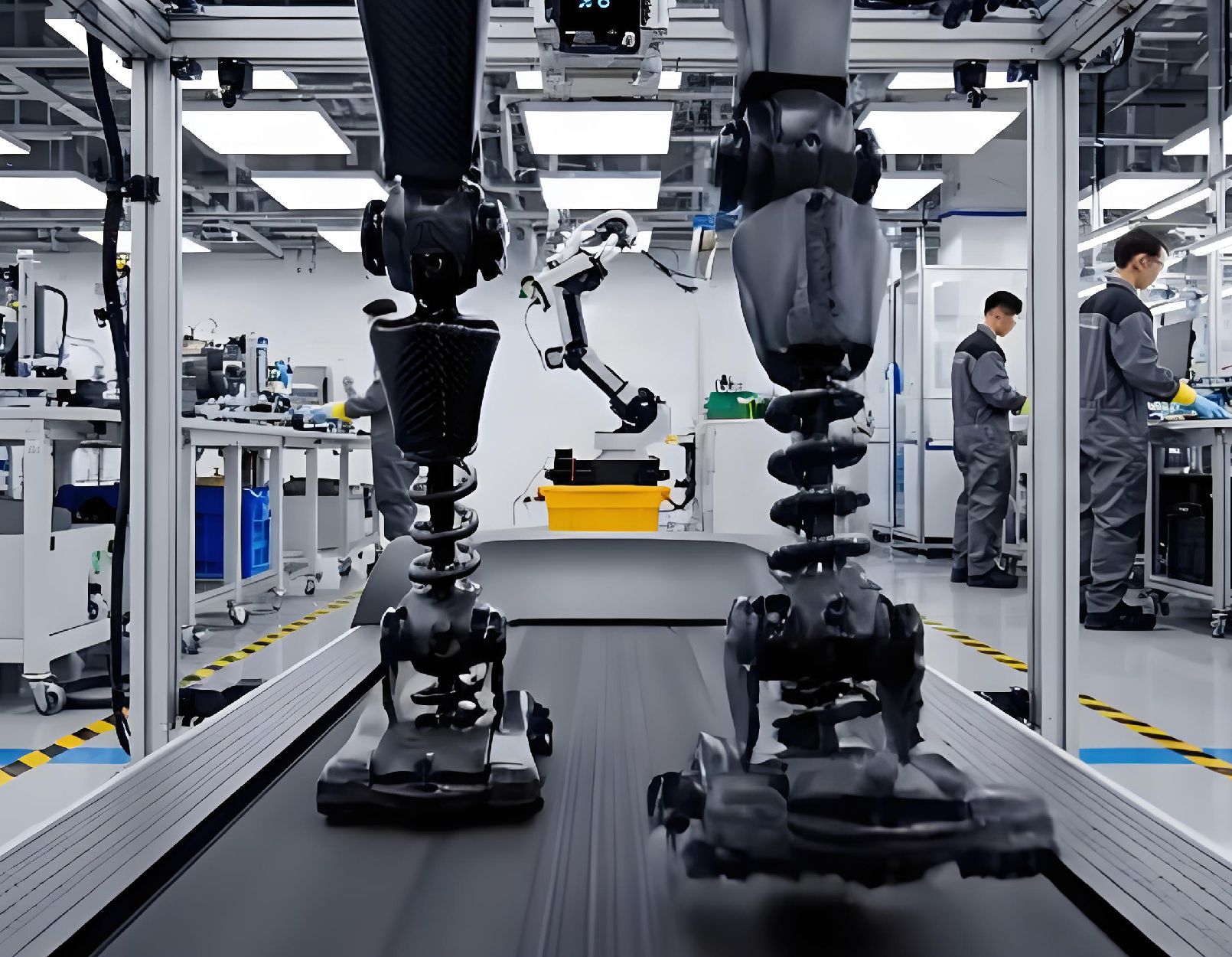
图一:双足人形机器人工厂
I. Policy Tailwinds Shift Toward "Embodied AI"
To understand the sudden surge in the humanoid robot sector, one must first look at policy developments.
As early as 2023, the Ministry of Industry and Information Technology (MIIT) issued the *Guiding Opinions on the Innovative Development of Humanoid Robots*, outlining a clear roadmap for technological breakthroughs and industrialization. The 2025 Government Work Report went a step further by explicitly including "embodied AI" and "intelligent robots" for the first time, sending a strong signal to the industry. Subsequently, cities such as Beijing, Shanghai, Shenzhen, and Chongqing followed suit; a comprehensive policy framework centering on humanoid robots—spanning fund support, the opening of application scenarios, and the construction of industrial parks—is rapidly taking shape.
Notably, humanoid robots have been designated as a key "future industry" for support in many regions. Shenzhen, for instance, has rolled out specialized policies for "embodied AI" that provide systematic backing across the board—from tackling technical hurdles and opening up use cases to establishing industrial funds. These policies convey a clear message: humanoid robots are not merely a long-term concept but represent a definite trajectory toward industrialization.
The logic behind this strong policy emphasis is straightforward: humanoid robots are viewed as the core vehicle for "embodied AI," marking a critical leap for artificial intelligence from "calculating and speaking" to "moving and acting." The goal is not just laboratory demonstrations, but deployment in real-world factory, logistics, and service environments.
Yet, this ambition conceals a severely underestimated technical challenge: the vast gap between the laboratory and the real world is defined by a formidable hurdle—reliability.
II. The "Achilles' Heel" of Humanoid Robots Lies in Their Joints
The complexity of humanoid robots stems from the dozens of degrees of freedom distributed across their bodies. Each joint integrates a drive motor, a speed reducer, an encoder, and the control circuitry, while every circuit board connects to a dense array of sensors.
This means that the electronic system of a humanoid robot is an order of magnitude more complex—and more fragile—than that of standard industrial equipment. Take the most common deployment scenarios as an example: when humanoid robots enter a factory, they may encounter oil mist from machining operations, the humid conditions of food processing workshops, or the static electricity and dust found in electronics manufacturing facilities. These environmental factors impose rigorous requirements on the circuit boards' ability to withstand water, moisture, oil contamination, and corrosion.
| Deployment Scenarios | Environmental Threats | Challenges for Circuit Boards |
|---|---|---|
| Machining Workshop | Oil mist, cutting fluid splash | Oil contamination adhesion, pad corrosion |
| Humid Environment | High humidity, condensation | Electrochemical migration, short circuit |
| Food Processing/Cleanroom | Cleaning agents, disinfectants | Liquid ingress, insulation failure |
| Outdoor Inspection | Rain, salt spray, temperature fluctuations | Corrosion, coating cracking |
It is evident that for a humanoid robot to truly enter active service, every single joint and circuit board must be capable of operating reliably in complex environments. Otherwise, even the most intelligent "brain" could be crippled by a single "nerve ending" that shorts out due to moisture.
III. Why Traditional Protection Falls Short for "Active" Robots
When dealing with moisture and oil contamination, the electronics manufacturing industry still relies primarily on conformal coatings and potting compounds.
However, humanoid robots possess a unique characteristic that renders these traditional solutions inadequate: they must move—and move with precision.
The issue with conformal coatings is their thickness. A coating layer measuring tens of microns can alter the assembly tolerances of joint components and potentially interfere with connector contact and signal transmission. For humanoid robot joints that often demand micron-level precision, such a "thick blanket" is frequently unacceptable.
The problems with potting compounds lie in their weight and permanence. While potting offers complete environmental isolation, it significantly adds weight and impedes heat dissipation; furthermore, once potted, the internal circuitry becomes virtually impossible to repair. For humanoid robots designed with a focus on lightweight construction and maintainability, this is an equally prohibitive cost.
A deeper issue concerns consistency. Humanoid robots are highly complex mechatronic systems; any variation in protection across joints could escalate into a total system failure during long-term operation. This necessitates a protection process that offers exceptional repeatability and stability.
Thus, a clear requirement emerges: humanoid robots need a protection solution that is sufficiently thin and lightweight, does not interfere with signals, and withstands complex environments. This is precisely where Zhongfu Technology excels.
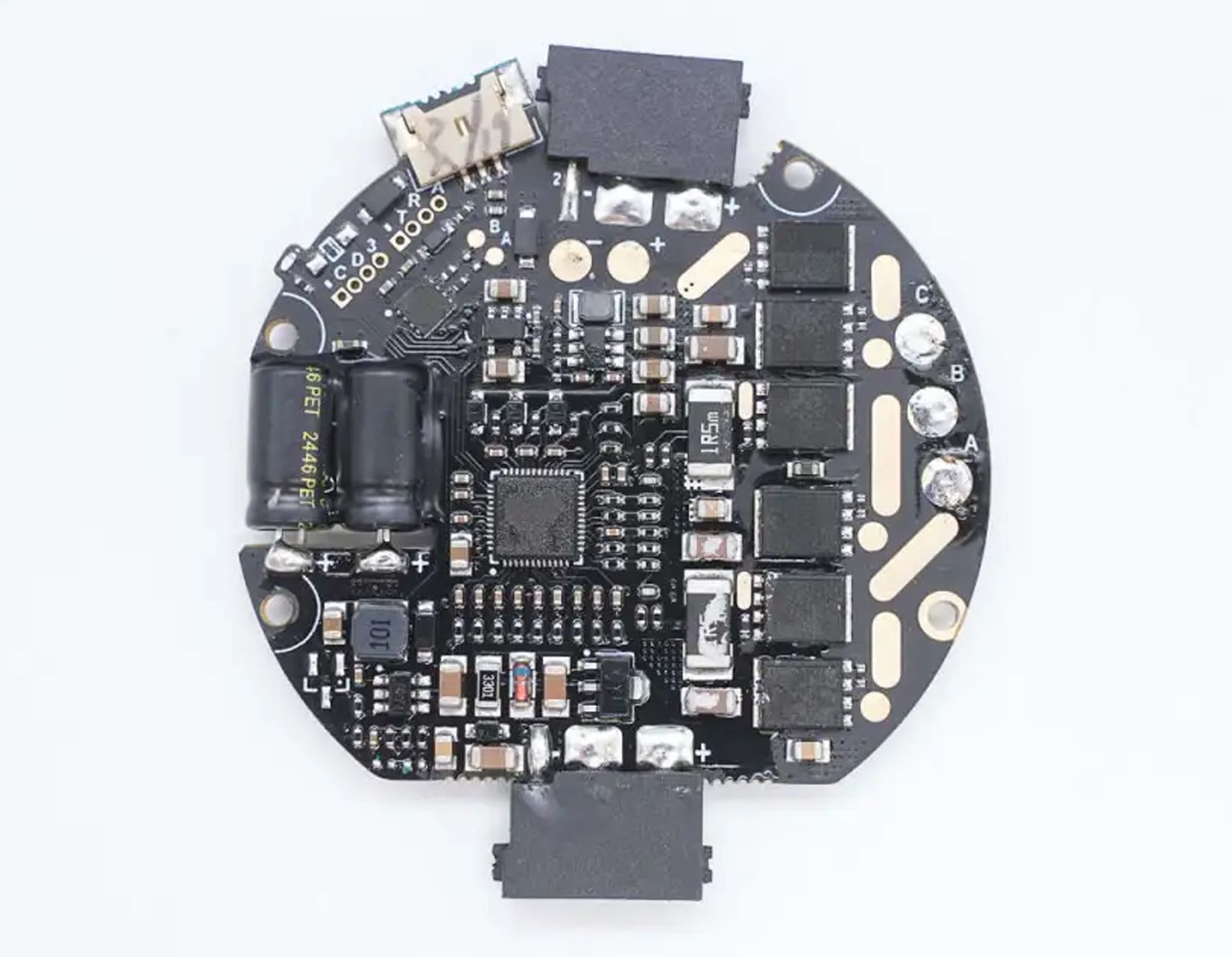
Figure 2: Precision circuit board for robot joints
IV. The 3-Micron Solution: Protection Designed for "Precision Electronics"
Departing from the traditional "thick-film barrier" approach, Zhongfu Technology has taken a different path: using a fluorinated nano-coating—only a few microns thick—to form a dense, "invisible armor" on the circuit board surface.
The suitability of this coating for humanoid robots hinges on three key characteristics: thinness, transparency, and density.
"Thinness" means it barely alters component dimensions or tolerances, ensuring no interference with the precision assembly of joints. "Transparency" means it is colorless, clear, and free of conductive materials, having virtually no impact on electrical signal transmission or heat dissipation. "Density" means it forms a continuous, gap-free protective film over intricate areas—such as solder pads, pins, and the undersides of components—effectively blocking pathways for moisture and oil ingress at the interface level.
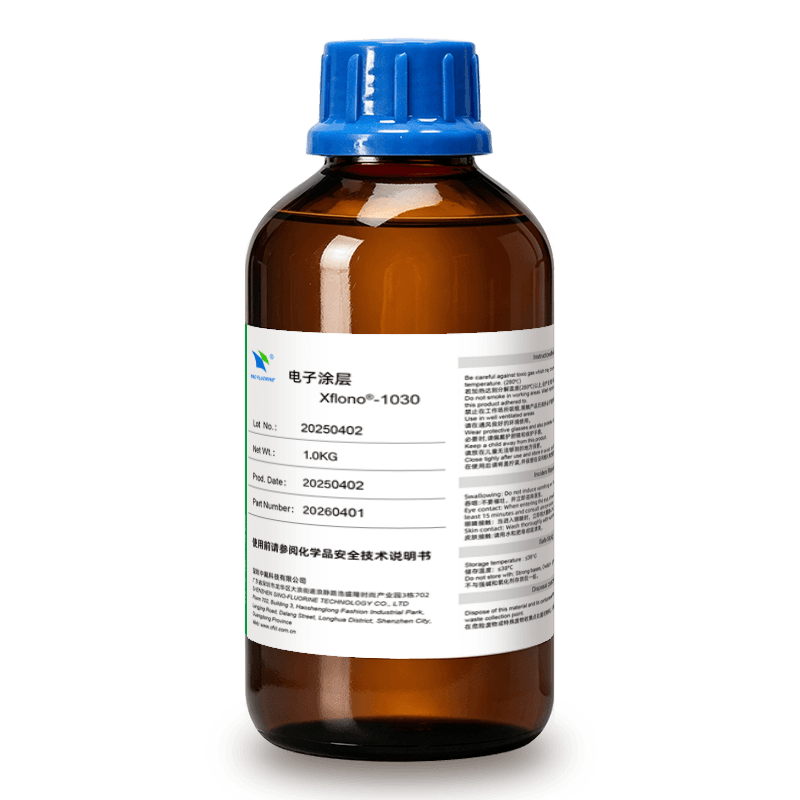
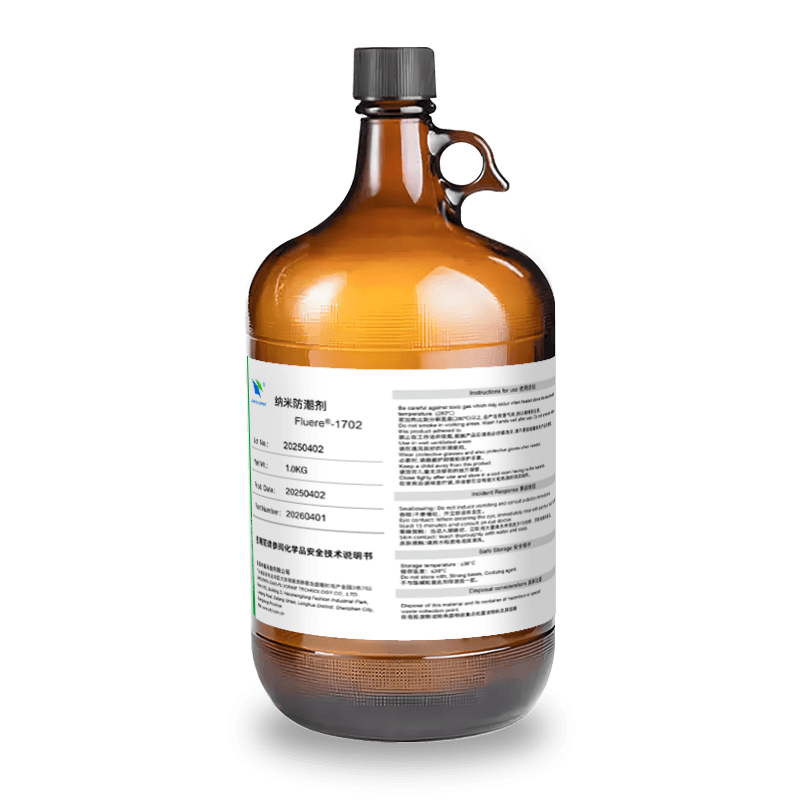
Take, for example, the flagship electronic protective nano-coating agent from Zhongfu Technology: its primary ingredient is a perfluoroalkyl acrylate polymer. This fluorinated polymer naturally possesses extremely low surface energy; upon contact, moisture and oil cannot spread across the surface but instead bead up and slide off. When applied via immersion or precision spraying, the coating fluid—thanks to its ultra-low viscosity and superior leveling properties—automatically penetrates tiny, hard-to-reach crevices that conventional spraying methods often miss.
Regarding humanoid robot joints specifically, the value of the nano-coating also lies in its resistance to oil contamination. Unlike coatings for consumer electronics, which primarily target moisture, coatings for industrial robot joints must withstand long-term exposure to organic contaminants like lubricating oils and cutting fluids. Thanks to its ultra-low surface energy, Zhongfu Technology’s fluorinated nano-coating effectively repels oil, slowing its accumulation on the circuit board surface and providing an extra layer of assurance for the joint's long-term, stable operation.
What does this mean? This means that the joint circuit boards, sensor modules, and electronic control systems of humanoid robots can achieve tangible resistance to moisture, oil, and corrosion without the need for a visible protective layer. This form of "imperceptible protection" is precisely what highly integrated humanoid robots require most: it imposes no additional burden on the robot and does not interfere with precision movement, yet it safeguards reliability in critical operational scenarios.
V. Paiqi Nano’s Practice: Turning "Reliability" into a Reproducible Process
While the technical principles may be sound, the industry is truly concerned with whether they can be reliably implemented in mass production.
Founded in 2013 and deeply engaged in the field of nano-protection for over a decade, Zhongfu Technology has served hundreds of corporate clients. The company has built comprehensive capabilities—spanning everything from formulation to processing—within the niche sector of nano-coating agents for electronic protection. Its products hold ISO9001, ISO14001, and ISO45001 management system certifications and comply with environmental regulations such as RoHS and REACH.
For high-value, high-reliability products like humanoid robots, Zhongfu Technology’s immersion process offers an irreplaceable advantage: consistency. This immersion method elevates protection from a "manual craft relying on masking" to a "standardized process with precisely controlled time, temperature, and concentration"—meaning the immersion of every circuit board can be quantified and replicated. This transition from "craftsmanship" to "industrial process" provides the very certainty needed as humanoid robots move toward mass production.
A circuit board treated with Zhongfu Technology’s nano-coating can maintain proper electrical conductivity during prolonged salt spray testing and continue to operate stably even in humid environments. This ability to "keep running while immersed in complex environments" provides the robust assurance humanoid robots need to transition from mere demonstrations to actual deployment.
VI. A Deeper Reflection: The Key to Success in Embodied AI Lies in "Physical Reliability"
At this point, we can perhaps draw a broader conclusion. In the current wave of enthusiasm for humanoid robots, the technological narrative focuses almost exclusively on the "brain"—large models, multimodal perception, and motion control algorithms. While these are certainly important, a frequently overlooked fact is that the "embodied" aspect of embodied AI implies that a smart brain alone is insufficient; a reliable "body" is equally essential.
No matter how intelligent the brain, if the body cannot withstand the rigors of the real-world environment, that intelligence cannot be put into practice. The ultimate challenge for humanoid robots has never been merely the ability to "think," but the capacity to act consistently and reliably within a complex world. This reliability is built upon countless minute hardware details—including the protective layer found on every circuit board within the robot's joints.
Zhongfu Technology operates in precisely this segment of the supply chain—one that is inconspicuous yet critical, where failure is not an option. Eschewing the grand narratives that dominate the spotlight, the company quietly ensures—through a coating just a few microns thick—that these "mobile humanoids" can stand firm and go the distance in the real world.
Viewed from this perspective, the competition in the humanoid robot sector may appear to be a race of algorithms and capital, but the true deciding factor in transitioning from "demonstration" to "mass production" lies in those often-overlooked details of reliability. When the details are mastered, the robot is ready for the job; when they fail, even the most intelligent robot can be defeated by nothing more than humidity.
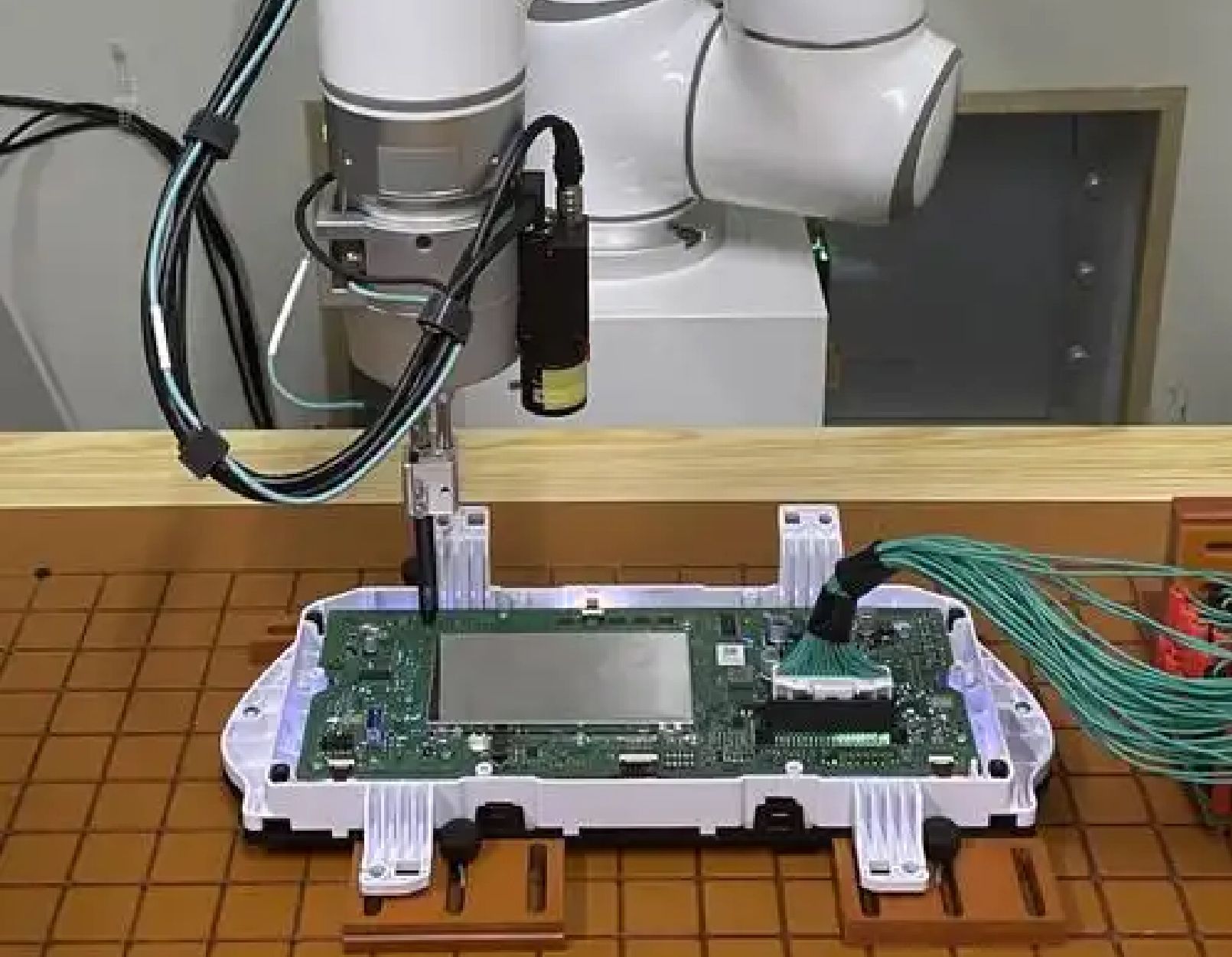
Figure 3: Protection testing for robot circuit boards
VII. Conclusion: Before a "moving humanoid" acts, it must first master "waterproofing"
The wave of humanoid robotics is upon us—an undeniable trend. Yet, amidst this trend, true success will belong to those who achieve the ultimate in reliability.
Every team dedicated to humanoid robotics should ask itself a crucial question: Is my robot ready to step into a workshop that is humid, greasy, and filled with dust? Have the circuit boards in its joints truly mastered "waterproofing"?
If you are unsure of the answer, it is time to seriously consider equipping your robot with that "invisible armor."
After all, a robot’s intelligence lies in its brain, and its agility in its joints; but its ability to operate reliably over the long term in the real world ultimately depends on that thin yet vital layer of protection.
This is precisely the safeguard that Zhongfu Technology aims to help you maintain.
Since 2025, "humanoid robots" have become perhaps the hottest buzzword in the global tech community. A wave of humanoid robot startups is rapidly securing funding and racing to deploy their technologies; the sector is surging from laboratories to factories and production lines at a pace visible to the naked eye.
When humanoid robots actually step onto the production line, the first components to "go on strike" are often neither the impressive large-scale AI models nor the motors driving their dexterous hands; instead, the failure points lie in the circuit boards—and the nearly invisible nano-coatings covering them—embedded within the joints, sensors, and electronic control systems.
The true challenge of a humanoid robot lies not in its human-like appearance, but in its ability to operate reliably, day in and day out, amidst real-world conditions characterized by humidity, oil, and dust. This is precisely the challenge that Zhongfu Technology has dedicated over a decade to addressing.
图一:双足人形机器人工厂
I. Policy Tailwinds Shift Toward "Embodied AI"
To understand the sudden surge in the humanoid robot sector, one must first look at policy developments.
As early as 2023, the Ministry of Industry and Information Technology (MIIT) issued the *Guiding Opinions on the Innovative Development of Humanoid Robots*, outlining a clear roadmap for technological breakthroughs and industrialization. The 2025 Government Work Report went a step further by explicitly including "embodied AI" and "intelligent robots" for the first time, sending a strong signal to the industry. Subsequently, cities such as Beijing, Shanghai, Shenzhen, and Chongqing followed suit; a comprehensive policy framework centering on humanoid robots—spanning fund support, the opening of application scenarios, and the construction of industrial parks—is rapidly taking shape.
Notably, humanoid robots have been designated as a key "future industry" for support in many regions. Shenzhen, for instance, has rolled out specialized policies for "embodied AI" that provide systematic backing across the board—from tackling technical hurdles and opening up use cases to establishing industrial funds. These policies convey a clear message: humanoid robots are not merely a long-term concept but represent a definite trajectory toward industrialization.
The logic behind this strong policy emphasis is straightforward: humanoid robots are viewed as the core vehicle for "embodied AI," marking a critical leap for artificial intelligence from "calculating and speaking" to "moving and acting." The goal is not just laboratory demonstrations, but deployment in real-world factory, logistics, and service environments.
Yet, this ambition conceals a severely underestimated technical challenge: the vast gap between the laboratory and the real world is defined by a formidable hurdle—reliability.
II. The "Achilles' Heel" of Humanoid Robots Lies in Their Joints
The complexity of humanoid robots stems from the dozens of degrees of freedom distributed across their bodies. Each joint integrates a drive motor, a speed reducer, an encoder, and the control circuitry, while every circuit board connects to a dense array of sensors.
This means that the electronic system of a humanoid robot is an order of magnitude more complex—and more fragile—than that of standard industrial equipment. Take the most common deployment scenarios as an example: when humanoid robots enter a factory, they may encounter oil mist from machining operations, the humid conditions of food processing workshops, or the static electricity and dust found in electronics manufacturing facilities. These environmental factors impose rigorous requirements on the circuit boards' ability to withstand water, moisture, oil contamination, and corrosion.
| Deployment Scenarios | Environmental Threats | Challenges for Circuit Boards |
|---|---|---|
| Machining Workshop | Oil mist, cutting fluid splash | Oil contamination adhesion, pad corrosion |
| Humid Environment | High humidity, condensation | Electrochemical migration, short circuit |
| Food Processing/Cleanroom | Cleaning agents, disinfectants | Liquid ingress, insulation failure |
| Outdoor Inspection | Rain, salt spray, temperature fluctuations | Corrosion, coating cracking |
It is evident that for a humanoid robot to truly enter active service, every single joint and circuit board must be capable of operating reliably in complex environments. Otherwise, even the most intelligent "brain" could be crippled by a single "nerve ending" that shorts out due to moisture.
III. Why Traditional Protection Falls Short for "Active" Robots
When dealing with moisture and oil contamination, the electronics manufacturing industry still relies primarily on conformal coatings and potting compounds.
However, humanoid robots possess a unique characteristic that renders these traditional solutions inadequate: they must move—and move with precision.
The issue with conformal coatings is their thickness. A coating layer measuring tens of microns can alter the assembly tolerances of joint components and potentially interfere with connector contact and signal transmission. For humanoid robot joints that often demand micron-level precision, such a "thick blanket" is frequently unacceptable.
The problems with potting compounds lie in their weight and permanence. While potting offers complete environmental isolation, it significantly adds weight and impedes heat dissipation; furthermore, once potted, the internal circuitry becomes virtually impossible to repair. For humanoid robots designed with a focus on lightweight construction and maintainability, this is an equally prohibitive cost.
A deeper issue concerns consistency. Humanoid robots are highly complex mechatronic systems; any variation in protection across joints could escalate into a total system failure during long-term operation. This necessitates a protection process that offers exceptional repeatability and stability.
Thus, a clear requirement emerges: humanoid robots need a protection solution that is sufficiently thin and lightweight, does not interfere with signals, and withstands complex environments. This is precisely where Zhongfu Technology excels.
Figure 2: Precision circuit board for robot joints
IV. The 3-Micron Solution: Protection Designed for "Precision Electronics"
Departing from the traditional "thick-film barrier" approach, Zhongfu Technology has taken a different path: using a fluorinated nano-coating—only a few microns thick—to form a dense, "invisible armor" on the circuit board surface.
The suitability of this coating for humanoid robots hinges on three key characteristics: thinness, transparency, and density.
"Thinness" means it barely alters component dimensions or tolerances, ensuring no interference with the precision assembly of joints. "Transparency" means it is colorless, clear, and free of conductive materials, having virtually no impact on electrical signal transmission or heat dissipation. "Density" means it forms a continuous, gap-free protective film over intricate areas—such as solder pads, pins, and the undersides of components—effectively blocking pathways for moisture and oil ingress at the interface level.
Take, for example, the flagship electronic protective nano-coating agent from Zhongfu Technology: its primary ingredient is a perfluoroalkyl acrylate polymer. This fluorinated polymer naturally possesses extremely low surface energy; upon contact, moisture and oil cannot spread across the surface but instead bead up and slide off. When applied via immersion or precision spraying, the coating fluid—thanks to its ultra-low viscosity and superior leveling properties—automatically penetrates tiny, hard-to-reach crevices that conventional spraying methods often miss.
Regarding humanoid robot joints specifically, the value of the nano-coating also lies in its resistance to oil contamination. Unlike coatings for consumer electronics, which primarily target moisture, coatings for industrial robot joints must withstand long-term exposure to organic contaminants like lubricating oils and cutting fluids. Thanks to its ultra-low surface energy, Zhongfu Technology’s fluorinated nano-coating effectively repels oil, slowing its accumulation on the circuit board surface and providing an extra layer of assurance for the joint's long-term, stable operation.
What does this mean? This means that the joint circuit boards, sensor modules, and electronic control systems of humanoid robots can achieve tangible resistance to moisture, oil, and corrosion without the need for a visible protective layer. This form of "imperceptible protection" is precisely what highly integrated humanoid robots require most: it imposes no additional burden on the robot and does not interfere with precision movement, yet it safeguards reliability in critical operational scenarios.
V. Paiqi Nano’s Practice: Turning "Reliability" into a Reproducible Process
While the technical principles may be sound, the industry is truly concerned with whether they can be reliably implemented in mass production.
Founded in 2013 and deeply engaged in the field of nano-protection for over a decade, Zhongfu Technology has served hundreds of corporate clients. The company has built comprehensive capabilities—spanning everything from formulation to processing—within the niche sector of nano-coating agents for electronic protection. Its products hold ISO9001, ISO14001, and ISO45001 management system certifications and comply with environmental regulations such as RoHS and REACH.
For high-value, high-reliability products like humanoid robots, Zhongfu Technology’s immersion process offers an irreplaceable advantage: consistency. This immersion method elevates protection from a "manual craft relying on masking" to a "standardized process with precisely controlled time, temperature, and concentration"—meaning the immersion of every circuit board can be quantified and replicated. This transition from "craftsmanship" to "industrial process" provides the very certainty needed as humanoid robots move toward mass production.
A circuit board treated with Zhongfu Technology’s nano-coating can maintain proper electrical conductivity during prolonged salt spray testing and continue to operate stably even in humid environments. This ability to "keep running while immersed in complex environments" provides the robust assurance humanoid robots need to transition from mere demonstrations to actual deployment.
VI. A Deeper Reflection: The Key to Success in Embodied AI Lies in "Physical Reliability"
At this point, we can perhaps draw a broader conclusion. In the current wave of enthusiasm for humanoid robots, the technological narrative focuses almost exclusively on the "brain"—large models, multimodal perception, and motion control algorithms. While these are certainly important, a frequently overlooked fact is that the "embodied" aspect of embodied AI implies that a smart brain alone is insufficient; a reliable "body" is equally essential.
No matter how intelligent the brain, if the body cannot withstand the rigors of the real-world environment, that intelligence cannot be put into practice. The ultimate challenge for humanoid robots has never been merely the ability to "think," but the capacity to act consistently and reliably within a complex world. This reliability is built upon countless minute hardware details—including the protective layer found on every circuit board within the robot's joints.
Zhongfu Technology operates in precisely this segment of the supply chain—one that is inconspicuous yet critical, where failure is not an option. Eschewing the grand narratives that dominate the spotlight, the company quietly ensures—through a coating just a few microns thick—that these "mobile humanoids" can stand firm and go the distance in the real world.
Viewed from this perspective, the competition in the humanoid robot sector may appear to be a race of algorithms and capital, but the true deciding factor in transitioning from "demonstration" to "mass production" lies in those often-overlooked details of reliability. When the details are mastered, the robot is ready for the job; when they fail, even the most intelligent robot can be defeated by nothing more than humidity.
Figure 3: Protection testing for robot circuit boards
VII. Conclusion: Before a "moving humanoid" acts, it must first master "waterproofing"
The wave of humanoid robotics is upon us—an undeniable trend. Yet, amidst this trend, true success will belong to those who achieve the ultimate in reliability.
Every team dedicated to humanoid robotics should ask itself a crucial question: Is my robot ready to step into a workshop that is humid, greasy, and filled with dust? Have the circuit boards in its joints truly mastered "waterproofing"?
If you are unsure of the answer, it is time to seriously consider equipping your robot with that "invisible armor."
After all, a robot’s intelligence lies in its brain, and its agility in its joints; but its ability to operate reliably over the long term in the real world ultimately depends on that thin yet vital layer of protection.
This is precisely the safeguard that Zhongfu Technology aims to help you maintain.