Many people assume that robot failures in welding workshops are caused by high temperatures, dust, or weld spatter. While these are indeed threats, there is often a single culprit behind the surge of breakdowns during the rainy season: moisture. The combination of the workshop's high-temperature, high-humidity environment and the persistent dampness of the rainy season leaves the robots' electronic control systems effectively "immersed" in moisture for extended periods.
Engineers in welding workshops share a common headache: their robots are prone to malfunctions whenever the rainy season arrives. Issues range from robotic arm stuttering and control system error messages to degraded weld quality or even complete system shutdowns.
Many assume that robot failures in welding workshops are caused by high temperatures, dust, or weld spatter. While these are indeed threats, there is often just one primary culprit behind the surge of breakdowns during the rainy season: moisture. The combination of the workshop's inherent heat and humidity with the season's persistent dampness leaves the robots' electronic control systems effectively "bathed" in moisture for extended periods.
This article explores the real reasons behind these rainy-season malfunctions and explains how electronic moisture-proofing agents can solve the problem at its source.

Figure 1: Moisture-proof protection for a robot control board (PCBA) in a welding workshop
I. Why Welding Workshops Are "High-Humidity Danger Zones"
Welding workshops might sound like "hot and dry" environments—filled with flying sparks and intense heat. In reality, however, the humidity levels in these workshops are often surprisingly high.
There are several reasons for this. First, the welding process generates significant amounts of water vapor and fumes; the gases released—especially when using welding fluxes—increase the workshop's humidity. Second, the ventilation and cooling systems required—such as air conditioning and water-cooling units—cause drastic fluctuations in temperature and humidity. Third, the naturally high humidity of the rainy season compounds the localized heat and moisture within the workshop, frequently pushing ambient humidity levels close to or even above 80%.
In such an environment, moisture easily condenses on the surfaces of robot PCBs. Welding robots typically operate continuously, causing their main control and drive circuits to generate constant heat. When the robots shut down to cool off or enter standby mode at night, the sudden temperature shift allows condensation to quietly form on the circuit boards. Solder joints corrode, pins oxidize, insulation degrades, and signals drift—leading to a surge of equipment failures during the rainy season.
II. The Limitations of Traditional Protection Methods
Traditional protective measures often prove inadequate against the humidity found in welding workshops.
While structural sealing can theoretically block moisture, welding robots feature numerous joints and moving parts; consequently, seals are prone to aging and failure due to prolonged friction, high temperatures, and exposure to weld spatter. Furthermore, the tighter the seal, the poorer the internal heat dissipation; the resulting high temperatures in the drive circuits can, in turn, accelerate the aging of electronic components.
Conformal coatings, while offering some moisture resistance, are often too thick and impede heat dissipation—conflicting directly with the "high-current, high-heat" nature of welding robot drive boards. In the hot, humid environment of a welding workshop, thick coatings may crack or blister under repeated temperature and humidity fluctuations, ultimately becoming a liability rather than a safeguard.
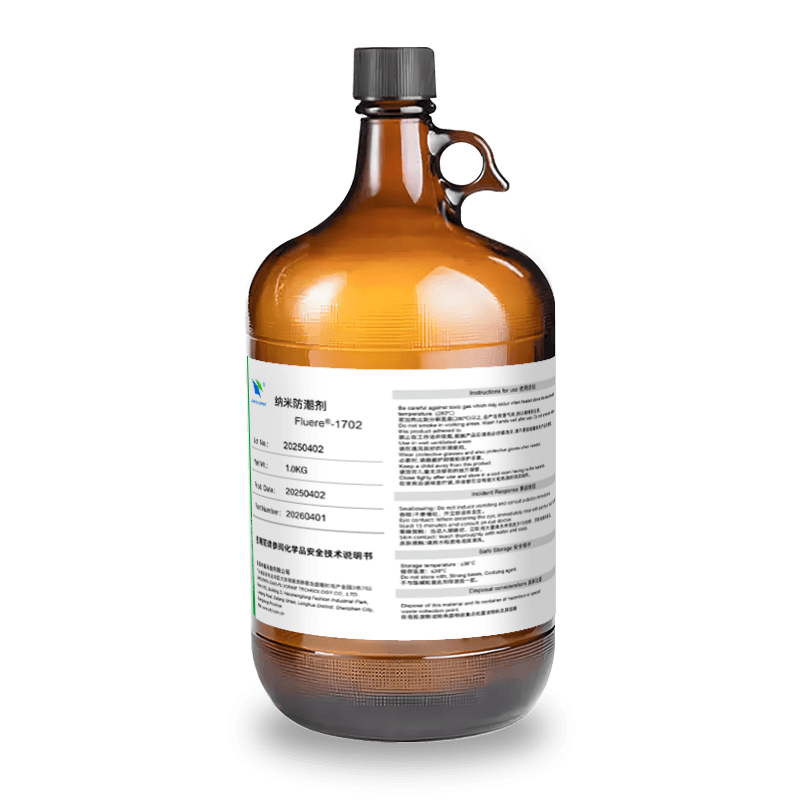
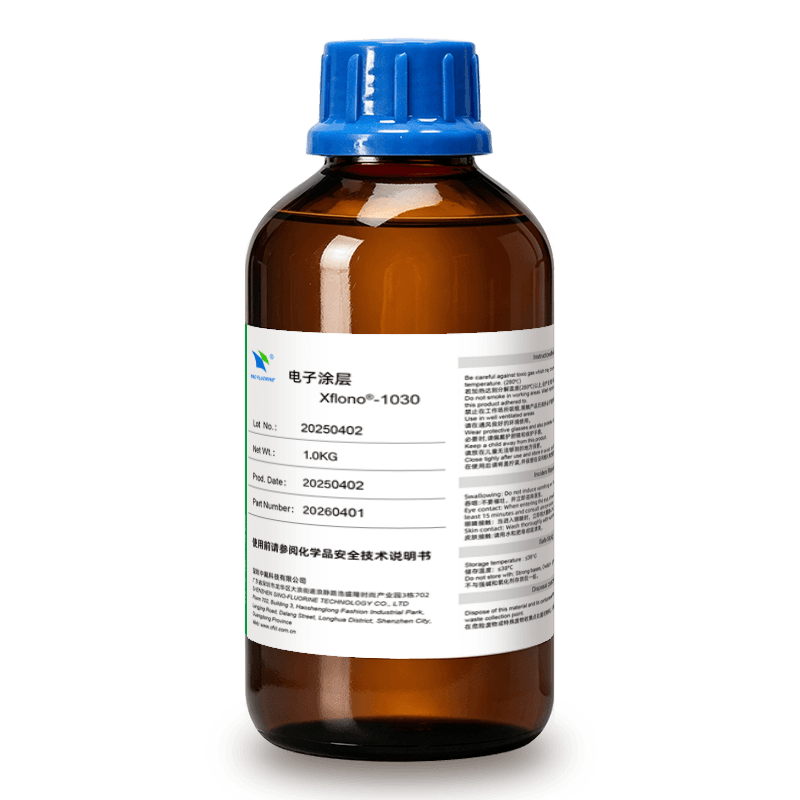
What welding robots require is a protective solution that can withstand high heat and humidity without hindering heat dissipation, while maintaining long-term stability in harsh operating environments. This is precisely where nano-coatings for electronic protection demonstrate their value.
III. Nano-coatings: Breaking the "Plum Rain Season Curse"
Electronic moisture-proofing agents break the "Plum Rain Season curse" affecting welding robots on three levels.
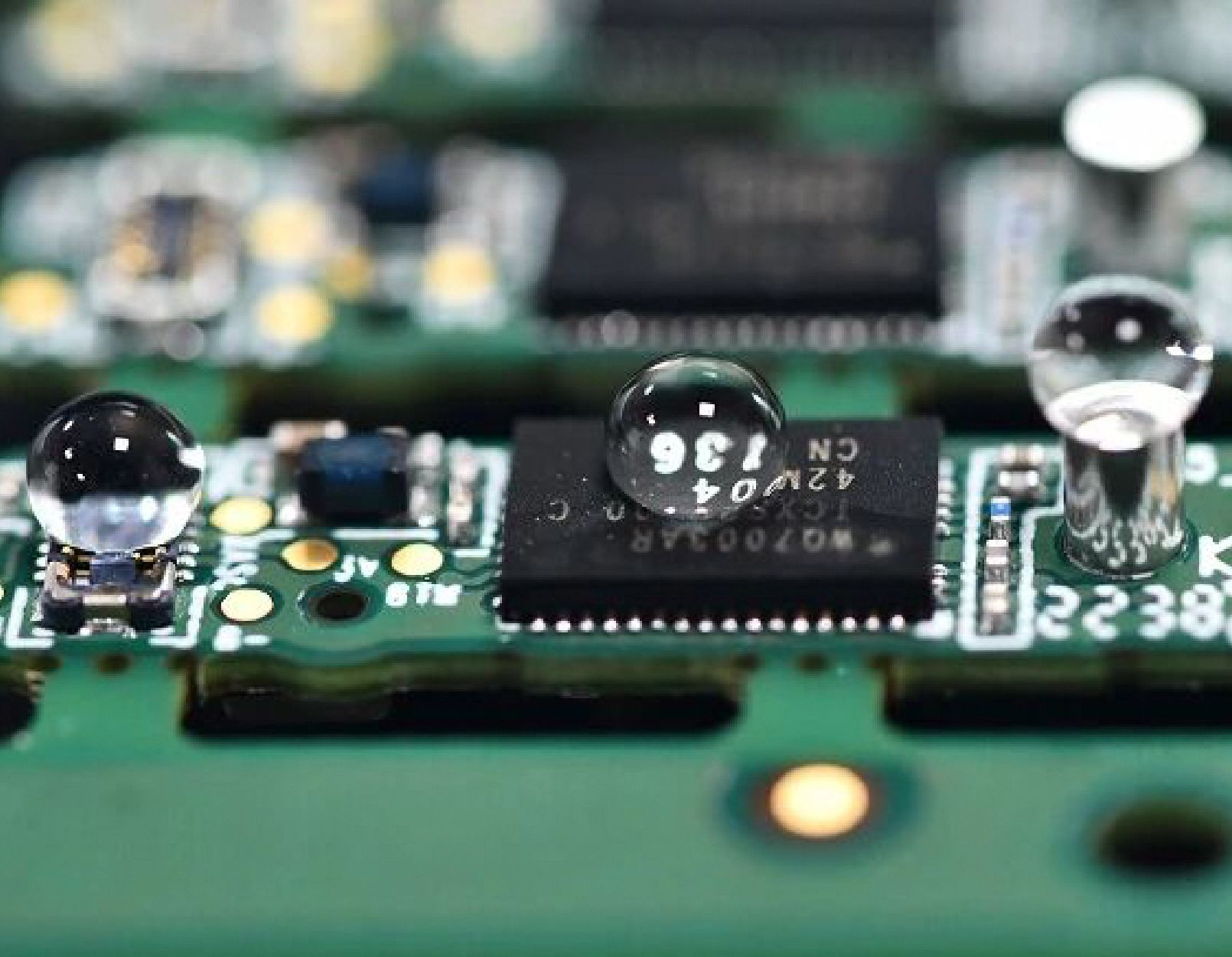
Level 1: Hydrophobicity. With a water contact angle of 116° to 123° and surface energy as low as 10 to 20 mN/m, the coating prevents water vapor from condensing or adhering to the PCB surface, thereby inhibiting condensation at the source. Even if minor condensation occurs, it cannot form a continuous water film capable of causing short circuits or corrosion.
Level 2: Temperature Resistance. The coating bonds chemically to the substrate, maintaining 96% adhesion after 1,000 thermal cycles between -40°C and 125°C. It withstands the drastic temperature fluctuations—from high operating heat to cooling during downtime—without peeling or cracking. This level of performance is difficult for traditional conformal coatings to match.
Level 3: Heat Dissipation Efficiency. With an ultra-thin profile of 0.8 to 13 microns and thermal resistance of only 0.0057 to 0.11 K/W, the coating has virtually no impact on the drive board's heat dissipation. High-current drive systems in welding robots continue to dissipate heat efficiently, avoiding heat buildup caused by the protective layer.
Figure 2: Hydrophobic effect of the nanocoating on a robot control board
IV. Practical Implementation: Helping Welding Robots Withstand Every Plum Rain Season
Implementing nano-coating protection for welding robots involves a practical, step-by-step process.
Step 1: Environmental Assessment. Assess the actual temperature and humidity, condensation distribution, and weld spatter conditions in the welding workshop to identify critical areas requiring protection—typically the main control board, servo drive board, and power supply board. Step 2: Solution Customization. Based on the assessment results, select either a dipping or spraying process to apply targeted protection to key PCBs. Step 3: Validation and Implementation. After protecting samples, verify effectiveness through tests such as salt spray, "Double 85" (85°C/85% RH), and thermal cycling; once standards are met, proceed to mass production.
Paiqi Nano has served leading clients in the industrial automation and robotics sectors, such as Inovance Technology and Roborock. The company possesses extensive practical experience in robot protection for harsh operating environments—including welding, spraying, and grinding—and can help clients implement protection solutions down to the individual circuit board level.
V. Three Questions About Welding Robot Protection
Question 1: Can nano-coatings withstand weld spatter and dust? The coating's primary function is moisture and corrosion resistance; mechanical impact from spatter requires structural protection measures. However, the coating prevents PCB corrosion caused by moisture absorption in spatter residues.
Question 2: Can the coating withstand the >80% humidity of the Plum Rain season? Yes. The coating's hydrophobic properties inhibit water vapor condensation; combined with proven water and salt-spray resistance, it is fully capable of handling the sustained high humidity of the Plum Rain season.
Question 3: Is the coating durable enough for robots operating 24/7? Yes. The coating forms chemical bonds and has passed long-term aging tests, ensuring stable protection throughout the robot's service life.
VI. The Fluorine-Free Approach: A Compliant Choice for Welding Robots
Environmental compliance is a mandatory requirement for exporting welding robots overseas. The EU's trend toward restricting PFAS makes the fluorine-free approach a crucial strategic direction. Zhongfu Technology’s fluorine-free, superhydrophobic electronic moisture-proofing agent—specifically the 1700 series—offers self-healing capabilities and withstands 168 to 240 hours of salt spray testing without degradation. With stable performance across high and low temperatures, it provides a compliant and reliable technical solution for welding robots.
Robots in welding workshops should not simply "give up" during the rainy season. While engineers pour immense effort into mechanical structures and motion control, moisture protection for electronic systems is often the final piece of the puzzle to be addressed. Nanocoating agents for electronic protection bridge this gap with molecular-level defense, enabling robots to reliably weather successive rainy seasons. The rainy season is no longer a threat; reliable protection ensures production continues without interruption.
For welding workshop managers, robot failures during the rainy season come at a tangible cost. An hour of downtime for robots on a welding line can mean delays for dozens or even hundreds of workpieces; a single control system malfunction can result in an entire batch of welded parts being scrapped. The cumulative cost of these losses far outweighs the investment in protective measures.
On a deeper level, welding robots often handle the most critical and irreplaceable processes. Their reliability directly determines the production line's capacity and quality. Therefore, applying electronic protection to welding robots is not merely an optional "extra"—it is a vital necessity. By providing lightweight, thin, heat-dissipating, and reworkable protection, these moisture-proofing agents help robots steadily withstand the rainy season, preventing production stoppages caused by humidity. Only when a robot's electronic systems are no longer vulnerable to moisture can the factory's production rhythm truly stabilize.
From another perspective, robot failures during the rainy season are essentially a "reliability test." They test not only the robot's hardware but also the manufacturer's attention to detail. Robots that continue to operate stably through the rainy season are usually backed by teams that have invested heavily in robust moisture protection. Electronic protective nano-coatings serve as an ideal tool for meeting this challenge.
As the manufacturing sector increasingly relies on automation and intelligent systems, the number of industrial robots—such as those used for welding, grinding, and spraying—continues to rise. Their reliability directly impacts the operational efficiency of the entire factory. Implementing robust electronic protection acts as an "insurance policy" for continuous production; the investment is modest, yet the returns are substantial.
It is also important to emphasize that protection in welding workshops is not a one-time task but an ongoing process. As workshop environments change, equipment is upgraded, and processes are adjusted, protection strategies must be continuously optimized. The technical team at Paiqi Nano consistently monitors protection performance and refines solutions based on feedback to ensure enduring effectiveness. This long-term, continuous partnership defines the value of Zhongfu Technology’s service.
Only when the electronic systems of welding robots are free from moisture-related issues can a factory truly achieve stable, year-round production. For manufacturers striving for efficiency and quality, this represents not just a technological advancement, but a boost in competitiveness. Choosing the right protection ensures more stable production and superior quality.
Ultimately, moisture protection in welding workshops is a battle for certainty. Factories do not merely seek a "high probability of trouble-free operation"; they demand the assurance that problems will not occur. Through empirical data and stable adhesion via chemical bonding, electronic protective nano-coatings deliver this certainty. Choosing this solution means ensuring that production lines continue to run smoothly, even during humid plum-rain seasons.
Many people assume that robot failures in welding workshops are caused by high temperatures, dust, or weld spatter. While these are indeed threats, there is often a single culprit behind the surge of breakdowns during the rainy season: moisture. The combination of the workshop's high-temperature, high-humidity environment and the persistent dampness of the rainy season leaves the robots' electronic control systems effectively "immersed" in moisture for extended periods.
Engineers in welding workshops share a common headache: their robots are prone to malfunctions whenever the rainy season arrives. Issues range from robotic arm stuttering and control system error messages to degraded weld quality or even complete system shutdowns.
Many assume that robot failures in welding workshops are caused by high temperatures, dust, or weld spatter. While these are indeed threats, there is often just one primary culprit behind the surge of breakdowns during the rainy season: moisture. The combination of the workshop's inherent heat and humidity with the season's persistent dampness leaves the robots' electronic control systems effectively "bathed" in moisture for extended periods.
This article explores the real reasons behind these rainy-season malfunctions and explains how electronic moisture-proofing agents can solve the problem at its source.
Figure 1: Moisture-proof protection for a robot control board (PCBA) in a welding workshop
I. Why Welding Workshops Are "High-Humidity Danger Zones"
Welding workshops might sound like "hot and dry" environments—filled with flying sparks and intense heat. In reality, however, the humidity levels in these workshops are often surprisingly high.
There are several reasons for this. First, the welding process generates significant amounts of water vapor and fumes; the gases released—especially when using welding fluxes—increase the workshop's humidity. Second, the ventilation and cooling systems required—such as air conditioning and water-cooling units—cause drastic fluctuations in temperature and humidity. Third, the naturally high humidity of the rainy season compounds the localized heat and moisture within the workshop, frequently pushing ambient humidity levels close to or even above 80%.
In such an environment, moisture easily condenses on the surfaces of robot PCBs. Welding robots typically operate continuously, causing their main control and drive circuits to generate constant heat. When the robots shut down to cool off or enter standby mode at night, the sudden temperature shift allows condensation to quietly form on the circuit boards. Solder joints corrode, pins oxidize, insulation degrades, and signals drift—leading to a surge of equipment failures during the rainy season.
II. The Limitations of Traditional Protection Methods
Traditional protective measures often prove inadequate against the humidity found in welding workshops.
While structural sealing can theoretically block moisture, welding robots feature numerous joints and moving parts; consequently, seals are prone to aging and failure due to prolonged friction, high temperatures, and exposure to weld spatter. Furthermore, the tighter the seal, the poorer the internal heat dissipation; the resulting high temperatures in the drive circuits can, in turn, accelerate the aging of electronic components.
Conformal coatings, while offering some moisture resistance, are often too thick and impede heat dissipation—conflicting directly with the "high-current, high-heat" nature of welding robot drive boards. In the hot, humid environment of a welding workshop, thick coatings may crack or blister under repeated temperature and humidity fluctuations, ultimately becoming a liability rather than a safeguard.
What welding robots require is a protective solution that can withstand high heat and humidity without hindering heat dissipation, while maintaining long-term stability in harsh operating environments. This is precisely where nano-coatings for electronic protection demonstrate their value.
III. Nano-coatings: Breaking the "Plum Rain Season Curse"
Electronic moisture-proofing agents break the "Plum Rain Season curse" affecting welding robots on three levels.
Level 1: Hydrophobicity. With a water contact angle of 116° to 123° and surface energy as low as 10 to 20 mN/m, the coating prevents water vapor from condensing or adhering to the PCB surface, thereby inhibiting condensation at the source. Even if minor condensation occurs, it cannot form a continuous water film capable of causing short circuits or corrosion.
Level 2: Temperature Resistance. The coating bonds chemically to the substrate, maintaining 96% adhesion after 1,000 thermal cycles between -40°C and 125°C. It withstands the drastic temperature fluctuations—from high operating heat to cooling during downtime—without peeling or cracking. This level of performance is difficult for traditional conformal coatings to match.
Level 3: Heat Dissipation Efficiency. With an ultra-thin profile of 0.8 to 13 microns and thermal resistance of only 0.0057 to 0.11 K/W, the coating has virtually no impact on the drive board's heat dissipation. High-current drive systems in welding robots continue to dissipate heat efficiently, avoiding heat buildup caused by the protective layer.
Figure 2: Hydrophobic effect of the nanocoating on a robot control board
IV. Practical Implementation: Helping Welding Robots Withstand Every Plum Rain Season
Implementing nano-coating protection for welding robots involves a practical, step-by-step process.
Step 1: Environmental Assessment. Assess the actual temperature and humidity, condensation distribution, and weld spatter conditions in the welding workshop to identify critical areas requiring protection—typically the main control board, servo drive board, and power supply board. Step 2: Solution Customization. Based on the assessment results, select either a dipping or spraying process to apply targeted protection to key PCBs. Step 3: Validation and Implementation. After protecting samples, verify effectiveness through tests such as salt spray, "Double 85" (85°C/85% RH), and thermal cycling; once standards are met, proceed to mass production.
Paiqi Nano has served leading clients in the industrial automation and robotics sectors, such as Inovance Technology and Roborock. The company possesses extensive practical experience in robot protection for harsh operating environments—including welding, spraying, and grinding—and can help clients implement protection solutions down to the individual circuit board level.
V. Three Questions About Welding Robot Protection
Question 1: Can nano-coatings withstand weld spatter and dust? The coating's primary function is moisture and corrosion resistance; mechanical impact from spatter requires structural protection measures. However, the coating prevents PCB corrosion caused by moisture absorption in spatter residues.
Question 2: Can the coating withstand the >80% humidity of the Plum Rain season? Yes. The coating's hydrophobic properties inhibit water vapor condensation; combined with proven water and salt-spray resistance, it is fully capable of handling the sustained high humidity of the Plum Rain season.
Question 3: Is the coating durable enough for robots operating 24/7? Yes. The coating forms chemical bonds and has passed long-term aging tests, ensuring stable protection throughout the robot's service life.
VI. The Fluorine-Free Approach: A Compliant Choice for Welding Robots
Environmental compliance is a mandatory requirement for exporting welding robots overseas. The EU's trend toward restricting PFAS makes the fluorine-free approach a crucial strategic direction. Zhongfu Technology’s fluorine-free, superhydrophobic electronic moisture-proofing agent—specifically the 1700 series—offers self-healing capabilities and withstands 168 to 240 hours of salt spray testing without degradation. With stable performance across high and low temperatures, it provides a compliant and reliable technical solution for welding robots.
Robots in welding workshops should not simply "give up" during the rainy season. While engineers pour immense effort into mechanical structures and motion control, moisture protection for electronic systems is often the final piece of the puzzle to be addressed. Nanocoating agents for electronic protection bridge this gap with molecular-level defense, enabling robots to reliably weather successive rainy seasons. The rainy season is no longer a threat; reliable protection ensures production continues without interruption.
For welding workshop managers, robot failures during the rainy season come at a tangible cost. An hour of downtime for robots on a welding line can mean delays for dozens or even hundreds of workpieces; a single control system malfunction can result in an entire batch of welded parts being scrapped. The cumulative cost of these losses far outweighs the investment in protective measures.
On a deeper level, welding robots often handle the most critical and irreplaceable processes. Their reliability directly determines the production line's capacity and quality. Therefore, applying electronic protection to welding robots is not merely an optional "extra"—it is a vital necessity. By providing lightweight, thin, heat-dissipating, and reworkable protection, these moisture-proofing agents help robots steadily withstand the rainy season, preventing production stoppages caused by humidity. Only when a robot's electronic systems are no longer vulnerable to moisture can the factory's production rhythm truly stabilize.
From another perspective, robot failures during the rainy season are essentially a "reliability test." They test not only the robot's hardware but also the manufacturer's attention to detail. Robots that continue to operate stably through the rainy season are usually backed by teams that have invested heavily in robust moisture protection. Electronic protective nano-coatings serve as an ideal tool for meeting this challenge.
As the manufacturing sector increasingly relies on automation and intelligent systems, the number of industrial robots—such as those used for welding, grinding, and spraying—continues to rise. Their reliability directly impacts the operational efficiency of the entire factory. Implementing robust electronic protection acts as an "insurance policy" for continuous production; the investment is modest, yet the returns are substantial.
It is also important to emphasize that protection in welding workshops is not a one-time task but an ongoing process. As workshop environments change, equipment is upgraded, and processes are adjusted, protection strategies must be continuously optimized. The technical team at Paiqi Nano consistently monitors protection performance and refines solutions based on feedback to ensure enduring effectiveness. This long-term, continuous partnership defines the value of Zhongfu Technology’s service.
Only when the electronic systems of welding robots are free from moisture-related issues can a factory truly achieve stable, year-round production. For manufacturers striving for efficiency and quality, this represents not just a technological advancement, but a boost in competitiveness. Choosing the right protection ensures more stable production and superior quality.
Ultimately, moisture protection in welding workshops is a battle for certainty. Factories do not merely seek a "high probability of trouble-free operation"; they demand the assurance that problems will not occur. Through empirical data and stable adhesion via chemical bonding, electronic protective nano-coatings deliver this certainty. Choosing this solution means ensuring that production lines continue to run smoothly, even during humid plum-rain seasons.