By 2026, the low-altitude economy was being incorporated into the government work reports of an increasing number of provinces. Scenarios that once existed only in science fiction—such as drone logistics, eVTOLs (electric vertical take-off and landing aircraft), and urban air mobility—are rapidly becoming reality. According to estimates by various institutions, the market size of China's low-altitude economy is poised to exceed one trillion yuan by 2030.
By 2026, the "low-altitude economy" had been incorporated into the government work reports of an increasing number of provinces. Scenarios once confined to science fiction—such as drone logistics, eVTOLs (electric vertical take-off and landing aircraft), and urban air mobility—are rapidly becoming reality. Projections by various institutions suggest that the market size of China's low-altitude economy is poised to exceed one trillion yuan by 2030.
Yet, few people notice a counterintuitive fact: what determines whether an aircraft can safely take to the skies is not just the "star components"—like motors, batteries, and flight control systems—but also the most ordinary of circuit boards, along with the virtually invisible nano-coating covering their surfaces.
When aircraft traverse cloud layers, skim across ocean surfaces, or take off and land in the humid air of southern China’s "return-to-south" (high-humidity) season, the first components to fail are often not the software, but the exposed PCBA circuit boards. This is precisely the arena where Zhongfu Technology has been deeply engaged for over a decade.
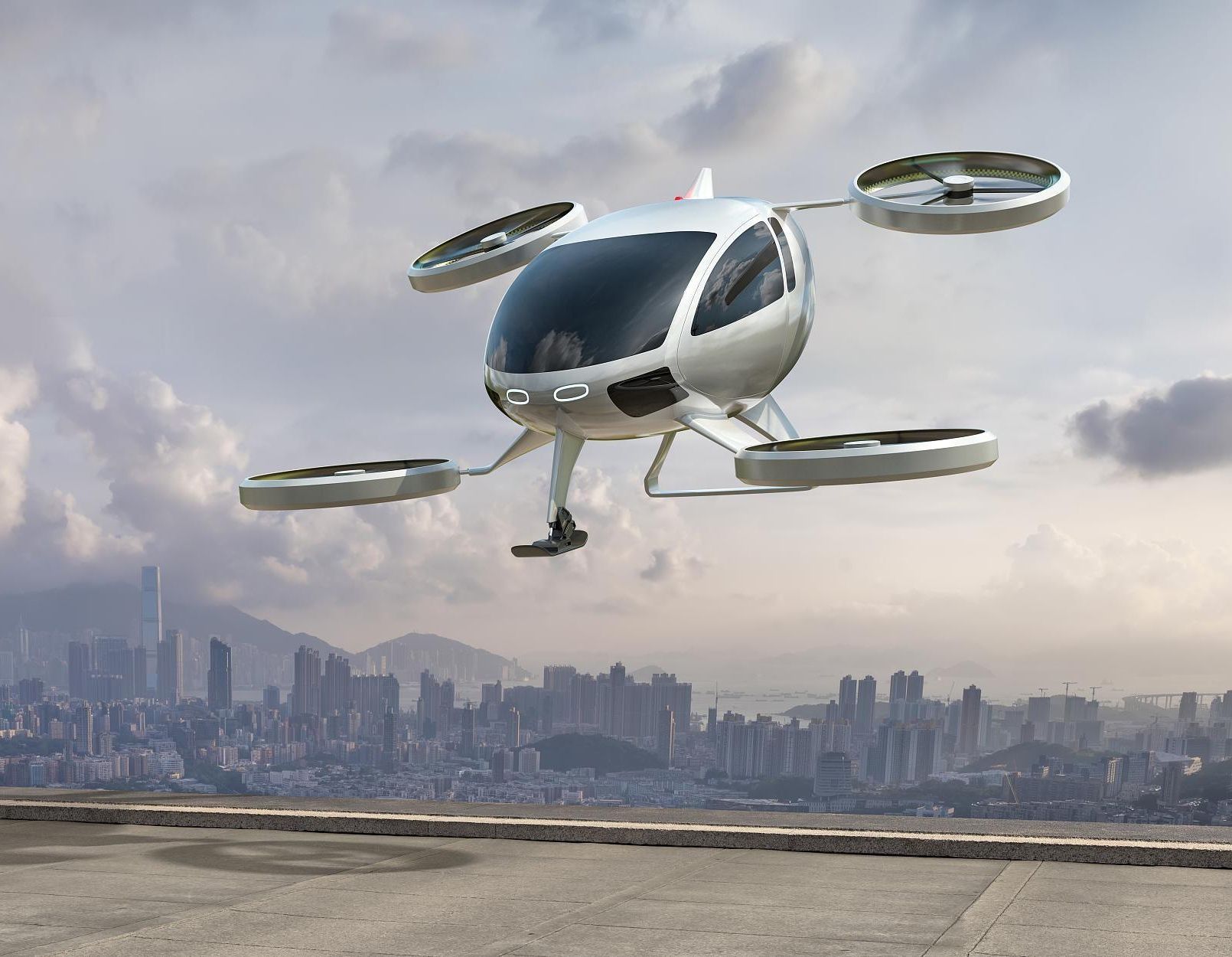
Figure 1: An eVTOL aircraft for the low-altitude economy flying through the clouds.
I. Behind the Trillion-Yuan Blueprint Lies an Underestimated Challenge: Moisture Protection
Policy enthusiasm for the low-altitude economy is virtually unprecedented. From central to local levels, the term "low-altitude economy" frequently appears in industrial plans—covering general aviation airport construction, accelerated airworthiness certification, airspace management reform, and eVTOL pilot operations. Policymakers are actively clearing obstacles and paving the way for this "aerial highway."
However, the industry's buzz masks a sobering engineering reality: the operating environments for low-altitude aircraft are far harsher than those for consumer electronics.
While a consumer-grade drone might fly within a few hundred meters of the ground, eVTOLs and industrial-grade drones routinely face temperature fluctuations at altitudes of several thousand meters, sudden spikes in humidity when passing through clouds, salt-spray corrosion during coastal operations, and high-frequency vibrations from motors and airframes during takeoff and landing. The cumulative effect of these environmental factors places demands on circuit boards—regarding waterproofing, moisture resistance, salt-spray resistance, and corrosion resistance—that far exceed the requirements for traditional electronic products.
In other words, for the low-altitude economy to truly "take off," a critical technical challenge must first be addressed: how to ensure that every circuit board continues to operate reliably amidst a complex combination of humidity, salt spray, temperature fluctuations, and vibration.
II. High-Altitude Environments: The Ultimate Test for Circuit Boards
Many people’s understanding of why circuit boards are vulnerable to water is limited to the intuitive notion that "a phone breaks if it falls into water." From an engineering perspective, however, when a powered circuit board encounters moisture, the result is not merely a simple short circuit; it triggers a complex, precise chain reaction.
When water vapor condenses on the surface of a PCB, a slightly acidic liquid film forms over the copper pads. Driven by voltage bias, copper ions migrate to form metallic dendrites—microscopic "metal whiskers" ranging from a few to several hundred micrometers in length. Once these structures bridge adjacent pads, an instantaneous short circuit occurs. This process—known in engineering as electrochemical migration (ECM)—is the most insidious and lethal failure mode for electronic products in humid environments.
For low-altitude aircraft, this risk is magnified several times over:
| Environmental Factors | Threats to Low-Altitude Aircraft | Challenges for Circuit Boards |
|---|---|---|
| Passing through cloud layers | Humidity surges instantly from low levels to near saturation | Sharp increase in condensation risk; accelerated ECM |
| High-altitude temperature differentials | Drastic temperature fluctuations caused by altitude differences of several thousand meters | Thermal expansion and contraction make coatings prone to cracking and delamination |
| Coastal salt spray | Salt corrosion in marine operating environments | Pad corrosion and impedance drift |
| High-frequency vibration | Continuous vibration from motors and airflow | Coatings require a balance of flexibility and adhesion |
It is evident that the requirements for circuit board protection in the low-altitude economy amount to a complex, multifaceted challenge. What is needed is not merely a "waterproof film," but a systematic protection solution capable of simultaneously withstanding humidity, salt spray, temperature fluctuations, and vibration.
III. Why Traditional Protection Methods Fall Short in Low-Altitude Scenarios
The electronics manufacturing industry is certainly not lacking in solutions for moisture protection. Conformal coatings, potting compounds, and structural sealing have long been the industry's "standard trio." However, the limitations of each method have become increasingly apparent when faced with the rigorous demands of the low-altitude economy.
The issue with conformal coatings lies in the "conflict between thickness and integrity." Traditional coatings typically range from tens to hundreds of microns in thickness, relying on a "physical barrier" to block moisture. While this "thick blanket" might suffice under static laboratory conditions, real-world high-altitude environments cause circuit boards to undergo repeated thermal expansion and contraction; thick coatings are prone to cracking and peeling, inadvertently creating new pathways for water ingress.
The problem with potting compounds is "over-protection." While potting offers complete environmental isolation, it comes at the cost of added weight and compromised heat dissipation. For aircraft—where "every gram counts"—the weight burden and thermal management issues associated with potting are often unacceptable.
A deeper issue concerns masking and production yield. Traditional spraying processes require manual masking of components such as connectors and card slots, resulting in cumbersome workflows, high labor costs, and inconsistent quality. For high-value, high-reliability products like aircraft, even a single oversight during masking can create potential hazards.
Thus, a critical question emerges: the low-altitude economy requires a protection method that is sufficiently thin, dense, and reliable, without adding unnecessary weight. This is precisely the area Zhongfu Technology has focused on for over a decade.
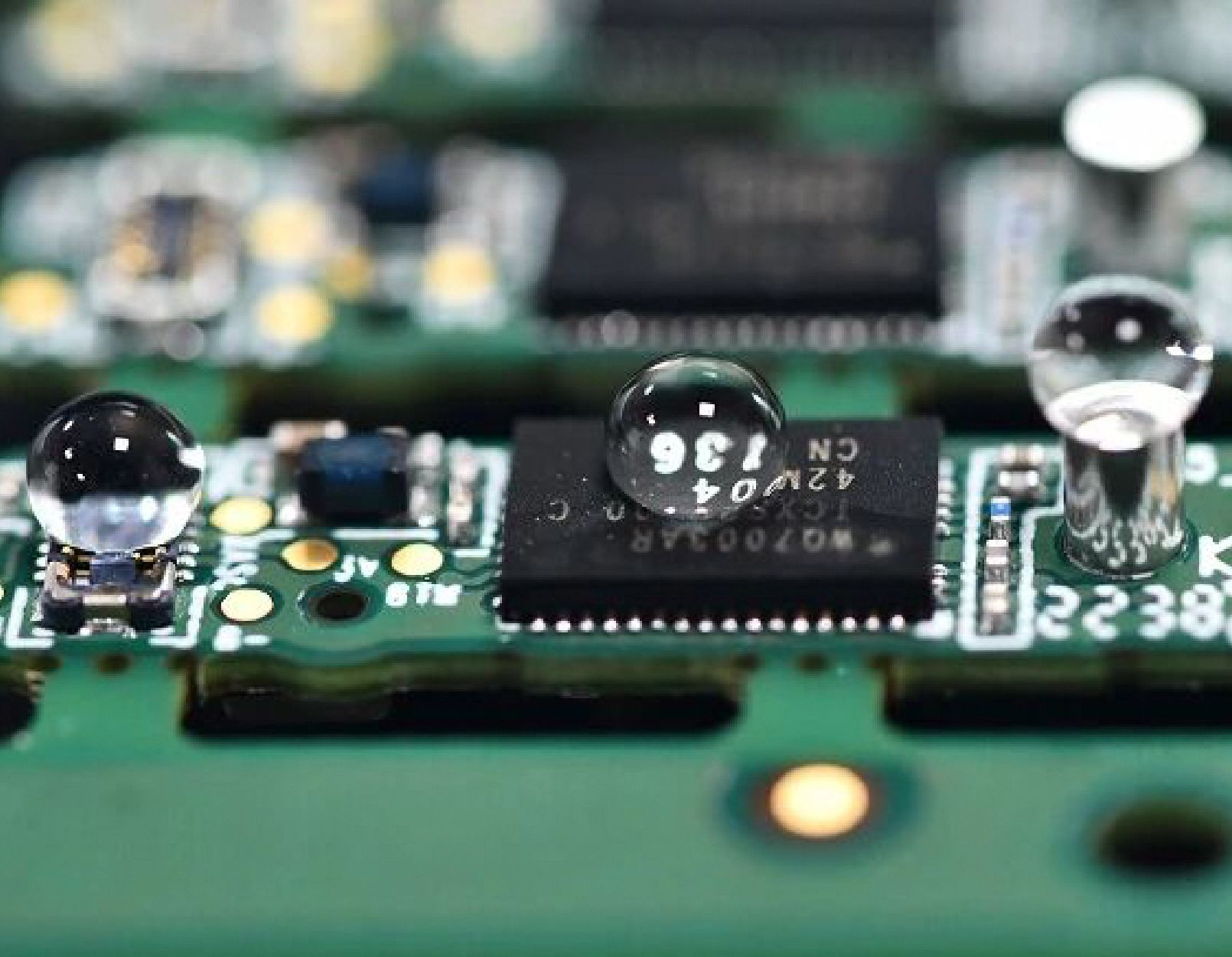
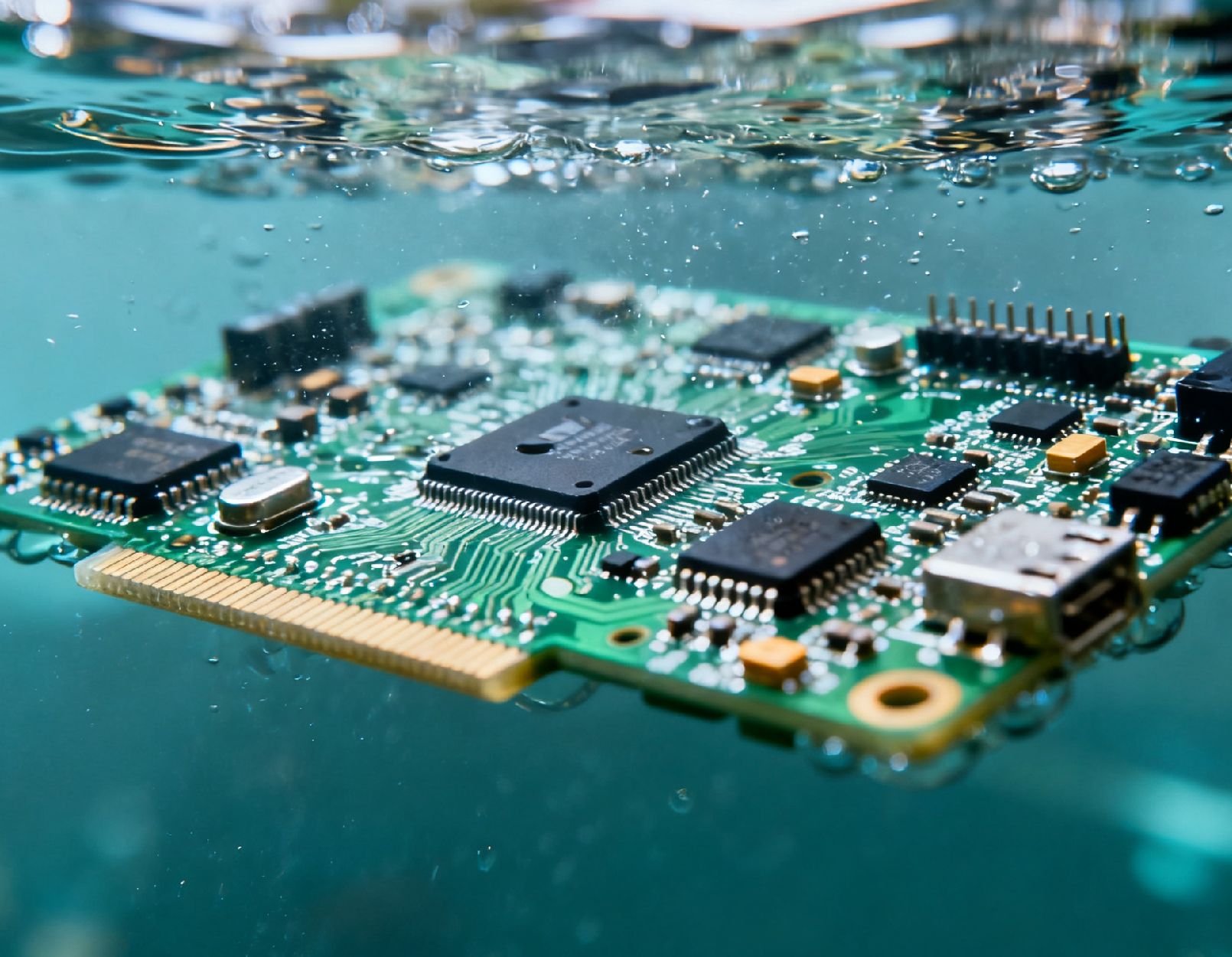
Figure 2: Hydrophobic effect of the nano-scale moisture-proofing agent on the PCBA circuit board.
Departing from the traditional "thick-film barrier" approach, Zhongfu Technology has taken a different path: applying a fluorinated nano-coating—measuring only a few microns or even sub-micron in thickness—to create a dense, "invisible armor" on the circuit board surface.
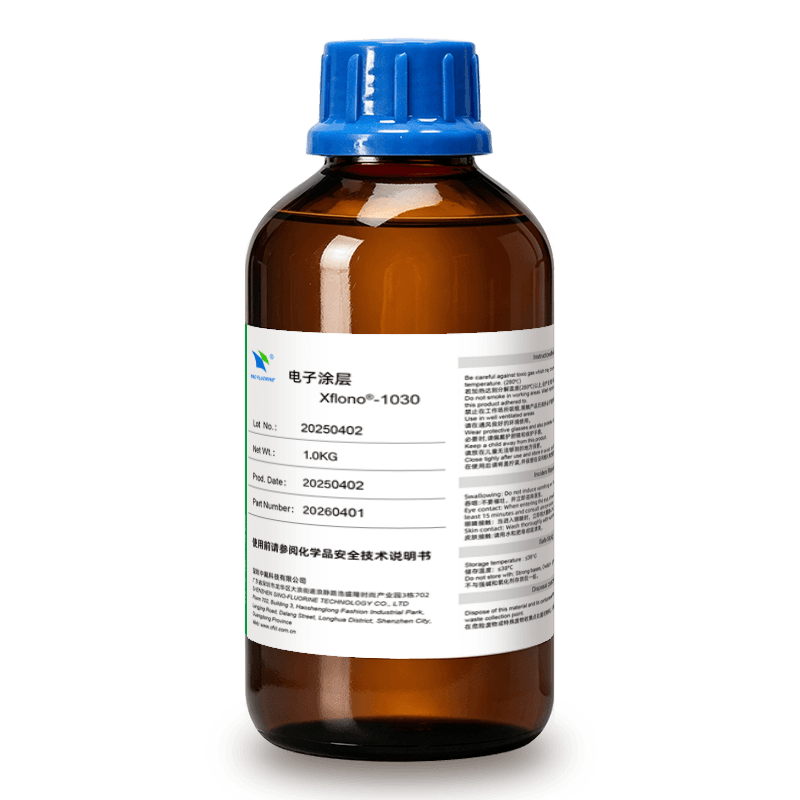
The key to this coating’s ability to be both ultra-thin and highly effective lies in its chemical composition. Take, for instance, the electronic protective nano-coating agent championed by Paiqi Nano: its primary ingredient is a perfluoroalkyl acrylate polymer. This fluorinated polymer naturally possesses extremely low surface energy; when moisture contacts the surface, it cannot spread out but instead beads up into droplets that refuse to adhere, sliding off readily.
Crucially, the nano-coating does not merely "block water out"; it severs the pathways for electrochemical migration at the interface level. Because the coating is exceptionally thin yet dense, it forms a continuous protective layer over copper pads. Furthermore, as it contains no conductive materials and is minimal in thickness, it has virtually no impact on electrical signal transmission or heat dissipation.
What does this mean? It means that aircraft circuit boards can gain genuine protection against moisture, salt spray, and corrosion without the presence of a visible protective layer. This "imperceptible protection" is precisely what low-altitude aircraft require: it adds no weight, does not hinder heat dissipation, and does not alter assembly tolerances, yet it safeguards reliability when it matters most.
V. Paiqi Nano’s Practice: Bringing "Laboratory-Grade Reliability" to the "Mass Production Line"
While the technical principles may be sound, the real concern for B2B clients is whether the technology can be successfully implemented in mass production. Since its inception in 2013, Paiqi Nano has focused deeply on the core technical approach of "immersion-based PCBA protection." As one of the earliest teams in China to specialize in immersion-based nano-protection, the company has served over a hundred enterprise clients. The so-called "immersion" method involves submerging the entire circuit board into a nano-coating solution, with the coating process completed in just a few seconds. Thanks to its ultra-low viscosity and exceptional leveling properties, the solution automatically penetrates hard-to-reach areas—such as solder pads, component leads, and the undersides of components—that are difficult to access with traditional spraying techniques, thereby forming a continuous protective film with no gaps or blind spots. The advantages of this process include:
| Process Characteristics | Traditional Conformal Coating | Paiqi Nano Dip Coating |
|---|---|---|
| Coating thickness | Tens to hundreds of micrometers | 0.1–3 microns |
| Masking requirements | Manual masking of connectors required | Significantly reduces masking |
| Coverage | Spray coating leaves inaccessible areas (dead zones) | Penetrates thoroughly with no dead zones |
| Weight and heat dissipation | Significant impact | Negligible impact |
| Curing method | Requires specialized baking | Air-dry at room temperature or rapid bake-dry |
In sectors such as aircraft, drones, energy storage, and automotive electronics—where reliability and lightweight design are paramount—this protective approach, characterized by being "thin, dense, comprehensive, and lightweight," is increasingly being validated by customers.
Behind this process system lies over a decade of unwavering R&D investment by Zhongfu Technology. The company has established a complete R&D chain spanning from raw material synthesis to finished product application; its products hold ISO9001, ISO14001, and ISO45001 certifications and comply with environmental standards such as RoHS and REACH. Centered on fluorinated electronic protective nano-coatings, Paiqi Nano has secured numerous invention patents, building a technological "moat" through expertise in formulation design, process parameter control, and mass-production consistency.
A real-world example from Paiqi Nano is particularly compelling: a circuit board treated with their immersion-style nano-coating remains fully functional after a 500-hour salt spray test and can even operate underwater for tens of minutes. This ability to "keep running while submerged" provides the essential confidence needed for low-altitude aircraft to traverse cloud layers or skim across the sea surface.
VI. A Deeper Reflection: Reliability as the "Invisible Foundation" of Industrial Upgrading
At this point, it is worth pausing to consider a broader perspective.
In recent years, our understanding of manufacturing upgrades has largely focused on "visible breakthroughs"—chips with greater computing power, more powerful batteries, lighter materials, and smarter algorithms. While these are certainly important, the successful implementation of high-tech industries—such as the low-altitude economy, new energy, and semiconductors—often hinges on "invisible" factors, such as how long a circuit board can withstand a humid environment.
This brings to mind a simple truth: the quality of any great product is limited by its weakest link. No matter how advanced an aircraft is, a single short circuit caused by condensation at high altitude can cause the entire machine to lose control. Reliability is never merely an optional "bonus" or a nice-to-have feature; it serves as the fundamental "safety cushion" for industrial upgrading.
Zhongfu Technology operates in precisely that link of the supply chain—the one that is most inconspicuous yet critical to safeguard. Eschewing the grand narratives that bask in the spotlight, the company quietly supports every step of "Made in China's" upward ascent with a protective coating just a few microns thick.
It is worth noting that the immersion process holds special significance for the low-altitude economy. When it comes to the mass airworthiness certification of aircraft, "replicable consistency" is paramount—every aircraft of the same model must demonstrate identical protective performance. The immersion process transforms protection from a form of "individual craftsmanship reliant on manual masking" into a "standardized procedure with precisely controlled timing, temperature, and concentration." This evolution from "craft" to "industrial process" is what truly guarantees reliability in the era of mass production.
Viewed from this perspective, the takeoff of the low-altitude economy may appear to be driven by the convergence of policy, capital, and technology; yet, what truly determines whether it can land safely are the countless—and often underestimated—details, such as moisture protection for circuit boards. When details are handled correctly, there is confidence for takeoff; if details are neglected, the higher the flight, the harder the fall.
Figure 3: Dip-coating process for nano-coatings
VII. Conclusion: As the Low-Altitude Economy Takes Flight, Who Provides the Safety Net?
The wave of the low-altitude economy has arrived—a trend that is certain. Yet, amidst this trend, success will belong to those who push "reliability" to the absolute limit.
Every hardware team venturing into the low-altitude economy should perhaps ask themselves: Is my aircraft ready to fly through those moisture-laden clouds? Have my circuit boards learned to "swim"?
If the answer remains uncertain, it is time to seriously consider adding that "invisible armor" to your circuit boards.
After all, flight altitude depends on motors and batteries; flight stability relies on flight controllers and algorithms; but flight endurance and safety ultimately hinge on that thin yet crucial layer of protection.
This is precisely the safeguard that Zhongfu Technology aims to help you maintain.
By 2026, the low-altitude economy was being incorporated into the government work reports of an increasing number of provinces. Scenarios that once existed only in science fiction—such as drone logistics, eVTOLs (electric vertical take-off and landing aircraft), and urban air mobility—are rapidly becoming reality. According to estimates by various institutions, the market size of China's low-altitude economy is poised to exceed one trillion yuan by 2030.
By 2026, the "low-altitude economy" had been incorporated into the government work reports of an increasing number of provinces. Scenarios once confined to science fiction—such as drone logistics, eVTOLs (electric vertical take-off and landing aircraft), and urban air mobility—are rapidly becoming reality. Projections by various institutions suggest that the market size of China's low-altitude economy is poised to exceed one trillion yuan by 2030.
Yet, few people notice a counterintuitive fact: what determines whether an aircraft can safely take to the skies is not just the "star components"—like motors, batteries, and flight control systems—but also the most ordinary of circuit boards, along with the virtually invisible nano-coating covering their surfaces.
When aircraft traverse cloud layers, skim across ocean surfaces, or take off and land in the humid air of southern China’s "return-to-south" (high-humidity) season, the first components to fail are often not the software, but the exposed PCBA circuit boards. This is precisely the arena where Zhongfu Technology has been deeply engaged for over a decade.
Figure 1: An eVTOL aircraft for the low-altitude economy flying through the clouds.
I. Behind the Trillion-Yuan Blueprint Lies an Underestimated Challenge: Moisture Protection
Policy enthusiasm for the low-altitude economy is virtually unprecedented. From central to local levels, the term "low-altitude economy" frequently appears in industrial plans—covering general aviation airport construction, accelerated airworthiness certification, airspace management reform, and eVTOL pilot operations. Policymakers are actively clearing obstacles and paving the way for this "aerial highway."
However, the industry's buzz masks a sobering engineering reality: the operating environments for low-altitude aircraft are far harsher than those for consumer electronics.
While a consumer-grade drone might fly within a few hundred meters of the ground, eVTOLs and industrial-grade drones routinely face temperature fluctuations at altitudes of several thousand meters, sudden spikes in humidity when passing through clouds, salt-spray corrosion during coastal operations, and high-frequency vibrations from motors and airframes during takeoff and landing. The cumulative effect of these environmental factors places demands on circuit boards—regarding waterproofing, moisture resistance, salt-spray resistance, and corrosion resistance—that far exceed the requirements for traditional electronic products.
In other words, for the low-altitude economy to truly "take off," a critical technical challenge must first be addressed: how to ensure that every circuit board continues to operate reliably amidst a complex combination of humidity, salt spray, temperature fluctuations, and vibration.
II. High-Altitude Environments: The Ultimate Test for Circuit Boards
Many people’s understanding of why circuit boards are vulnerable to water is limited to the intuitive notion that "a phone breaks if it falls into water." From an engineering perspective, however, when a powered circuit board encounters moisture, the result is not merely a simple short circuit; it triggers a complex, precise chain reaction.
When water vapor condenses on the surface of a PCB, a slightly acidic liquid film forms over the copper pads. Driven by voltage bias, copper ions migrate to form metallic dendrites—microscopic "metal whiskers" ranging from a few to several hundred micrometers in length. Once these structures bridge adjacent pads, an instantaneous short circuit occurs. This process—known in engineering as electrochemical migration (ECM)—is the most insidious and lethal failure mode for electronic products in humid environments.
For low-altitude aircraft, this risk is magnified several times over:
| Environmental Factors | Threats to Low-Altitude Aircraft | Challenges for Circuit Boards |
|---|---|---|
| Passing through cloud layers | Humidity surges instantly from low levels to near saturation | Sharp increase in condensation risk; accelerated ECM |
| High-altitude temperature differentials | Drastic temperature fluctuations caused by altitude differences of several thousand meters | Thermal expansion and contraction make coatings prone to cracking and delamination |
| Coastal salt spray | Salt corrosion in marine operating environments | Pad corrosion and impedance drift |
| High-frequency vibration | Continuous vibration from motors and airflow | Coatings require a balance of flexibility and adhesion |
It is evident that the requirements for circuit board protection in the low-altitude economy amount to a complex, multifaceted challenge. What is needed is not merely a "waterproof film," but a systematic protection solution capable of simultaneously withstanding humidity, salt spray, temperature fluctuations, and vibration.
III. Why Traditional Protection Methods Fall Short in Low-Altitude Scenarios
The electronics manufacturing industry is certainly not lacking in solutions for moisture protection. Conformal coatings, potting compounds, and structural sealing have long been the industry's "standard trio." However, the limitations of each method have become increasingly apparent when faced with the rigorous demands of the low-altitude economy.
The issue with conformal coatings lies in the "conflict between thickness and integrity." Traditional coatings typically range from tens to hundreds of microns in thickness, relying on a "physical barrier" to block moisture. While this "thick blanket" might suffice under static laboratory conditions, real-world high-altitude environments cause circuit boards to undergo repeated thermal expansion and contraction; thick coatings are prone to cracking and peeling, inadvertently creating new pathways for water ingress.
The problem with potting compounds is "over-protection." While potting offers complete environmental isolation, it comes at the cost of added weight and compromised heat dissipation. For aircraft—where "every gram counts"—the weight burden and thermal management issues associated with potting are often unacceptable.
A deeper issue concerns masking and production yield. Traditional spraying processes require manual masking of components such as connectors and card slots, resulting in cumbersome workflows, high labor costs, and inconsistent quality. For high-value, high-reliability products like aircraft, even a single oversight during masking can create potential hazards.
Thus, a critical question emerges: the low-altitude economy requires a protection method that is sufficiently thin, dense, and reliable, without adding unnecessary weight. This is precisely the area Zhongfu Technology has focused on for over a decade.
Figure 2: Hydrophobic effect of the nano-scale moisture-proofing agent on the PCBA circuit board.
Departing from the traditional "thick-film barrier" approach, Zhongfu Technology has taken a different path: applying a fluorinated nano-coating—measuring only a few microns or even sub-micron in thickness—to create a dense, "invisible armor" on the circuit board surface.
The key to this coating’s ability to be both ultra-thin and highly effective lies in its chemical composition. Take, for instance, the electronic protective nano-coating agent championed by Paiqi Nano: its primary ingredient is a perfluoroalkyl acrylate polymer. This fluorinated polymer naturally possesses extremely low surface energy; when moisture contacts the surface, it cannot spread out but instead beads up into droplets that refuse to adhere, sliding off readily.
Crucially, the nano-coating does not merely "block water out"; it severs the pathways for electrochemical migration at the interface level. Because the coating is exceptionally thin yet dense, it forms a continuous protective layer over copper pads. Furthermore, as it contains no conductive materials and is minimal in thickness, it has virtually no impact on electrical signal transmission or heat dissipation.
What does this mean? It means that aircraft circuit boards can gain genuine protection against moisture, salt spray, and corrosion without the presence of a visible protective layer. This "imperceptible protection" is precisely what low-altitude aircraft require: it adds no weight, does not hinder heat dissipation, and does not alter assembly tolerances, yet it safeguards reliability when it matters most.
V. Paiqi Nano’s Practice: Bringing "Laboratory-Grade Reliability" to the "Mass Production Line"
While the technical principles may be sound, the real concern for B2B clients is whether the technology can be successfully implemented in mass production. Since its inception in 2013, Paiqi Nano has focused deeply on the core technical approach of "immersion-based PCBA protection." As one of the earliest teams in China to specialize in immersion-based nano-protection, the company has served over a hundred enterprise clients. The so-called "immersion" method involves submerging the entire circuit board into a nano-coating solution, with the coating process completed in just a few seconds. Thanks to its ultra-low viscosity and exceptional leveling properties, the solution automatically penetrates hard-to-reach areas—such as solder pads, component leads, and the undersides of components—that are difficult to access with traditional spraying techniques, thereby forming a continuous protective film with no gaps or blind spots. The advantages of this process include:
| Process Characteristics | Traditional Conformal Coating | Paiqi Nano Dip Coating |
|---|---|---|
| Coating thickness | Tens to hundreds of micrometers | 0.1–3 microns |
| Masking requirements | Manual masking of connectors required | Significantly reduces masking |
| Coverage | Spray coating leaves inaccessible areas (dead zones) | Penetrates thoroughly with no dead zones |
| Weight and heat dissipation | Significant impact | Negligible impact |
| Curing method | Requires specialized baking | Air-dry at room temperature or rapid bake-dry |
In sectors such as aircraft, drones, energy storage, and automotive electronics—where reliability and lightweight design are paramount—this protective approach, characterized by being "thin, dense, comprehensive, and lightweight," is increasingly being validated by customers.
Behind this process system lies over a decade of unwavering R&D investment by Zhongfu Technology. The company has established a complete R&D chain spanning from raw material synthesis to finished product application; its products hold ISO9001, ISO14001, and ISO45001 certifications and comply with environmental standards such as RoHS and REACH. Centered on fluorinated electronic protective nano-coatings, Paiqi Nano has secured numerous invention patents, building a technological "moat" through expertise in formulation design, process parameter control, and mass-production consistency.
A real-world example from Paiqi Nano is particularly compelling: a circuit board treated with their immersion-style nano-coating remains fully functional after a 500-hour salt spray test and can even operate underwater for tens of minutes. This ability to "keep running while submerged" provides the essential confidence needed for low-altitude aircraft to traverse cloud layers or skim across the sea surface.
VI. A Deeper Reflection: Reliability as the "Invisible Foundation" of Industrial Upgrading
At this point, it is worth pausing to consider a broader perspective.
In recent years, our understanding of manufacturing upgrades has largely focused on "visible breakthroughs"—chips with greater computing power, more powerful batteries, lighter materials, and smarter algorithms. While these are certainly important, the successful implementation of high-tech industries—such as the low-altitude economy, new energy, and semiconductors—often hinges on "invisible" factors, such as how long a circuit board can withstand a humid environment.
This brings to mind a simple truth: the quality of any great product is limited by its weakest link. No matter how advanced an aircraft is, a single short circuit caused by condensation at high altitude can cause the entire machine to lose control. Reliability is never merely an optional "bonus" or a nice-to-have feature; it serves as the fundamental "safety cushion" for industrial upgrading.
Zhongfu Technology operates in precisely that link of the supply chain—the one that is most inconspicuous yet critical to safeguard. Eschewing the grand narratives that bask in the spotlight, the company quietly supports every step of "Made in China's" upward ascent with a protective coating just a few microns thick.
It is worth noting that the immersion process holds special significance for the low-altitude economy. When it comes to the mass airworthiness certification of aircraft, "replicable consistency" is paramount—every aircraft of the same model must demonstrate identical protective performance. The immersion process transforms protection from a form of "individual craftsmanship reliant on manual masking" into a "standardized procedure with precisely controlled timing, temperature, and concentration." This evolution from "craft" to "industrial process" is what truly guarantees reliability in the era of mass production.
Viewed from this perspective, the takeoff of the low-altitude economy may appear to be driven by the convergence of policy, capital, and technology; yet, what truly determines whether it can land safely are the countless—and often underestimated—details, such as moisture protection for circuit boards. When details are handled correctly, there is confidence for takeoff; if details are neglected, the higher the flight, the harder the fall.
Figure 3: Dip-coating process for nano-coatings
VII. Conclusion: As the Low-Altitude Economy Takes Flight, Who Provides the Safety Net?
The wave of the low-altitude economy has arrived—a trend that is certain. Yet, amidst this trend, success will belong to those who push "reliability" to the absolute limit.
Every hardware team venturing into the low-altitude economy should perhaps ask themselves: Is my aircraft ready to fly through those moisture-laden clouds? Have my circuit boards learned to "swim"?
If the answer remains uncertain, it is time to seriously consider adding that "invisible armor" to your circuit boards.
After all, flight altitude depends on motors and batteries; flight stability relies on flight controllers and algorithms; but flight endurance and safety ultimately hinge on that thin yet crucial layer of protection.
This is precisely the safeguard that Zhongfu Technology aims to help you maintain.